
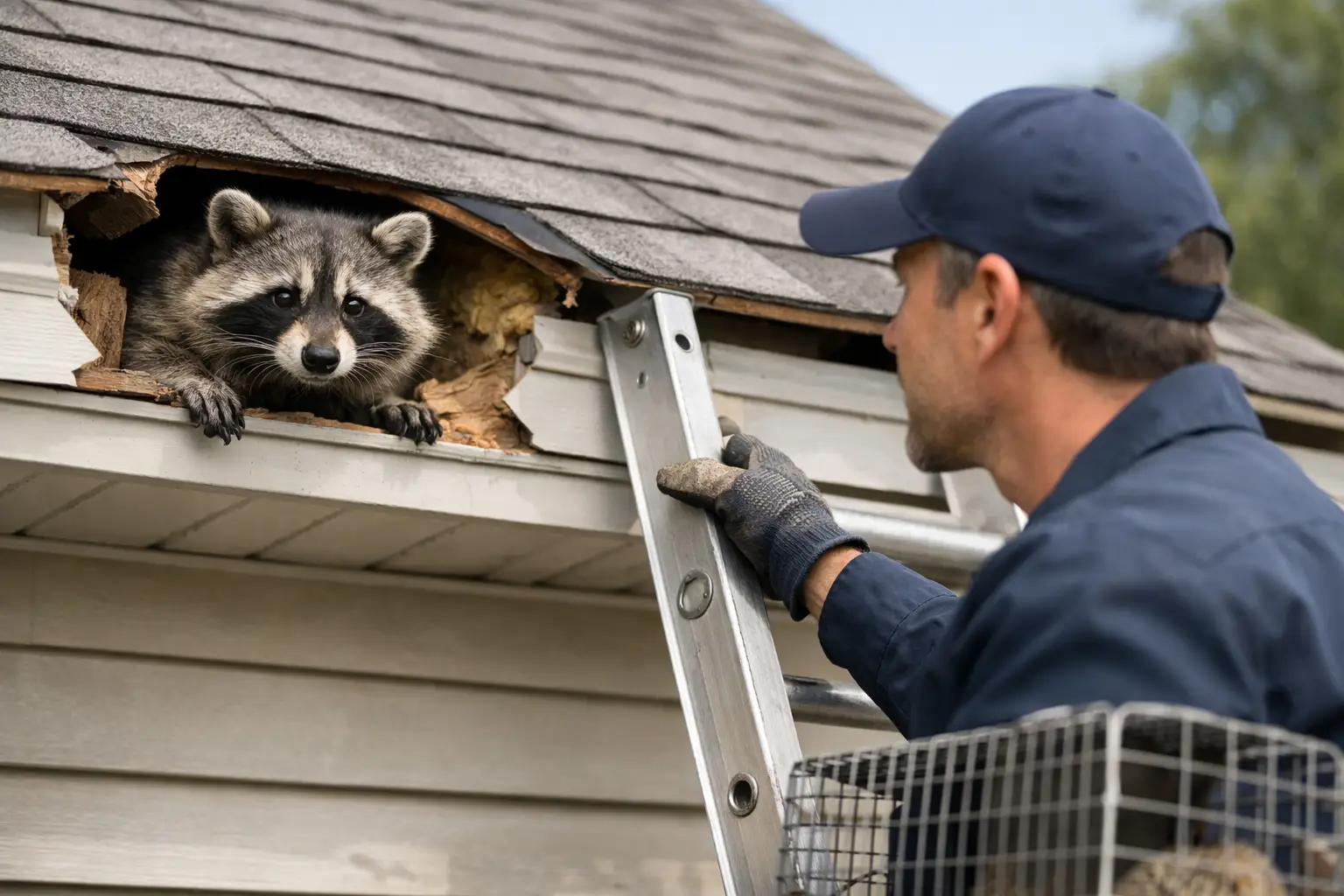
A raccoon in the attic is not a problem to wait out. In Bowmanville, Ontario, raccoon removal often becomes urgent when scratching overhead turns into torn insulation, damaged soffits, and a mother raccoon nesting with young. These animals are intelligent, strong, and persistent. Once they have found a warm, quiet way into a home, shed, garage, or commercial property, they may return night after night.
Quality Pest Control GTA provides practical, humane wildlife solutions designed to remove the immediate problem and help keep raccoons from coming back. The goal is not simply to get an animal outside. It is to identify the entry point, make sure no babies are left behind, and secure vulnerable areas before more damage occurs.
Signs You Need Raccoon Removal in Bowmanville, Ontario
Raccoons are mainly active at night, so homeowners may hear them before they see them. Heavy footsteps, thumping, chattering, or scratching in the attic, walls, chimney, or ceiling are common warning signs. Compared with mice or squirrels, raccoons sound surprisingly large. Their movement can resemble a person walking above the ceiling.
Outside, look for disturbed garbage, tipped green bins, scattered pet food, damaged roof vents, loose soffits, bent aluminum flashing, or claw marks around eaves and downspouts. Raccoons are skilled climbers and can use trees, fences, brickwork, and even downspouts to reach the roofline.
A strong odor can also signal that raccoons have been inside for some time. Droppings, urine, nesting material, and spoiled food can create unpleasant smells and contaminate attic insulation. If a raccoon dies in a wall or attic, the odor can become severe and requires professional attention.
For property managers and business operators, recurring garbage-area activity is a concern beyond mess and damage. Raccoons can create unsanitary conditions around restaurants, apartment buildings, warehouses, and retail locations. Prompt wildlife control helps protect the property, staff, tenants, and customers.
Why Raccoons Choose Attics, Roofs, and Sheds
Raccoons do not enter buildings randomly. They look for shelter, food, water, and protected places to raise their young. An attic is dry, warm, hidden from predators, and usually filled with soft insulation that can be pulled into a nest.
In Bowmanville, common entry points include roof vents, chimney caps, gaps at the roof-wall junction, damaged soffits, weak fascia boards, uncapped exhaust vents, and openings around additions or older repairs. A raccoon does not need a large opening if it can pull, bend, or break the material around it.
Season matters. Spring and early summer are especially sensitive because a female may have kits in an attic or chimney. Closing an entry hole without checking for young can separate a mother from her babies. That can lead to distressed animals, additional property damage, and lingering odor. A professional inspection helps determine what is happening before exclusion work begins.
How Professional Raccoon Removal Works
Effective raccoon removal is a process, not a quick trap-and-release job. The right method depends on the location of the animal, the condition of the structure, whether young are present, and the entry points available.
Inspection and Entry-Point Assessment
A trained technician begins by inspecting the roofline, attic access, vents, soffits, chimney, garage, and exterior areas around the property. The inspection identifies active entry points, travel routes, damage, nesting signs, and conditions that may attract raccoons.
This step matters because sealing only the obvious hole can push a raccoon toward another weak area. A complete assessment identifies the repairs and exclusion measures needed to protect the structure.
Humane Eviction and Exclusion
When appropriate, one-way exclusion devices allow raccoons to leave safely while preventing them from re-entering. These are installed only after considering the possibility of babies and monitoring the situation carefully. If young are present, the approach must protect animal welfare while resolving the infestation safely and in accordance with applicable wildlife rules.
Relocating wildlife is not always the best or legally appropriate answer. Raccoons are territorial, and moving them can create survival issues or simply shift the problem elsewhere. Professional exclusion focuses on getting the animal out and making the building inaccessible afterward.
Sealing and Wildlife-Proofing
Once the raccoon has left, the key work begins: securing the building. This may involve reinforcing roof vents with heavy-gauge screening, repairing soffit and fascia damage, securing chimney openings, sealing gaps, and reinforcing weak areas around the roofline.
The exact repairs depend on the property. A newer home with a damaged vent may need a focused repair, while an older home with multiple gaps may need broader wildlife-proofing. Cutting corners at this stage can result in another raccoon, squirrel, bird, or bat using the same opening later.
Cleanup and Damage Advice
Raccoon droppings and urine should be handled cautiously. Avoid sweeping or vacuuming dry droppings because contaminated material can become airborne. A professional can assess affected insulation and nesting debris and recommend appropriate cleanup or replacement where needed.
If wiring, ductwork, roof decking, or insulation has been damaged, repairs may be necessary after wildlife removal. Addressing the damage promptly helps prevent moisture problems, odors, and future pest activity.
What Not to Do When You Hear a Raccoon in the Attic
Do not try to corner, chase, poison, or handle a raccoon yourself. A frightened raccoon may bite or scratch, especially if it is protecting young. Poison is unsafe, inhumane, and can leave an animal dying inside a wall or attic, creating a much bigger odor and cleanup problem.
Avoid sealing an active entry point immediately. The animal may still be inside, or babies may be unable to leave. Do not rely on bright lights, loud music, or household repellents as a permanent solution either. These tactics may temporarily disturb an animal, but they do not repair the access point that allowed it inside.
Keep children and pets away from raccoons outdoors. If an animal appears sick, disoriented, unusually aggressive, or active during odd hours, do not approach it. Contact a professional for guidance.
Prevention Tips for Bowmanville Properties
Prevention is most effective when it removes both access and attractants. Keep garbage containers secured with tight-fitting lids and avoid leaving pet food outside overnight. Clean up fallen fruit, birdseed, and food scraps around decks and yards.
Trim tree branches that overhang or closely approach the roof. Secure loose soffits, replace damaged vent covers, and inspect chimney caps regularly. If you have had raccoon activity before, an annual roofline inspection can catch small weaknesses before an animal turns them into a major entry point.
For multi-unit properties and businesses, waste management is especially important. Overflowing bins and unsecured dumpster areas can attract raccoons repeatedly. A cleaner, better-secured waste area reduces the chance of ongoing wildlife complaints.
Frequently Asked Questions About Raccoon Removal
Can raccoons cause serious damage in an attic?
Yes. Raccoons can tear insulation, damage vents and soffits, contaminate attic materials with urine and droppings, and sometimes damage wiring or ductwork. The longer they remain inside, the more likely cleanup and repairs will be needed.
Will a raccoon leave on its own?
It depends. A raccoon may leave to forage at night, but it can return if the entry point remains open. A mother with young is particularly likely to stay. Professional exclusion is more reliable than hoping the animal moves on.
How quickly should I arrange service?
Call as soon as you hear persistent attic noise, notice roof damage, or find signs of an active entry point. Fast action can limit damage and prevent a raccoon from establishing a nest.
Is raccoon removal safe for pets and children?
Professional wildlife removal is designed to reduce risk by keeping direct contact to a minimum and using humane, targeted exclusion methods. Keep pets and children away from the affected area until the issue has been assessed and resolved.
A raccoon problem rarely improves with time. If you suspect activity in your attic, roof, shed, or garbage area, arrange a professional inspection before a small opening becomes costly property damage.

