
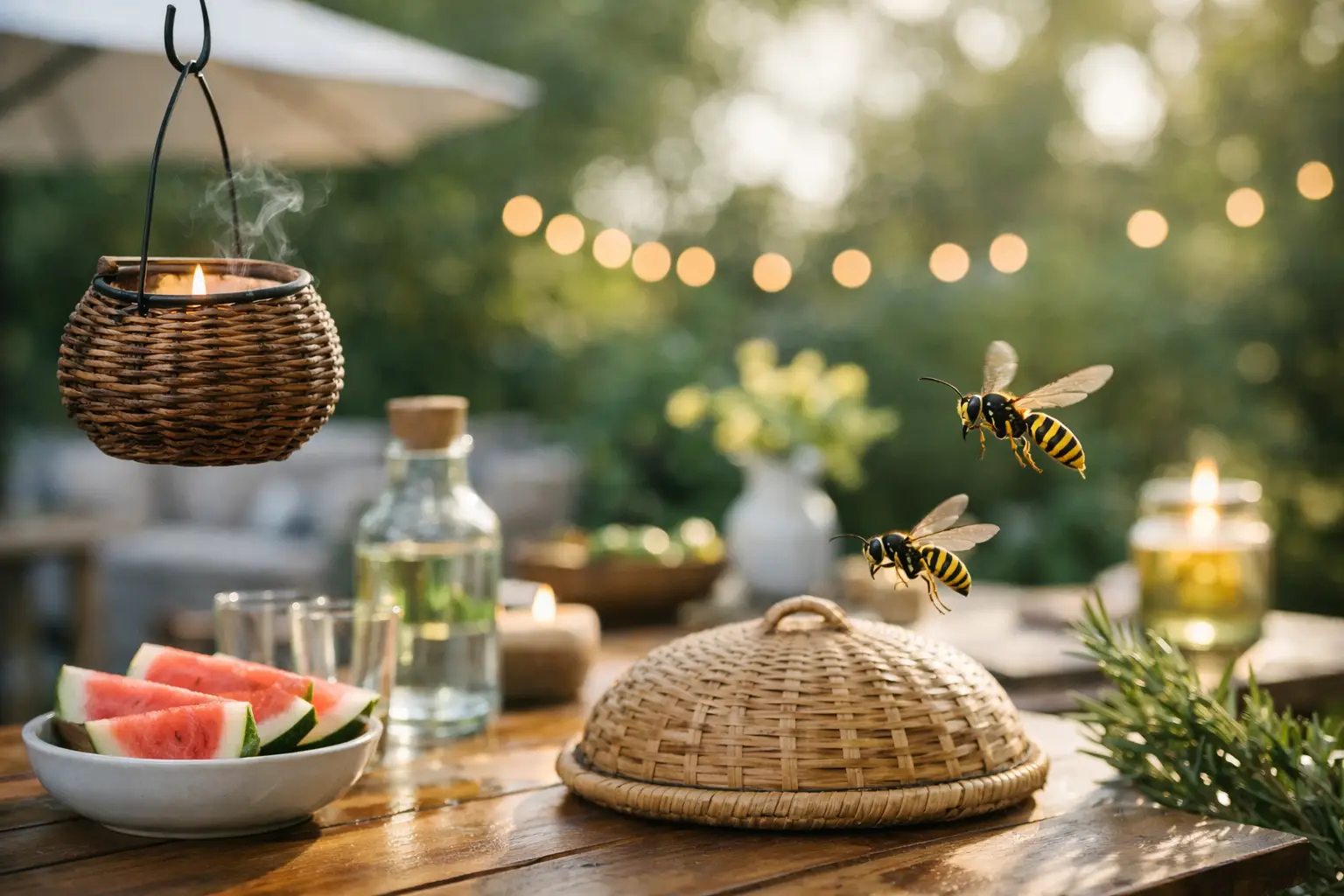
A backyard meal can go from relaxing to stressful fast when wasps start circling drinks, hovering over food, or building around the eaves. If you are wondering how to keep wasps away outdoors, the good news is that prevention usually works best when you combine a few simple habits with fast action around nesting spots.
Wasps are not randomly picking your patio. They are looking for sugar, protein, water, and sheltered places to build. That is why one yard can stay relatively calm while the house next door seems to attract them every afternoon. The difference usually comes down to food handling, moisture, and hidden nest activity.
How to keep wasps away outdoors starts with what attracts them
Most outdoor wasp problems begin with easy access to food. Sweet drinks, ripe fruit, barbecue grease, pet food, and open garbage all pull them in. In late summer and early fall, this gets worse because many wasps become more aggressive about searching for sugary foods.
If you eat outside often, clean-up speed matters more than most people think. A plate left on a patio table for 20 minutes can be enough to bring them over. The same goes for sticky spills on railings, outdoor kitchens, and kids’ cups. Wiping surfaces right away and clearing food as soon as the meal ends takes away the strongest reason for wasps to stay.
Garbage control also makes a big difference. Trash bins should stay closed tightly, and any residue around the lid needs to be washed off regularly. Recycling bins are another common trigger because soda cans, juice bottles, and food containers still hold sugary residue. Rinsing recyclables before they go outside can reduce activity around decks, garages, and side yards.
Water sources matter too. Birdbaths, clogged gutters, kiddie pools, and even dripping hose connections can give wasps a reliable place to drink. You do not need to remove every water feature, but you should avoid letting water sit close to seating areas.
Outdoor spaces that tend to attract wasps most
Certain parts of a property create better conditions for wasps than others. Rooflines, soffits, deck undersides, sheds, pergolas, fence posts, and outdoor light fixtures all offer some level of shelter. If the area is quiet, dry, and protected from wind, it becomes more attractive as a nest site.
Landscaping can also contribute. Dense shrubs near patios, overgrown hedges, fallen fruit, and unmaintained garden beds create cover and food at the same time. That does not mean you need a bare yard. It means trimming back the areas where wasps can hide and keeping ripe or rotting produce off the ground.
For commercial properties, the risk usually centers around dumpsters, loading zones, restaurant patios, and entrance areas where people carry drinks or food. One recurring issue in multi-unit buildings is that one poorly managed trash area can affect the whole property.
Practical ways to keep wasps away from patios, decks, and yards
The best prevention plan is usually layered. One tactic helps, but several used together work better.
Start with food protection. Keep drinks covered when possible, especially canned or bottled beverages that hide wasps inside the opening. Serve food in closed containers until people are ready to eat. If you are grilling, clean grease trays and cooking surfaces after each use instead of letting residue sit.
Next, reduce attractants around the perimeter. Pick up fallen fruit, store pet food indoors, and keep compost sealed if it contains food scraps. Check garbage bins weekly for spills or leaks. If a bin smells strong from a distance, it is already inviting wasps in.
Then look at the structure itself. Seal small gaps around siding, vents, and roof edges where possible, and inspect under railings, umbrellas, and play structures. Wasps often start with a small nest in a quiet spot before activity becomes obvious. Catching that early can prevent a much larger issue later in the season.
Air movement can help in seating areas. Wasps are not strong flyers in steady wind, so a fan on a patio or porch can make the space less comfortable for them. This will not solve a nesting problem, but it can make outdoor meals easier when wasp pressure is moderate.
Scent-based deterrents get mixed results. Some people use peppermint oil or similar natural repellents around seating areas, but these are usually short-term and need frequent reapplication. They may help a little in light-activity areas, but they are not reliable if there is an active nest nearby.
What not to do when wasps show up
A lot of outdoor wasp problems get worse because people react in ways that trigger defensive behavior. Swatting is the most common mistake. Fast movement can make wasps more aggressive, especially if they are already guarding a nest or competing for food.
Another bad idea is trying to knock down a visible nest during the day. That is when activity is highest, and the chance of multiple stings goes up fast. Spraying random areas without identifying the nest can also push the problem deeper into wall voids, rooflines, or structural gaps.
Homemade traps can help in some situations, but they are not a cure-all. In fact, poorly placed traps may draw more wasps into an area where people are sitting. If you use them, placement matters. They should go away from dining and gathering spaces, not beside them.
How to keep wasps away outdoors when nests are already present
Once there is an active nest on the property, prevention alone usually stops being enough. At that stage, the goal shifts from reducing attraction to removing the source safely.
Small early-stage nests are easier to deal with than mature colonies, but identification still matters. Not every stinging insect behaves the same way. Paper wasps, yellowjackets, and hornets have different nesting habits and different risk levels. Yellowjackets are especially troublesome because they may nest in the ground, inside wall voids, or in hidden structural spaces where people do not see them until someone gets stung.
If you notice repeated flight paths to the same hole, soffit, shrub, or section of deck, treat that as a warning sign. The same is true if wasps suddenly appear in large numbers around one part of the yard. At that point, keeping children and pets away from the area is the safest move until it can be inspected.
For homeowners and property managers, this is where professional help often saves time and risk. A licensed pest control technician can identify the species, locate the nest properly, and use treatment methods that are effective without creating unnecessary exposure for people or pets. Quality Pest Control GTA handles wasp and hornet issues with that exact balance in mind – fast response, safe treatment, and prevention steps that help reduce future activity.
Seasonal timing matters more than most people realize
Spring is the best time to prevent serious wasp problems. Queens start building early nests when temperatures rise, and those small nests are much easier to address before the colony expands. By midsummer, the population is larger. By late summer, they are often more aggressive around food.
This is why routine checks around eaves, sheds, decks, and fences are worth doing in spring and early summer. A quick inspection every couple of weeks can catch a problem before it affects daily use of the yard.
In the GTA and nearby areas, warm spells can push wasp activity earlier than expected. If you wait until peak barbecue season to look around, you may already be dealing with established nesting sites.
When outdoor wasps become a safety issue
Sometimes the question is not just how to keep wasps away outdoors. It is how to make the property safe again. That is especially true if someone in the home has a sting allergy, if tenants are reporting repeated activity, or if customers are being affected around entrances and patios.
Businesses have an added layer of urgency because visible wasp activity can quickly become a customer service and liability issue. Restaurants, daycare facilities, property management companies, and retail locations need more than temporary relief. They need the nest removed and the attractants managed so the issue does not keep returning.
The same logic applies to family homes. If wasps are active around play areas, pools, garden seating, or entryways, waiting it out usually is not the right call.
A smarter long-term approach
The most effective way to keep outdoor spaces comfortable is to think beyond quick fixes. Clean food areas promptly, manage trash and recycling, reduce standing water, trim back sheltered nesting zones, and check the property early in the season. If activity keeps returning, there is usually a nest nearby or an attractant that has been missed.
A calm yard is rarely an accident. It is usually the result of simple prevention done consistently and fast action when nesting starts. If wasps keep showing up around your home or business, getting expert help early is often the easiest way to protect the space before a minor nuisance turns into a bigger problem.

