
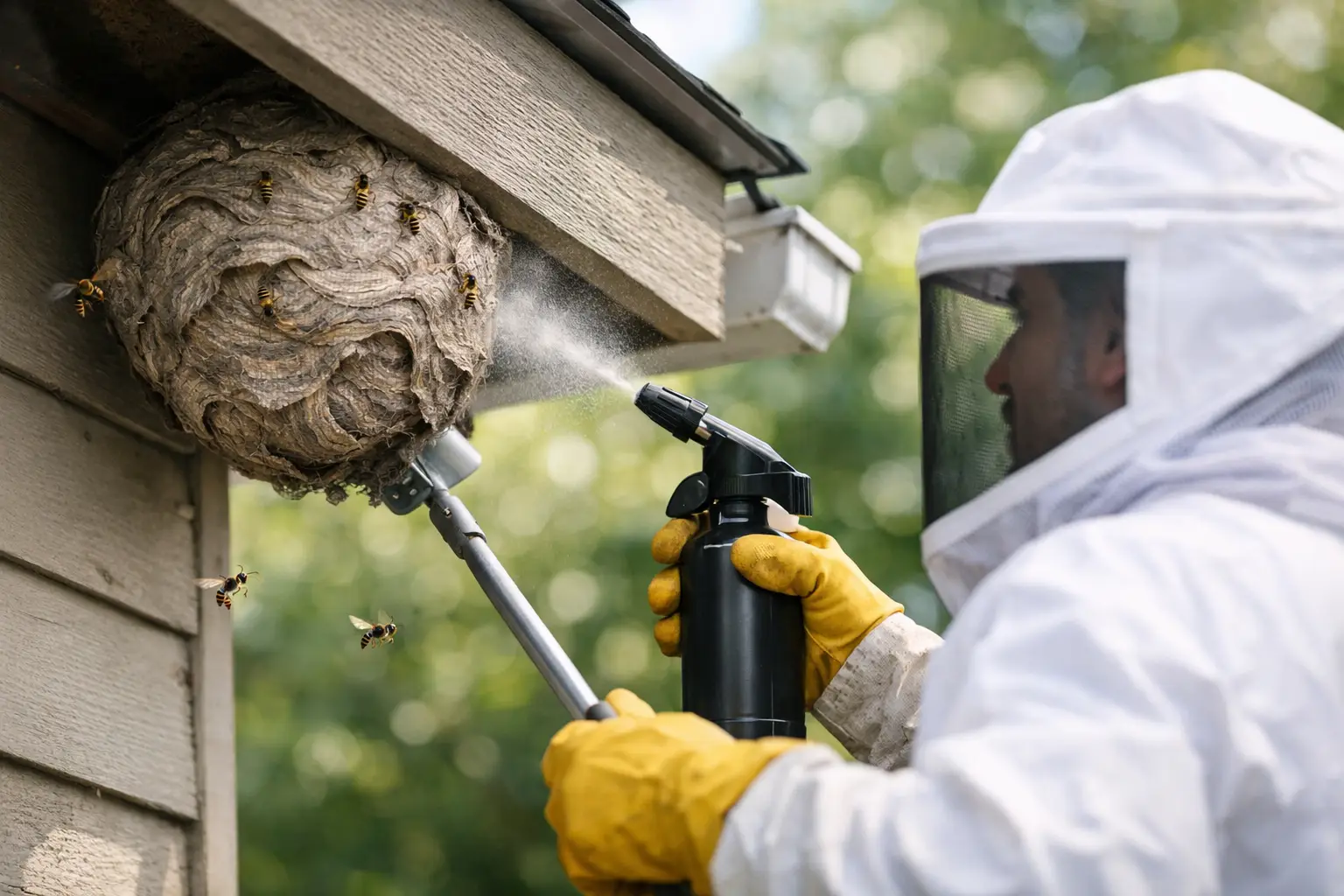
A wasp nest hanging over your front door or tucked under the eaves can turn a normal day into a problem fast. If you are searching for how to remove wasp nest safely, the first thing to know is simple – not every nest should be a DIY job, and acting too quickly can make the situation worse.
Wasps are defensive, fast, and unpredictable when their nest is disturbed. A small paper nest built early in the season is very different from a large, active colony in midsummer. The safest approach depends on the nest size, its location, how active the wasps are, and whether children, pets, tenants, or customers are nearby.
When removing a wasp nest is dangerous
The biggest mistake people make is assuming all nests can be knocked down with a broom, blasted with a hose, or sprayed from too close. That is how stings happen. It also often leaves part of the colony alive, which means the problem returns quickly.
A wasp nest is especially risky to handle on your own if it is inside a wall void, attic, soffit, roofline, garage, shed, or under a deck. These hidden nesting spots make it hard to see the full colony and hard to treat it properly. If you block the opening without removing the nest, wasps may look for another way out and end up inside your living space or business.
It is also not smart to attempt removal yourself if anyone on the property has a known allergy to stings. In those cases, speed matters, but safety matters more. A licensed pest control professional can remove the nest with the right products, equipment, and protective gear while reducing the risk to your family or staff.
How to remove wasp nest in low-risk situations
If the nest is very small, clearly visible, easy to access, and not located near a high-traffic area, some homeowners may choose to handle it carefully. This usually applies to early-stage paper wasp nests that have only a few wasps on them.
The timing matters. Wasps are less active in the early morning or at dusk, when temperatures are cooler and more of the colony is at the nest. Midday is the worst time to disturb an active nest because many wasps are alert and moving.
Before doing anything, wear thick clothing that covers your skin, along with gloves, long sleeves, long pants, closed shoes, and eye protection. You should also make sure you have a clear exit path. If the wasps become aggressive, you need to move away quickly without tripping over furniture, tools, or toys.
Use a product specifically labeled for wasps and follow the label instructions exactly. Spray from the recommended distance. Do not stand directly underneath the nest. After treatment, wait the full amount of time suggested on the product before approaching again. Rushing this step is one of the easiest ways to get stung.
Once there is no visible activity, the empty nest can usually be removed with a scraper or sealed in a bag and disposed of. Then clean the area. While old nests are not typically reused by the same colony, the location itself may attract new nest building if the space stays sheltered and undisturbed.
What not to do when trying to remove a wasp nest
If you want to know how to remove wasp nest problems without making them worse, it helps to know what to avoid. Never burn a nest. This is dangerous, can spread fire quickly, and often fails to eliminate the colony.
Do not hit the nest with a stick, broom, or hose. That only agitates the wasps and gives you very little control over what happens next. Vacuuming live wasps is also a poor idea unless it is being done by a professional using the right setup.
Another common mistake is sealing the entrance before the colony is treated. That can trap wasps inside walls and drive them into other parts of the property. The same goes for using random household chemicals that are not made for nest treatment. These methods are unreliable and can expose people and pets to unnecessary risk.
Signs you should call a professional right away
Sometimes the nest itself is only part of the issue. If you are seeing a steady stream of wasps entering a small gap in siding, brick, roofing, or trim, the nest may be hidden inside the structure. That is not a simple spray-and-remove situation.
You should also call for professional help if the nest is larger than a softball, if there are multiple nests, or if the wasps are swarming around doors, windows, garbage areas, outdoor dining spaces, or play areas. For businesses, especially restaurants, daycares, offices, and multi-unit properties, there is also a liability issue. A delayed response can expose customers, employees, or tenants to stings and complaints.
In these cases, licensed treatment is the safer and more reliable option. A professional can identify the species, treat the nest properly, remove it if needed, and help prevent future nesting in the same area. That matters because not every stinging insect behaves the same way. Paper wasps, yellow jackets, and hornets each bring different risks.
Why professional wasp nest removal is often the better value
DIY treatment can look cheaper at first, but that depends on the result. If the nest is not fully eliminated, if you buy multiple products, or if you end up needing help after getting stung or after the wasps move into a wall, the cost climbs quickly.
Professional service is often the better value because it deals with the source of the problem. It also saves time, avoids guesswork, and reduces the chance of repeat activity. For property managers and business owners, it is often the only practical choice because the problem needs to be handled quickly and with minimal disruption.
A reliable local provider like Quality Pest Control GTA focuses on safe, effective treatment with prevention in mind. That means not just killing visible wasps, but also checking for access points, nesting conditions, and nearby activity that could trigger another infestation.
How to prevent wasps from nesting again
After a nest is removed, prevention becomes the next priority. Wasps look for quiet, protected areas that offer shelter and nearby food or water. That is why roof edges, soffits, decks, sheds, and fence corners are common nesting spots.
Keep outdoor garbage sealed tightly and clean up sugary spills, fallen fruit, and food waste quickly. Inspect your property for gaps around vents, siding, utility lines, and roof edges. Repairing these openings can reduce the chances of hidden nesting.
It also helps to keep storage areas organized and limit undisturbed clutter in garages, sheds, and covered outdoor spaces. Early-season inspections are useful because catching a small nest in spring is much easier than dealing with a mature colony later in summer.
For commercial properties, routine pest inspections are even more important. Outdoor seating areas, dumpsters, loading zones, and entrances can all attract stinging pests. A prevention-focused service plan can help avoid emergency calls during the busiest part of the season.
How to remove wasp nest issues without risking your family
The safest answer is not always the fastest DIY method. If the nest is small and exposed, careful treatment may work. But if the nest is active, hard to reach, inside the building structure, or near people and pets, it is better to treat it as a serious pest issue and bring in a licensed expert.
That is especially true during peak wasp season, when colonies are larger and more aggressive. In neighborhoods across Toronto, Whitby, Pickering, Oshawa, and nearby service areas, wasp activity can escalate quickly in warm months. What starts as a minor nuisance can turn into a real safety concern in just a few weeks.
If you are unsure whether the nest is safe to handle, trust that instinct. Getting the right help early is usually the safest, most affordable move. A wasp problem should not force you to avoid your yard, worry about your kids, or put your customers on edge. The right response is the one that removes the threat fully and lets you use your space with confidence again.
When a nest appears, the goal is not just to get rid of it today. The goal is to solve the problem safely and make sure it does not come back in the same spot next week.

