
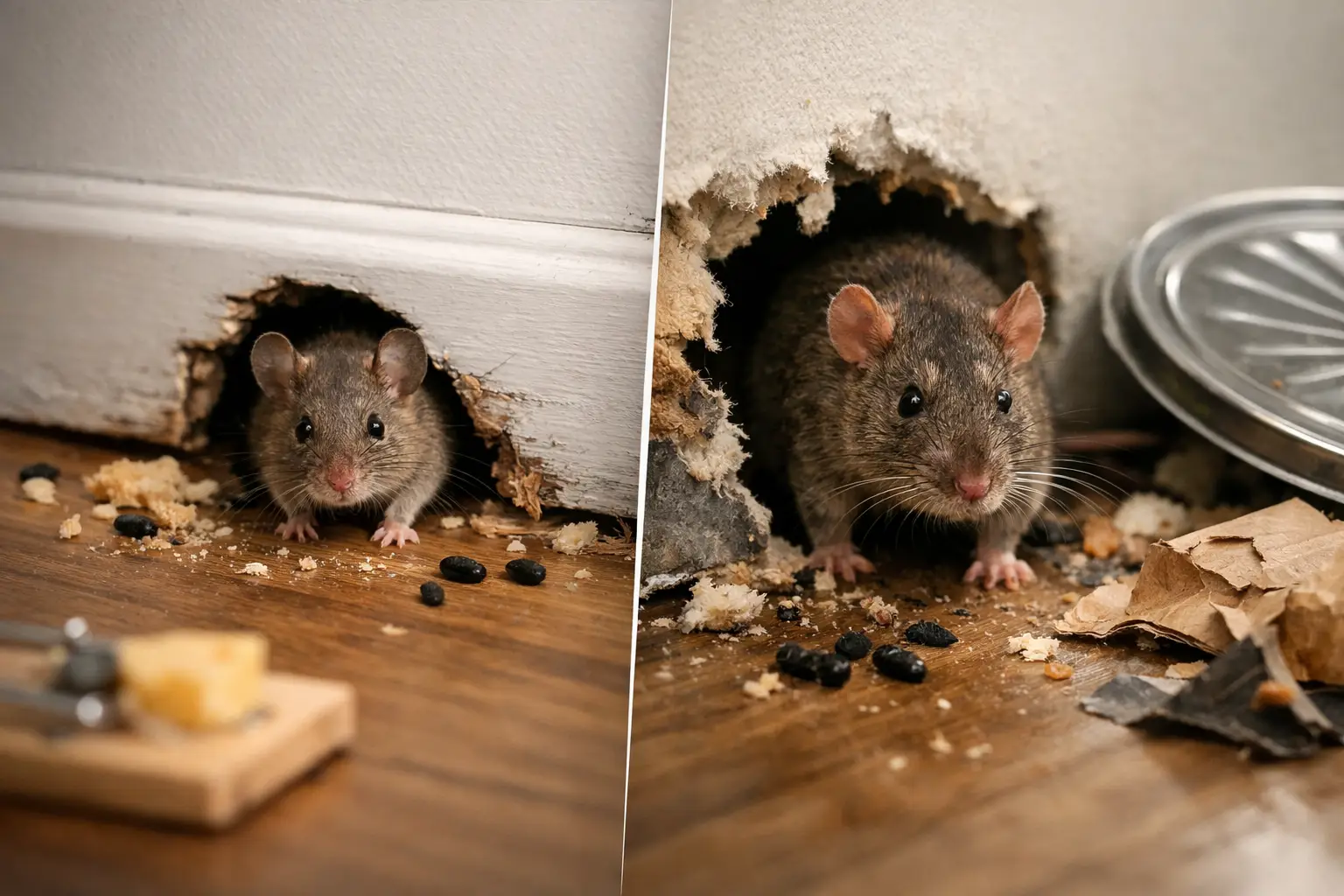
That tiny scratching sound behind a wall can mean very different things depending on whether the intruder is a mouse or a rat. Knowing the mice versus rats infestation signs helps you respond faster, protect food and wiring, and avoid using the wrong control method. Both rodents can contaminate surfaces and multiply quickly, but their size, habits, and damage patterns are not the same.
For homeowners, tenants, property managers, and business owners, the goal is not just to identify the rodent. It is to stop active activity, find how it entered, and prevent the next infestation from starting.
Why the Difference Between Mice and Rats Matters
Mice and rats both seek warmth, food, water, and shelter. In the GTA, activity often becomes more noticeable when temperatures drop, but rodents can enter properties at any time of year. A small mouse issue can become established in cupboards, wall voids, basements, or storage rooms before anyone sees an animal. Rats usually require more space and leave heavier evidence, but they can cause serious damage in a short period.
Identification affects treatment. A mouse can fit through an opening about the size of a dime, while rats need larger access points but can chew and widen weak materials. Bait placement, trap size, exclusion work, and inspection areas should match the rodent involved. Treating every rodent problem as the same often leads to a temporary reduction in sightings without solving the source.
Mice Versus Rats Infestation Signs: What to Look For
The most reliable answer comes from the evidence rodents leave behind. Look at droppings, gnaw marks, noises, travel routes, and the location of the activity rather than relying on a single sighting.
Droppings are often the clearest clue
Mouse droppings are small, usually about one-quarter inch long, and shaped like dark grains of rice with pointed ends. You may find them in drawers, under sinks, behind appliances, in pantry areas, or along baseboards. Fresh droppings are darker and may look slightly soft or shiny. Older droppings become dull, dry, and crumbly.
Rat droppings are noticeably larger. Norway rat droppings are blunt at both ends and can be around three-quarters of an inch long. Roof rat droppings tend to be narrower and more pointed. Large quantities near garbage storage, utility areas, crawl spaces, sheds, or commercial loading areas may indicate an established rat route.
Do not sweep or vacuum dry rodent droppings. Disturbing them can send contaminated dust into the air. Wear gloves, ventilate the area, apply an appropriate disinfectant, allow it to sit, then carefully wipe up the material and dispose of it in a sealed bag.
The sounds can point to the pest
Mice make light scratching, scurrying, and squeaking sounds. They are often active at night and may be heard in ceilings, kitchen walls, or behind cabinets. Their movement can sound quick and delicate.
Rats are heavier. Their activity may sound like thumping, louder scratching, gnawing, or movement in an attic, suspended ceiling, basement, or wall cavity. A repeated heavy noise after dark, especially near plumbing or garbage areas, deserves prompt attention.
Sounds alone cannot confirm the species. Squirrels, birds, and other wildlife can also make noise in attics. A professional inspection can identify the animal and make sure no entry points are missed.
Gnawing and property damage reveal their size
Both rodents constantly gnaw because their teeth continue growing. Mice leave fine, small chew marks on food packaging, cardboard, paper, plastic, and light wood. They may shred insulation, fabric, paper towels, or nesting material inside drawers and storage boxes.
Rats leave bigger, rougher damage. They can chew through thicker plastic, wood, damaged screens, and vulnerable wiring. Rat damage may include gnawed pipes, torn garbage bags, damaged pet-food containers, or sizeable holes near floor level. Chewed electrical wiring is especially urgent because it creates a fire risk.
Where you find activity matters
Mice usually stay close to food and nesting sites. In a home, that often means kitchens, pantries, laundry rooms, utility closets, garages, and basement storage. They can climb, but they commonly travel along edges and hide in tight, quiet spaces.
Norway rats are more likely to be found at ground level, in basements, crawl spaces, drains, garbage areas, and around foundations. Roof rats are more likely to climb and may be found in upper floors, attics, rafters, or ceiling voids. In commercial properties, rats may travel behind equipment, near dumpsters, in stock rooms, or along exterior service areas.
Greasy rub marks are another useful sign. Rats often leave dark, oily marks along walls, pipes, and travel routes because their bodies repeatedly brush against the same surfaces. Mice can leave rub marks too, but rat marks are usually more obvious.
Signs You May Have a Growing Rodent Problem
Seeing one mouse does not always mean there is only one mouse. The same is true for rats. Rodents are cautious and mainly active when people are asleep or rooms are quiet. If you are seeing them during the day, finding fresh droppings repeatedly, or hearing movement in several areas, the population may be growing.
Watch for a persistent musty odor, torn food packaging, nesting materials, pet agitation near a wall, unexplained holes, or droppings that return after cleaning. In rental properties and multi-unit buildings, activity may move between units through pipe openings, utility lines, shared walls, and hallways. Treating one unit without inspecting connected areas can allow the issue to continue.
Businesses should take early signs seriously. A single dropping in a food storage, restaurant, retail, warehouse, or office setting can create sanitation concerns and damage customer confidence. Fast documentation, cleanup, inspection, and corrective action are better than waiting for visible rodent activity.
What Attracts Mice and Rats?
Rodents are practical. Accessible food, water, and shelter are enough to keep them nearby. Crumbs under appliances, open pet-food bags, overflowing trash, bird seed, cluttered storage, leaking pipes, and gaps around utility lines all make a property more inviting.
Outdoor conditions matter as well. Dense vegetation touching a building, firewood stacked against the home, unsealed sheds, damaged foundation vents, and overflowing bins can give rodents cover before they find an entry point. Rats may also be drawn to poorly maintained garbage areas and standing water.
Cleanliness helps, but it is not a complete solution. Even very clean homes can have rodent activity when exterior gaps, construction openings, or shared building pathways provide easy access.
Safe Steps to Take Before Professional Treatment
Start by protecting food. Place dry goods, snacks, and pet food in hard-sided containers with secure lids, and remove food debris from counters and floors. Empty indoor trash regularly and make sure outdoor bins close tightly.
Next, reduce access where you can safely do so. Check door sweeps, damaged screens, garage-door edges, and visible gaps around pipes or cables. Avoid sealing an opening if you suspect rodents are currently trapped inside a wall or attic. That can push them deeper into the structure or create odor problems later.
Store boxes off the floor where possible and reduce clutter in basements, garages, and utility rooms. If you use traps, keep them away from children and pets and check them frequently. Avoid scattering poison indoors. Rodenticides can create risks when used incorrectly and may leave a rodent inaccessible inside a wall after it dies.
How Professional Rodent Control Solves the Full Problem
Effective rodent control is more than setting a few traps. A licensed technician begins with an inspection to determine whether the evidence points to mice, rats, or another pest. The inspection should assess nesting areas, food sources, travel paths, exterior entry points, and conditions that may be supporting the infestation.
Treatment may include targeted trapping, secured bait stations where appropriate, sanitation recommendations, and exclusion work to block access. The right plan depends on the property, the level of activity, the presence of children or pets, and whether the issue is residential or commercial. Follow-up is important because new droppings, bait activity, and trap results show whether the control program is working.
Quality Pest Control GTA provides reliable, eco-friendly pest management focused on both removal and prevention. For urgent mouse or rat activity in Toronto, Scarborough, Etobicoke, Aurora, Whitby, Pickering, Oshawa, or Bowmanville, a prompt inspection can prevent a small warning sign from becoming extensive property damage.
Frequently Asked Questions
Can mice and rats live in the same property?
Yes, although they often compete for food and shelter. Larger rat activity may discourage mice in some areas, but a property with multiple entry points, ample food, and hidden voids can support both. An inspection is the best way to confirm what is present.
Are rat droppings always larger than mouse droppings?
Generally, yes. Rat droppings are substantially larger, but size alone is not enough when droppings are old, broken, or mixed with other debris. Location, shape, and nearby damage provide a more accurate picture.
How quickly should I act after finding droppings?
Act immediately. Clean the area safely, protect food, and monitor for fresh evidence. If droppings return, you hear noises, or you find chewed wiring or multiple activity areas, arrange professional rodent control without delay.
A quiet house should stay quiet. When fresh droppings, gnaw marks, or nighttime scratching appear, treat them as an early warning and address the entry point before rodents turn your walls, pantry, or business into a permanent shelter.

