
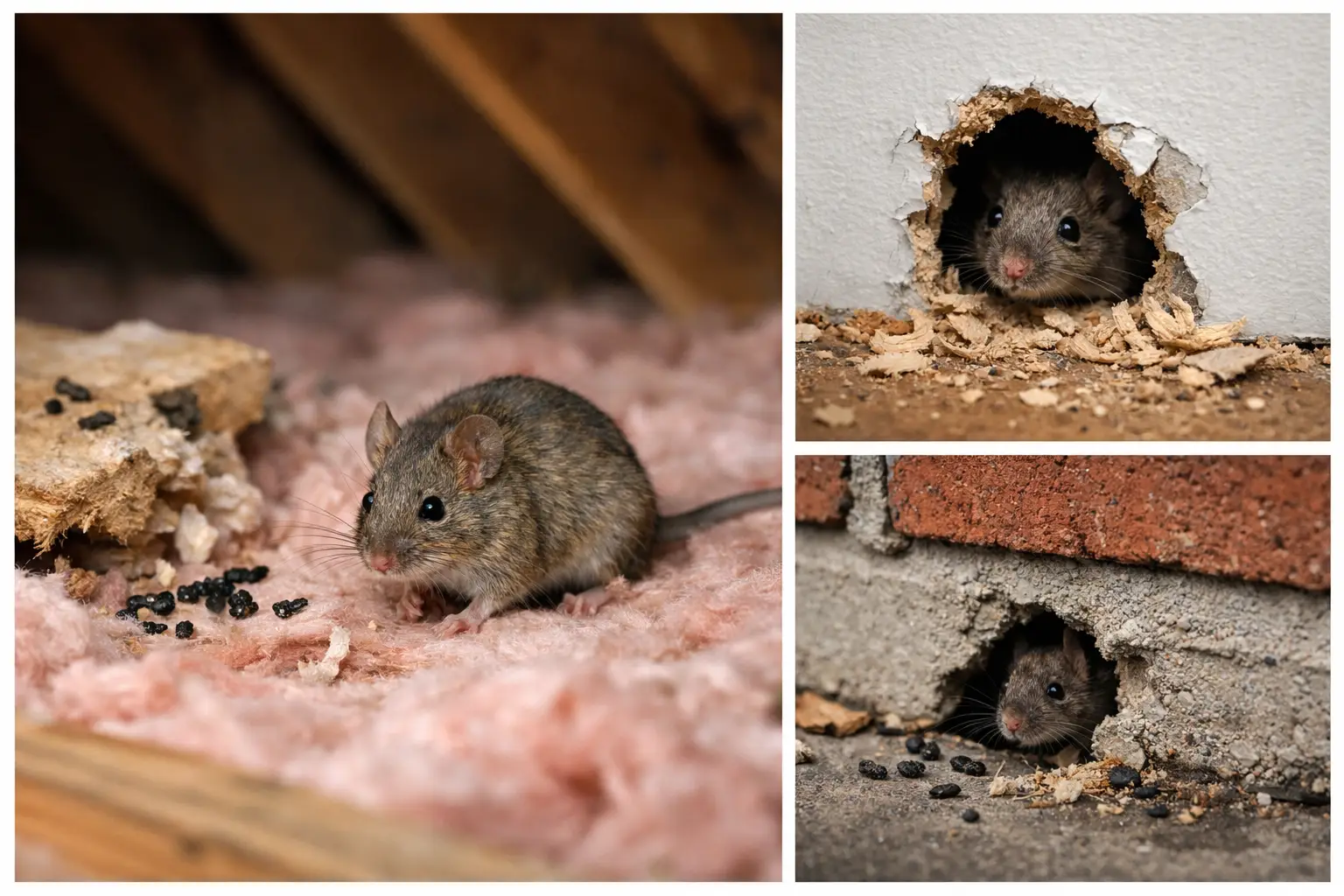
A faint scratching sound above the ceiling at night is easy to dismiss once. Hear it again, find a few dark droppings near a cupboard, or notice a stale odor in a storage room, and it is time to take it seriously. Knowing the signs of mice, whether you suspect mice in attic spaces or mice in walls, starts with understanding how mice enter homes and why they stay.
Mice are not just a seasonal nuisance. In GTA homes and businesses, they can contaminate food, damage insulation and wiring, and reproduce quickly in quiet, protected spaces. Acting early keeps a small entry problem from becoming a larger infestation that affects multiple rooms.
The Early Signs of Mice in Your Home
Mice are most active after dark, so homeowners often notice evidence before they see an actual mouse. Fresh droppings are one of the clearest signs. They are small, dark, and rice-shaped, commonly found behind appliances, under sinks, in pantries, along baseboards, and near pet food. Fresh droppings look darker and may appear slightly soft, while older droppings become dry and gray.
A persistent musty or ammonia-like smell can also point to an active nesting area. This odor is often stronger in enclosed places such as kitchen cabinets, utility rooms, crawl spaces, and closets. In a heavier infestation, you may notice the smell before you locate the source.
Other warning signs usually include:
- Scratching, squeaking, or light scurrying sounds in ceilings and walls, especially overnight.
- Chewed food packages, electrical cables, plastic containers, wood trim, or stored belongings.
- Shredded paper, fabric, insulation, or cardboard gathered into a nest.
- Rub marks or greasy streaks along walls, pipes, and baseboards where mice repeatedly travel.
One sign alone does not always confirm an infestation. A single old dropping in a garage, for example, may not mean mice are currently living inside. Multiple fresh signs, recurring sounds, or activity in more than one area usually means prompt treatment is needed.
Mice in Attic Spaces: Why They Choose Them
An attic offers mice privacy, warmth, and nesting material. Insulation, cardboard boxes, seasonal decorations, and stored fabrics give them everything they need to build a nest. Once inside, they can travel down wall voids to kitchens, basements, and living areas without being seen.
The most common sign of mice in attic areas is nighttime movement above the ceiling. It may sound like light scratching, tapping, or quick running. You may also find disturbed insulation, droppings around the attic hatch, chewed storage bins, or small nests tucked near framing and vents.
Do not assume every attic noise is a mouse. Squirrels and raccoons are generally louder, and they are often active during daylight. Mice tend to create quieter, rapid sounds after dark. A licensed pest professional can identify the animal and avoid using a treatment that does not address the actual problem.
Attic infestations deserve quick attention because mice can soil insulation with urine and droppings, chew electrical wiring, and move deeper into the home. Trapping a few mice without sealing their access points may reduce activity temporarily, but it will not stop new rodents from entering.
Mice in Walls Can Stay Hidden for Weeks
Wall voids are protected pathways between an attic, basement, kitchen, and other rooms. Mice may nest behind drywall near a heat source or use walls as travel routes to food and water. This is why a customer might hear activity in a bedroom wall while finding droppings only under the kitchen sink.
Listen for scratching or movement that follows a regular nighttime pattern. Pay attention to activity near plumbing lines, heating vents, electrical outlets, and the spaces behind large appliances. A new odor, tiny droppings near baseboards, or insects gathering around a wall opening can also suggest a hidden nesting area.
Avoid sealing a suspected active wall opening before the infestation is assessed. If mice are trapped inside, they may chew a new exit route, damage more materials, or die in an inaccessible space. The better approach is to remove the active population, identify the travel routes, and then complete exclusion work carefully.
How Mice Enter Homes
A mouse can fit through an opening roughly the width of a pencil. That makes small gaps around pipes, vents, foundations, and doors much more serious than they look. Cooler weather often drives mice indoors, but they can enter at any time of year when food, water, and shelter are available.
Common entry points include gaps around utility lines, cracks in foundations, loose weather stripping, damaged door sweeps, open garage corners, and unprotected vents. Mice may also climb exterior brick, siding, trees, downspouts, or utility cables to reach rooflines and attic vents.
In older homes, settling and worn building materials can create gaps that are easy to miss. In newer homes, construction gaps around plumbing and electrical penetrations are often the issue. Property managers should also check shared utility rooms, garbage areas, loading spaces, and gaps between units, since mice can move through connected buildings.
A thorough inspection looks beyond the room where activity was noticed. The goal is to find the entry point, the nesting area, and the routes mice use inside. This prevention-focused process is what reduces the chance of repeat activity.
What to Do When You Find Signs of Mice
Start by protecting food. Store dry goods, pet food, and birdseed in hard, sealed containers, and clean crumbs or spills promptly. Avoid leaving pet bowls out overnight. Reducing food access helps, but it is not a complete solution if mice are already nesting in walls or an attic.
Next, document what you find. Note where droppings appear, when noises occur, and whether activity is getting worse. This information helps identify the likely travel route. When cleaning droppings, do not sweep or vacuum them dry, as this can stir contaminated particles into the air. Ventilate the area, wear gloves, dampen the droppings with disinfectant, wipe them up with paper towel, and dispose of the waste in a sealed bag.
Store-bought traps can help with a small, visible problem, but they have limits. They do not identify hidden entry points, and placing them incorrectly can leave activity untouched. Poison is also a poor choice for many homes and businesses because rodents can die inside inaccessible walls, creating odor issues, while children, pets, and non-target animals may be exposed.
Professional mice control is especially worthwhile when you hear activity in walls or ceilings, find repeated droppings, manage a multi-unit property, or have tried traps without lasting results. A licensed technician can inspect the property, use targeted control methods, identify access points, and recommend practical exclusion repairs. Quality Pest Control GTA provides reliable, eco-friendly mice control designed to remove the active problem and help keep rodents out.
Frequently Asked Questions
Are mice in the attic dangerous?
They can be. Mice may contaminate insulation and stored items with urine and droppings, and their chewing can damage electrical wiring. The longer activity continues, the more likely they are to spread into wall voids and living areas.
Can mice come through vents?
Yes. Damaged screens, poorly fitted vent covers, and gaps around roof or dryer vents can provide access. Vents must remain functional, so any exclusion work should use appropriate materials and avoid blocking airflow.
Why do I hear mice but cannot find droppings?
The nesting area may be inside a wall or attic, while droppings are limited to a different feeding route. It is also possible the sound is another animal. An inspection can confirm what is active and where it is entering.
How quickly can a mouse problem grow?
Mice reproduce rapidly under favorable conditions. A small number can become a larger infestation within a matter of months, particularly where food is accessible and nesting areas are undisturbed.
If you hear scratching tonight or find fresh droppings tomorrow, treat it as an early warning, not something to wait out. Fast inspection, careful removal, and properly sealed entry points give your home or business the best chance of staying clean, safe, and mouse-free.

