
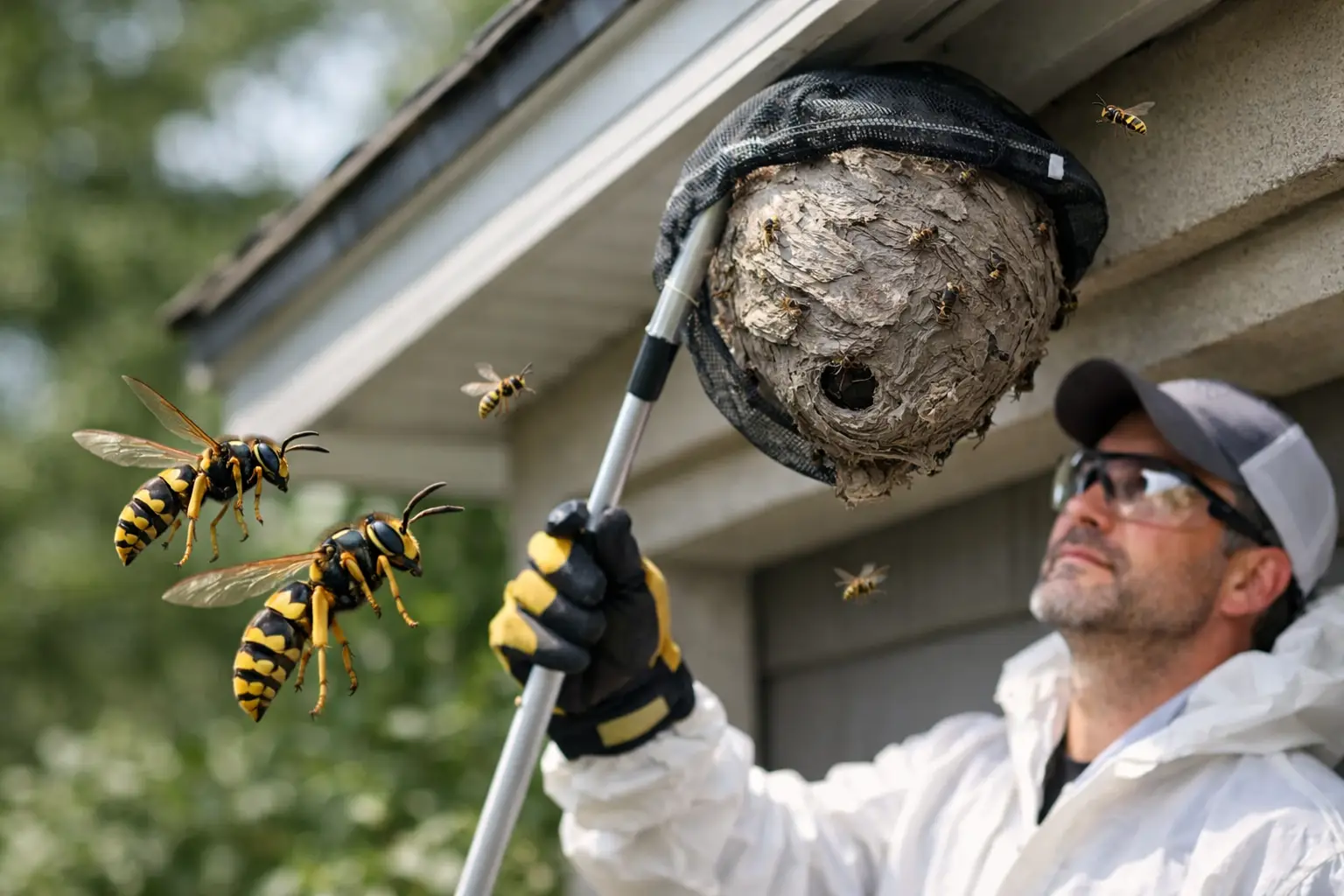
A wasp nest can start as a small paper-like shape under an eave and become a serious concern within weeks. For homeowners searching for wasps Toronto services, the goal is usually simple: protect children, pets, tenants, customers, and outdoor spaces without taking risks around an active colony.
Wasps are common across Toronto during the warmer months, especially near homes with sheltered rooflines, decks, sheds, gardens, garbage areas, and outdoor dining spaces. Seeing one or two wasps does not always mean there is a nest on your property. Repeated traffic to one opening, corner, or structure is different. That activity often points to a nearby nest that needs attention.
When Wasps Become a Property Safety Problem
Wasps are beneficial predators in nature, but they become a problem when they build close to people. A nest beside a front entrance, playground, patio, balcony, service door, or dumpster can make normal daily activity stressful. Yellowjackets, in particular, can defend their nest aggressively when disturbed.
The risk is higher for anyone with a known allergy to stinging insects. Even without an allergy, multiple stings can require medical attention. Businesses also face practical concerns: a visible wasp problem near customers, food areas, loading docks, or staff entrances can lead to complaints and interrupt operations.
Toronto properties often provide the protected cavities wasps prefer. They may nest behind siding, inside wall voids, under decks, beneath roof overhangs, in sheds, or underground in old rodent burrows. These hidden locations are a major reason not to assume a nest is small or easy to remove.
Signs There Is a Wasp Nest Nearby
The clearest sign is steady wasp activity along the same flight path. You may notice insects entering a gap near a soffit, disappearing under deck boards, or flying into a hole in the ground. Activity is often busiest during sunny daytime hours, although a colony may remain active until evening.
Other signs include a visible gray or brown paper nest, buzzing behind a wall or ceiling, wasps gathering around garbage bins, and increased activity around sweet drinks, ripe fruit, pet food, or outdoor eating areas. In late summer, colonies can become more noticeable as their food-seeking behavior changes and the nest population reaches its peak.
Do not block an entrance hole if you suspect wasps are nesting inside a wall. Sealing the opening can force wasps into living areas or cause them to find another exit. A professional inspection identifies the nest location and the safest treatment approach before exclusion work is completed.
Why DIY Wasp Removal Often Goes Wrong
It is understandable to want a quick fix when wasps are near your home. However, swatting at the insects, spraying a nest at close range, using fire, flooding a ground nest, or knocking down a visible nest can trigger a defensive swarm. These actions are especially risky on ladders, near doors, or around children and pets.
Store-bought sprays may work on a very small, fully exposed nest when used exactly as directed, but there are trade-offs. The user still needs to get close, treatment may not reach the entire colony, and a nest hidden in a wall or roofline cannot be safely handled this way. An incomplete treatment can leave active wasps behind and create a recurring problem.
Professional wasp control is the better option when the nest is large, elevated, concealed, located near a high-traffic area, or associated with repeated stinging. Licensed technicians use appropriate protective equipment and targeted products to treat the colony while limiting unnecessary exposure around your property.
Professional Wasp Nest Removal in Toronto
A proper wasp service starts with identifying where the insects are entering, nesting, and foraging. Different species use different nesting sites, so the solution depends on the problem. A paper wasp nest under an eave is handled differently from yellowjackets nesting underground or wasps entering a wall cavity.
The technician evaluates access, nest location, colony activity, and the people or animals who use the affected area. Treatment is selected to control the active colony safely and effectively. For a nest in a wall void, the focus is on treating the colony through the correct access point rather than opening up the wall unnecessarily.
After activity has stopped, recommendations may include sealing gaps around soffits, vents, utility lines, siding, decks, and exterior fixtures. Timing matters. Sealing a gap too early can trap wasps indoors, while waiting too long can allow a new colony to establish. A professional can advise when repairs can be completed safely.
Quality Pest Control GTA provides reliable wasp nest removal for residential and commercial properties, with practical recommendations to help reduce future nesting opportunities. For an active nest near an entrance, deck, school area, restaurant patio, or workplace, prompt service is the safest choice.
Wasp Prevention for Homes and Businesses
No prevention plan can guarantee that a queen will not investigate your property in spring. However, reducing food sources and protected nesting spots makes a meaningful difference. Start in early spring, when queens are searching for locations to establish new colonies.
Keep garbage and recycling containers closed, and rinse sugary drink containers before placing them outside. Clean spills around patios, outdoor kitchens, and commercial waste areas. If your business has outdoor dining, clear food debris promptly and monitor bins throughout the day.
Inspect exterior areas for small gaps under roof edges, loose siding, damaged window screens, and openings around pipes or cables. Repairing these areas can reduce access to wall voids and attics. Keep vegetation trimmed away from buildings where possible, and avoid leaving fallen fruit on the ground for long periods.
For properties with recurring wasp activity, regular exterior inspections are useful. This is especially true for apartment buildings, restaurants, warehouses, daycare facilities, and homes with large decks, sheds, or mature landscaping. Catching a new nest early is usually simpler and less disruptive than dealing with a mature colony later in the season.
What to Do If Someone Is Stung
Move away from the area calmly, as other wasps may still be defending the nest. Wash the sting site with soap and water, apply a cold pack wrapped in a cloth, and monitor symptoms. Avoid scratching, which can irritate the skin further.
Call emergency services immediately if the person has trouble breathing, swelling of the lips, tongue, or throat, dizziness, widespread hives, vomiting, or signs of a severe allergic reaction. People who have been prescribed an epinephrine auto-injector should follow their medical plan and seek urgent care after using it.
FAQs About Wasps in Toronto
Are wasps active at night?
Most wasps are far less active after dark, but that does not make nighttime nest removal safe for an untrained person. Disturbing a nest can still lead to stings, and poor visibility creates additional hazards around ladders, rooflines, and uneven ground.
Will wasps return after the nest is removed?
The same colony generally will not rebuild in the exact nest after it has been properly treated and removed. However, new queens may choose a nearby protected area in a later season if gaps, food sources, and shelter remain available.
Can wasps nest inside walls?
Yes. Wasps can enter through small exterior gaps and build nests in wall voids, attics, and other enclosed spaces. You may hear buzzing or see repeated traffic at a single crack or vent. Avoid sealing the entry point until the active colony has been professionally addressed.
How quickly should an active nest be treated?
A nest near a door, deck, play area, business entrance, or outdoor dining space should be addressed as soon as possible. If there has been stinging, visible aggression, or a person with a sting allergy is nearby, treat the situation as urgent.
A wasp problem does not need to take over your summer plans or disrupt your business. Keep people away from the nest area, avoid DIY actions that can provoke the colony, and arrange a professional inspection so your property can be safe and usable again.

