
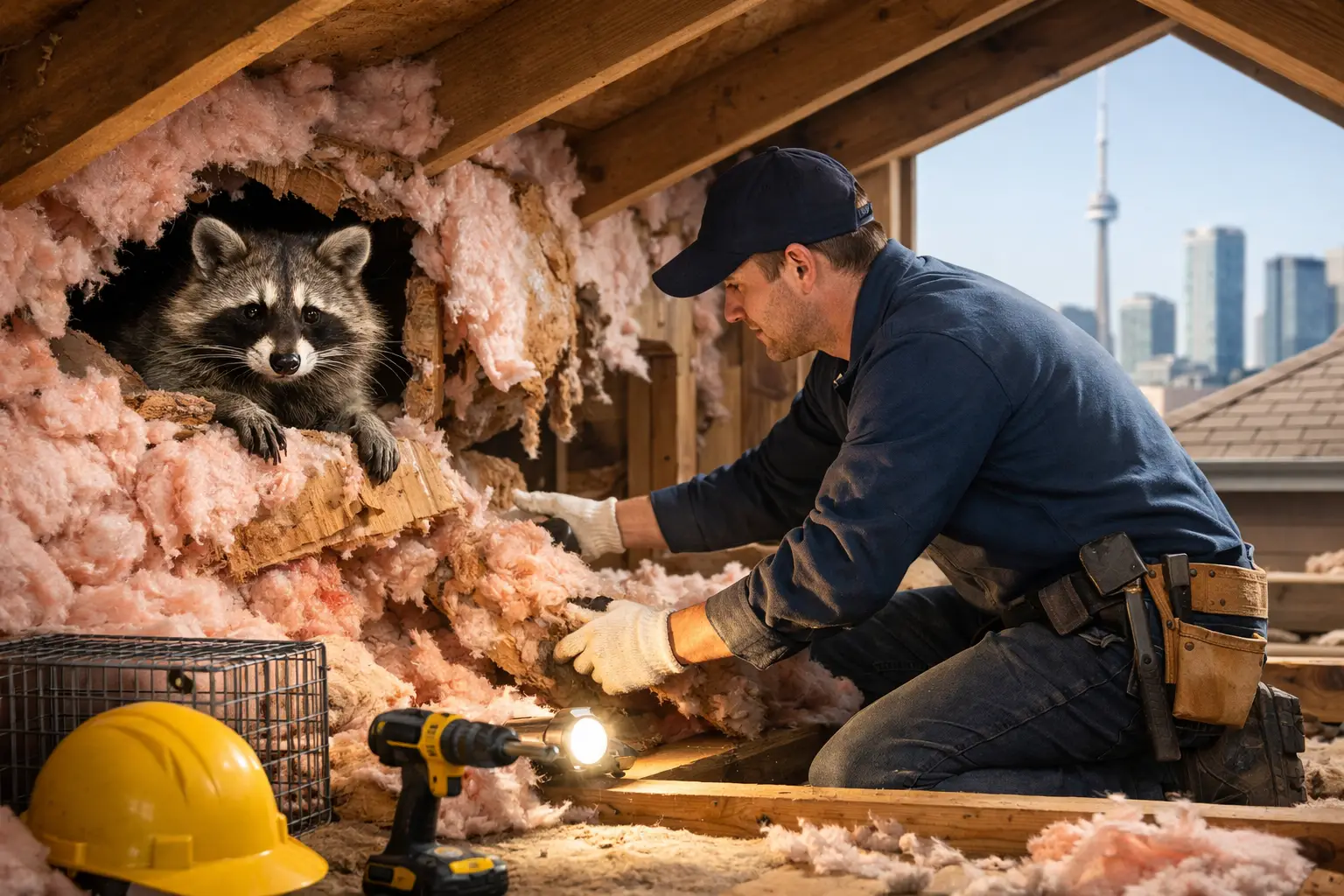
A raccoon in the attic can turn a quiet home into a noisy, expensive problem overnight. Scratching above the ceiling, heavy thumping after dark, torn soffits, and a strong odor are all reasons to arrange raccoon attic repair quickly. The goal is not simply to get the animal out. Proper repair means removing the raccoon humanely, preventing re-entry, cleaning contamination, and restoring the damaged areas that made your home vulnerable.
For homeowners in Toronto, Scarborough, Etobicoke, Pickering, Whitby, Oshawa, and nearby communities, early action can prevent a single wildlife entry from becoming a larger insulation, odor, and structural repair project.
Why raccoons cause serious attic damage
Raccoons are strong, intelligent animals with capable front paws. They can pull apart loose soffits, lift damaged roof vents, widen gaps around fascia boards, and force their way through weak sections of roofing. Once inside, an attic provides warmth, darkness, and protection from weather and predators.
The damage often goes beyond the entry hole. Raccoons may flatten or tear insulation while creating a nesting area. They can leave droppings and urine across insulation and ceiling joists, damage ductwork, chew wiring, or disturb stored items. If a female has babies in the attic, activity may continue for weeks, and sealing the opening too early can create a worse problem.
That is why effective raccoon attic repair follows a specific order: inspect, remove or exclude the wildlife safely, confirm all animals are out, clean the affected space, repair the entry point, and protect other likely access areas.
Signs you need raccoon attic repair
Raccoons are much heavier and louder than mice, rats, or squirrels. You may hear distinct walking, thumping, or dragging sounds, especially around dusk, overnight, and early morning. Activity can be louder during spring and early summer when raccoons may be raising young.
Outside, look for bent roof vents, torn aluminum soffits, loose shingles, damaged eaves, claw marks, or a visible gap near the roofline. On the inside, a new ceiling stain, persistent urine smell, insulation falling through a ceiling fixture, or an unexplained insect problem can point to attic contamination.
Do not assume the animal has left just because the noise stops. Raccoons often leave to forage and return later. A professional inspection identifies active entry points and helps determine whether babies may still be inside.
What professional raccoon attic repair includes
A careful attic and exterior inspection
A licensed wildlife technician begins by checking the roofline, vents, chimney area, soffits, siding transitions, and other vulnerable points. Inside the attic, the technician looks for tracks, nesting material, droppings, damaged insulation, and signs that more than one animal is present.
This inspection matters because a repaired hole is only useful if it was the actual access point. Raccoons commonly use one opening while testing or enlarging other weak areas nearby.
Humane removal and exclusion
The raccoon must be out before the opening is permanently sealed. Depending on the situation, this may involve a one-way exclusion device that lets the animal leave but prevents it from returning. When babies are present, removal needs to be handled with extra care so no young are left trapped in the attic.
Avoid blocking an entry hole with foam, wood, or metal while you still hear activity. A trapped raccoon may tear through another part of the roof or wall, and an animal that dies inside can lead to severe odor and insect issues.
Entry-point repair and wildlife-proofing
After the attic is confirmed clear, the damaged entry area is repaired with materials that can withstand wildlife pressure. This may include reinforcing roof vents, replacing damaged soffit sections, securing fascia gaps, repairing loose flashing, or covering vulnerable openings with appropriate heavy-gauge screening.
A reliable repair is more than a cosmetic patch. It should fit the construction of the home, keep out raccoons and other wildlife, and allow normal roof and attic ventilation to continue.
Cleanup and insulation restoration
Raccoon waste can contaminate insulation and create lingering odors. In some cases, only a small section of insulation needs to be removed. In heavier infestations, affected insulation may need more extensive replacement after cleaning and disinfecting the attic surfaces.
The right scope depends on the amount of contamination, how long the raccoon was present, and whether urine has soaked into building materials. A professional can explain what requires immediate removal and what can be safely restored, helping you avoid unnecessary costs without leaving behind a sanitation problem.
Why DIY attic raccoon removal can backfire
It is understandable to want a fast fix when you hear an animal overhead. However, raccoons can bite or scratch when cornered, especially when protecting young. They may also carry parasites and leave waste that should not be handled without proper protective equipment.
DIY traps and hastily sealed holes can separate a mother from her babies, leave an animal trapped in the attic, or result in repeat entry through a second weak spot. There are also local wildlife rules that affect how animals can be handled and relocated.
Homeowners can safely document the issue by taking photos of exterior damage from the ground, noting when noises occur, and keeping pets away from the suspected entry area. Leave attic entry, handling, cleanup, and exclusion work to trained wildlife professionals.
How to prevent raccoons from returning
Raccoon prevention starts with closing access to food and shelter around the property. Secure garbage bins with tight-fitting lids and avoid leaving pet food outdoors overnight. Clean up fallen fruit, keep compost contained, and make sure bird feeders are not easily accessible from a roof, fence, or tree branch.
Trim branches that provide an easy route to the roof, but remember that raccoons are excellent climbers and may still use downspouts, fences, or nearby structures. Regularly inspect your roofline after storms and seasonal temperature changes. Small loose sections of soffit, deteriorating wood, and unprotected vents are easier and more affordable to address before wildlife finds them.
Property managers should also respond quickly to tenant reports of attic noise, odors, or roof damage. Delays can increase cleanup costs and may lead to moisture, flies, and secondary pest concerns in the building.
Frequently asked questions about raccoons in attics
Will a raccoon leave the attic on its own?
It may leave temporarily to search for food, but that does not mean it has abandoned the attic. If the space is warm, dry, and accessible, the raccoon may return repeatedly. A mother with babies is especially likely to stay nearby until the young are old enough to leave.
Can I repair the roof before raccoon removal?
Temporary weather protection may be necessary if there is an active leak, but permanent repairs should wait until a technician confirms the attic is clear. Sealing an active entry point can trap wildlife inside and lead to more damage.
How long does raccoon attic repair take?
A straightforward exclusion and exterior repair may be completed quickly, while cleanup and insulation replacement can take longer. The timeline depends on the number of entry points, the presence of babies, and the level of attic contamination.
Does homeowners insurance cover raccoon damage?
Coverage varies by policy and by the type of damage. Sudden damage from an event may be treated differently from gradual deterioration or maintenance-related issues. Document the damage with photographs and contact your insurer to review your specific coverage.
If you suspect a raccoon has entered your attic, treat the issue as a repair and prevention job, not just an animal removal call. Quality Pest Control GTA can assess the entry point, provide humane wildlife exclusion, and help protect your home from another unwanted attic visitor.

