
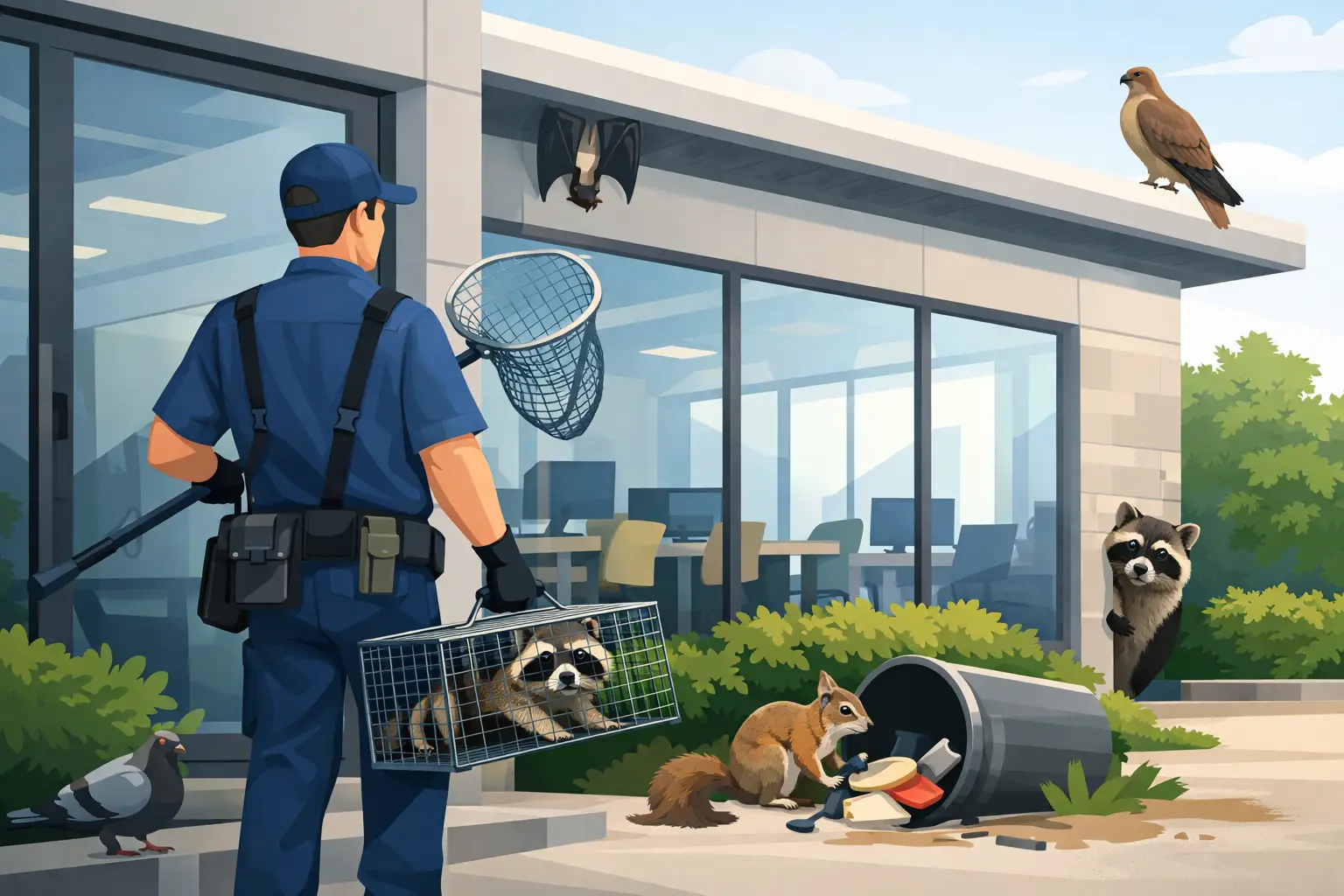
A raccoon in a warehouse ceiling is not just a nuisance. It can delay operations, damage insulation, contaminate inventory areas, and create a safety issue for staff. That is why commercial wildlife removal needs to be handled quickly, legally, and with a plan that solves both the immediate problem and the reason it started.
For business owners and property managers, wildlife problems rarely stay small. A few scratching sounds above an office can turn into chewed wiring, foul odors, stained ceiling tiles, and tenant complaints. In food service, retail, industrial, and multi-unit commercial properties, the stakes are even higher because wildlife activity can affect sanitation, compliance, reputation, and day-to-day business continuity.
What commercial wildlife removal actually includes
Commercial wildlife removal is more than trapping an animal and leaving. In a business setting, the job usually starts with a full inspection of the roofline, loading areas, vents, utility penetrations, dumpsters, crawl spaces, and other entry points. Wildlife uses weak spots in a building the same way water does – it looks for the smallest opening and the easiest path to shelter, food, or warmth.
Once the source of the activity is identified, the removal strategy depends on the species, the layout of the property, and how the building is used. Raccoons in a restaurant attic, squirrels in a retail plaza soffit, birds in a warehouse, or skunks around a commercial foundation all require different handling. Humane removal matters, but so does minimizing disruption to staff, customers, and tenants.
A proper service also includes exclusion work. That means sealing access points, screening vents, reinforcing damaged areas, and correcting conditions that attract wildlife in the first place. Without that step, removal becomes temporary. The same or another animal often returns through the same opening.
Why wildlife problems hit commercial properties differently
A house and a commercial building do not face the same level of risk. Businesses usually have larger footprints, more access points, more foot traffic, and tighter operational requirements. A problem that might be inconvenient in a home can become expensive very quickly in a business property.
One issue is liability. If an employee encounters an aggressive animal near a dumpster enclosure or service entrance, that creates a workplace safety concern. If customers notice droppings, odors, or visible animal damage, that affects confidence in the business. In multi-tenant buildings, one unresolved wildlife issue can spread complaints across several units.
There is also the question of hidden damage. Wildlife often nests in attics, wall voids, basements, and mechanical spaces where activity goes unnoticed for weeks. By the time the signs become obvious, the repair bill is often larger than expected. Insulation can be torn apart, ductwork can be damaged, and contamination cleanup may be needed before the space is fully usable again.
Common wildlife issues in business properties
Raccoons are one of the most disruptive animals in commercial buildings because they are strong, persistent, and highly adaptable. They can tear into roofing materials, pry open weak soffits, and create major messes in attics or upper voids. Squirrels are smaller but just as destructive in their own way, especially when they chew wood, wiring, and entry gaps to widen access.
Birds create a different kind of problem. On commercial properties, they often nest on ledges, signs, vents, and rooftop equipment. The droppings can damage surfaces, create slip hazards, and lead to sanitation concerns near entrances or customer-facing areas. In warehouse settings, interior bird activity can become a serious contamination issue.
Skunks, groundhogs, and other burrowing animals can affect foundations, walkways, loading zones, and landscaped areas. These problems may seem minor at first, but they can create odor, structural instability, and ongoing safety concerns. The right solution depends on how the property is built and how much access the animals have to food and shelter nearby.
The cost of waiting too long
Many business owners hesitate because they want to avoid disruption or unexpected expense. The problem is that delay usually increases both. Wildlife does not stay in one place quietly. Nesting animals reproduce, damage expands, and the cleanup gets more complicated.
A raccoon in an attic may lead to insulation replacement and odor treatment. A squirrel issue can turn into electrical risk if wiring is chewed. Birds around a storefront can create visible mess that drives complaints before the owner even realizes how bad the activity has become. Fast action is usually the most affordable option because it limits secondary damage.
This is especially true for property managers. If one tenant reports noises or odors and the issue is left unresolved, it can quickly become a building-wide frustration. Responsive service protects the property, but it also protects tenant relationships.
What a professional removal process should look like
The first step should always be a careful inspection. Guesswork leads to repeat problems. A licensed wildlife technician should identify the species involved, confirm where the animals are entering, look for signs of young or nesting activity, and assess any damage or contamination.
From there, the removal method should match the situation. Humane techniques are often the best fit for commercial wildlife removal because they address the problem without creating unnecessary risk or mess on site. Timing matters too. In some cases, removal has to be coordinated around business hours, tenant access, or safety requirements in active commercial spaces.
After removal, exclusion is the part that determines whether the problem stays solved. Open gaps around vents, roof returns, soffits, and service penetrations need to be secured with durable materials. Temporary patchwork may look cheaper at first, but it often fails under weather exposure or animal pressure. A long-term fix is what actually saves money.
Cleanup may also be needed. If there are droppings, nesting debris, urine contamination, or damaged insulation, those issues should be handled properly. Removal without cleanup leaves behind odor, health concerns, and attractants for future wildlife activity.
Prevention matters as much as removal
The best commercial wildlife removal strategy is not just about getting animals out. It is about making the property less attractive afterward. That can mean securing waste areas, improving dumpster management, trimming branches away from the roofline, repairing exterior damage, and checking that vents and roof openings are properly screened.
For some businesses, prevention needs to be built into routine property maintenance. Restaurants, plazas, warehouses, and multi-unit buildings tend to have recurring risk factors because of food waste, frequent deliveries, or multiple structural access points. A one-time visit helps, but ongoing monitoring can be the smarter choice when the property has a history of repeat issues.
This is where local experience helps. Commercial buildings in dense urban areas often face different wildlife pressures than properties near ravines, green spaces, or older neighborhoods. A provider that understands those patterns can spot risks earlier and recommend practical prevention that fits the site.
Choosing the right commercial wildlife removal provider
Not every pest control company is equipped for wildlife work in commercial settings. Business owners should look for licensed professionals who understand humane removal, exclusion repair, safety protocols, and how to work in occupied properties without creating unnecessary disruption.
Speed matters, but so does follow-through. The right company should be able to explain what animal is present, how it got in, what damage it caused, and what needs to be done to prevent a return. Clear communication is especially important for property managers who need documentation, scheduling coordination, and confidence that the issue will not reappear after a quick fix.
If the building is in a busy service area like Toronto, Scarborough, Etobicoke, or Aurora, response time can be a major factor. Wildlife problems do not wait for a convenient time, and commercial properties often need action fast to protect operations. That is one reason many businesses prefer working with an experienced local team such as Quality Pest Control GTA that can handle both removal and prevention.
When to call right away
If you hear movement in ceilings or walls, notice droppings near entrances or mechanical spaces, smell strong animal odor, or see damage around the roofline, vents, or soffits, it is time to act. The same goes for any direct wildlife sightings on the property, especially around dumpsters, loading docks, attic spaces, or customer-access areas.
A fast inspection can prevent a minor issue from turning into building damage, contamination, or a bigger operational headache. For businesses, that peace of mind is not a small thing. When wildlife shows up on your property, the goal is simple – remove the problem safely, protect the building properly, and make sure your staff and customers can get back to normal without looking over their shoulder.

