
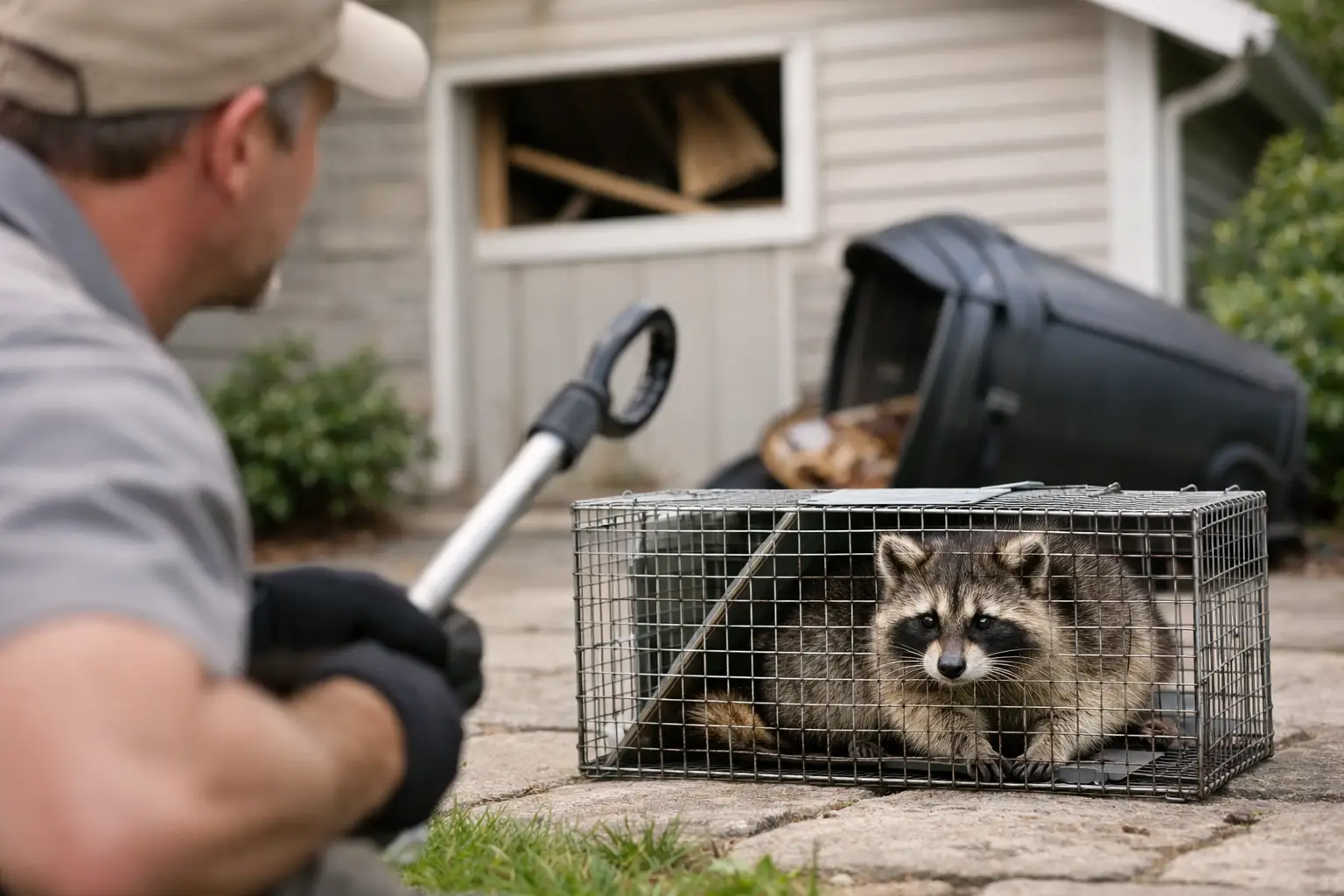
Hearing heavy footsteps above the ceiling at night is not a small problem. Raccoons can tear insulation, damage roof vents, contaminate attics with droppings, and create expensive entry points for other pests. The best way to remove raccoons is to identify where they entered, make sure no young are trapped inside, use humane exclusion, and secure the property so they cannot return.
Trying to scare a raccoon out with noise, repellents, or a loose trap often turns an active wildlife issue into a larger repair job. A practical, professional approach protects your home, your family, and the animal while addressing the reason it chose your property in the first place.
Why Raccoons Move Into Homes
Raccoons are resourceful, strong climbers that look for sheltered spaces close to food and water. In residential areas, attics, chimneys, sheds, decks, and crawl spaces provide protection from weather and predators. A loose soffit, broken roof vent, uncapped chimney, or gap near a deck can be enough for one to get inside.
They are especially active in spring, when a female may be looking for a quiet den to raise kits, and in fall, when wildlife seeks warmer shelter. In Toronto, Scarborough, Pickering, Whitby, Oshawa, and other GTA communities, mature trees, dense neighborhoods, accessible garbage, and older rooflines can all make a property more attractive.
Do not assume the raccoon will leave permanently just because the noise stops for a night or two. It may be out foraging, or it may have relocated deeper into the structure.
Signs You Have a Raccoon Problem
The sound is often the first clue. Raccoons are much larger and heavier than mice or squirrels, so activity may sound like slow walking, thumping, dragging, or loud scratching overhead. They are commonly active at night, although a mother with young may make daytime trips for food.
Other warning signs include torn shingles, displaced soffits, bent roof vents, damaged chimney caps, and claw marks around possible entry points. You may also notice strong odors from urine or droppings, stained ceilings, disturbed insulation, or garbage containers that have been tipped over repeatedly.
A raccoon seen outdoors during the day is not automatically sick or aggressive. It may simply be foraging or caring for young. Keep your distance, bring pets inside, and avoid approaching or feeding it. If an animal appears disoriented, injured, unusually aggressive, or unable to move normally, contact local animal services or a licensed wildlife professional.
The Best Way to Remove Raccoons Safely
Effective raccoon removal is not about catching the first animal you see. It is a process of inspection, humane eviction, entry-point repair, cleanup, and prevention. Skipping any step can lead to repeat visits or trap young animals inside.
Start With a Full Property Inspection
A trained technician should inspect the roofline, attic, soffits, vents, chimney, deck, garage, and exterior walls. The goal is to confirm the animal’s main entry point and find weak areas that could become future access points.
Inspection also helps distinguish raccoon activity from squirrels, skunks, rats, or birds. This matters because removal methods and timing are different. Blocking an opening without knowing what is inside can cause wildlife to die in the structure, create severe odor problems, or lead an animal to chew through another part of the home.
Check for Young Before Closing Any Opening
This is one of the most important parts of humane raccoon control. Female raccoons may leave their young in an attic or chimney while they search for food. Sealing the mother out can separate her from dependent kits, resulting in distress, damage, and an urgent retrieval problem.
A professional can assess signs of nesting activity and use appropriate methods to encourage the mother and young to leave together when possible. The timing of removal should always account for the animal’s life cycle and local wildlife requirements.
Use One-Way Exclusion, Not a Quick Seal
Once the area is confirmed safe for exclusion, a one-way wildlife door may be installed at the active entry point. This allows the raccoon to exit but prevents it from getting back in. It is a more reliable solution than simply covering the hole while the animal is still inside.
The device must be installed correctly and monitored for signs of continued activity. Raccoons are powerful and persistent. Weak materials, temporary patches, and poorly secured screening can be pulled apart quickly.
Repair and Reinforce Entry Points
After the raccoon has left, the access point needs permanent wildlife-proofing. Depending on the property, this may include reinforcing roof vents, repairing soffits, securing chimney caps, screening vulnerable openings, or repairing damage around decks and sheds.
The best material and repair method depend on the location. A repair that works for a ground-level crawl-space opening may not be enough for a roof vent exposed to wind, snow, and a determined climbing animal. This is where professional inspection saves money by treating the actual vulnerability rather than just the visible damage.
Clean Up Contamination Carefully
Raccoon droppings and urine can contaminate insulation and building materials. Avoid sweeping or vacuuming dry droppings, especially in an enclosed attic, because this can stir particles into the air. Keep children and pets out of the area until it has been assessed and cleaned.
Professional cleanup may involve removing heavily contaminated insulation, disinfecting affected surfaces, and deodorizing the space. The scope depends on how long the animal was present and whether there is nesting material, water damage, or extensive waste buildup.
What Not to Do When Raccoons Are in Your Attic
Do not poison raccoons or use harmful home remedies. These methods are unsafe, inhumane, and can leave an animal dead inside a wall or attic. They also put pets, children, and non-target wildlife at risk.
Avoid climbing onto a roof at night, confronting a raccoon in a confined space, or trying to handle one yourself. A frightened animal may bite or scratch when cornered. You should also avoid using mothballs, ammonia, bright lights, or loud music as a primary solution. These tactics may briefly disrupt activity, but they rarely solve the entry-point problem and may drive the animal farther into the structure.
Live trapping is not always the simple answer people expect. Raccoons can be protected by local rules, and relocation may be restricted or ineffective. If removal is necessary, it should be handled by a qualified professional using lawful, humane methods.
Prevent Raccoons From Coming Back
Once the animal is out, prevention becomes the priority. Raccoons remember dependable food sources and shelter, so an unprotected property can attract the same animal or another one later.
Secure garbage and green bins with tight-fitting lids, and put them out as close to pickup time as practical. Do not leave pet food outdoors overnight. Clean barbecue grills, pick up fallen fruit, and avoid leaving birdseed accessible on the ground.
Trim branches that provide easy roof access, especially limbs close to the house. Inspect roof vents, soffits, fascia boards, chimney caps, and deck skirting at least twice a year and after major storms. Small defects are far less expensive to repair before wildlife finds them.
For rental properties and commercial sites, routine exterior checks are particularly valuable. Overflowing dumpsters, unsecured waste areas, damaged loading-dock doors, and neglected rooflines can create recurring wildlife complaints and costly tenant or customer concerns.
When to Call a Professional Raccoon Removal Service
Call for professional help if you hear activity in the attic or walls, see roof damage, suspect babies are present, notice droppings, or cannot safely locate the entry point. Prompt service matters because raccoons can cause more damage with every night they remain inside.
Quality Pest Control GTA provides licensed, humane wildlife removal and exclusion work for homes and businesses. The focus should be on safely getting the raccoon out, protecting the building from re-entry, and identifying repairs that prevent another wildlife issue from developing.
Frequently Asked Questions
Will a raccoon leave my attic on its own?
It may leave temporarily to forage, but it can return to the same den site repeatedly. If young are present, the mother is especially likely to come back. Professional exclusion and repair are more dependable than waiting.
How long does raccoon removal take?
The inspection and installation of exclusion measures can often be completed promptly, but the full timeline depends on the entry point, the presence of young, weather, and the amount of damage. Permanent repairs should be completed only after the space is confirmed clear.
Can I seal the hole after I see the raccoon leave?
Not until you are certain no other raccoon or young animal remains inside. Raccoons may use more than one access point, and kits can be hidden in insulation or walls. A careful inspection prevents a serious mistake.
If raccoon activity is disrupting your home or business, act before minor roof damage becomes a contaminated attic or a repeat wildlife problem. A humane removal plan and durable exclusion work can restore a clean, secure property without relying on temporary fixes.

