
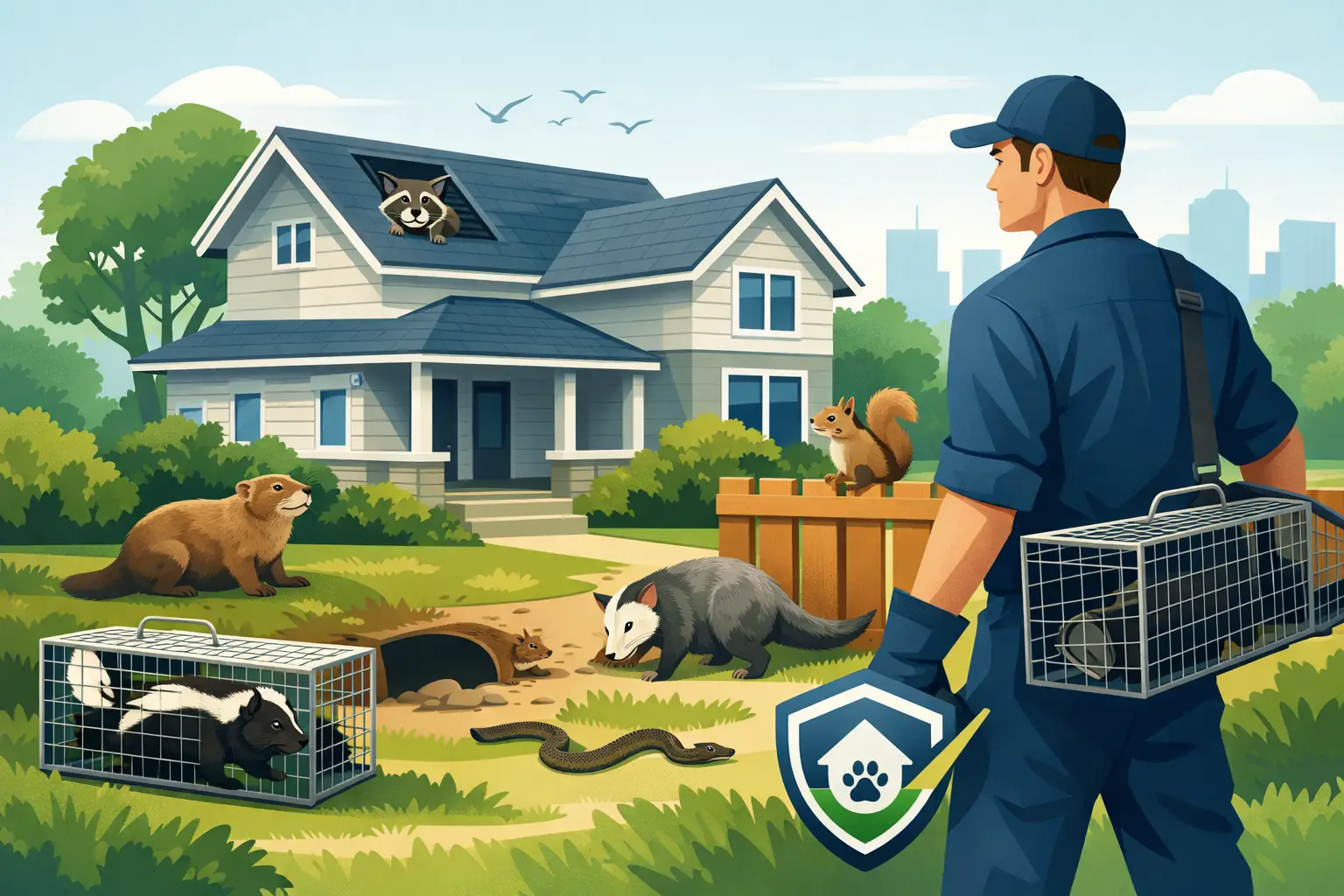
Hearing scratching in the attic at 2 a.m. changes the way a home feels. What was quiet and comfortable suddenly feels exposed. Residential wildlife removal is about more than getting an animal out of the house. It is about protecting insulation, wiring, air quality, and the sense of safety you expect at home.
For many homeowners, the first mistake is assuming the problem will leave on its own. Sometimes it does not. Raccoons can tear into soffits and roof vents. Squirrels can chew entry points wider and nest in attic insulation. Skunks may burrow under porches or sheds. Once wildlife settles in, the damage usually grows with time, and so does the cost of fixing it.
What residential wildlife removal really includes
Good residential wildlife removal is not just trapping or chasing animals away. If removal is handled without checking how the animal got in, the same problem often comes back within days or weeks. A complete service starts with inspection, confirms the species involved, removes the animal safely, and then closes off the weak points that made the home vulnerable in the first place.
That last step matters most. Wildlife problems tend to repeat when gaps in rooflines, damaged vents, loose soffits, uncapped chimneys, and foundation openings are left behind. A fast removal may solve the immediate panic, but exclusion work is what turns a short-term fix into long-term protection.
For homeowners, that means the right service should deal with both the animal and the reason it was able to enter. Humane handling also matters. In many cases, especially during nesting season, the job has to be done carefully to avoid separating mothers from their young or creating a worse odor problem inside walls or attics.
Signs you may need residential wildlife removal
Some infestations are obvious. Others start quietly. You may hear movement in the attic before sunrise, notice thumping across the roof at night, or smell a strong odor near crawl spaces or garages. Droppings, torn insulation, greasy rub marks, damaged vent covers, and digging around foundations are all common warning signs.
It depends on the animal. Squirrels are often active during the day and can sound like quick scurrying overhead. Raccoons are heavier and louder, especially overnight. Skunks usually announce themselves by smell before you see visible burrowing. Birds may create repeated noise near vents or chimneys. Bats can leave droppings near entry points and create health concerns that should never be handled casually.
The bigger issue is timing. Wildlife rarely improves a situation by staying put. Nesting, chewing, contamination, and structural wear tend to increase the longer the problem goes untreated.
Why DIY wildlife removal often goes wrong
Homeowners usually reach for the quickest solution first. Store-bought repellents, noise devices, bright lights, or patching a hole from the outside can seem like a simple answer. Sometimes these steps do nothing. Sometimes they make the problem worse.
If an entry point is sealed while an animal is still inside, it may tear through another part of the home trying to escape. If babies are hidden in an attic or wall void, removing only the adult leaves a serious problem behind. Traps also bring legal, safety, and humane concerns, especially if the species is misidentified or the animal is relocated improperly.
There is also the health side. Wildlife droppings, urine, nesting debris, and parasites can affect the home environment. A homeowner dealing with raccoons, squirrels, bats, or skunks is not just dealing with noise. They may also be dealing with contamination that needs careful cleanup and prevention work after removal.
The safest way to remove wildlife from a home
The safest process begins with a full inspection of the property. That means looking at rooflines, vents, soffits, fascia, chimneys, garages, crawl spaces, decks, and foundation edges. The goal is to find active access points, identify all vulnerable areas, and understand whether there are young animals present.
Once the species and activity are confirmed, removal methods can be matched to the situation. Humane one-way doors, hands-on retrieval of young, habitat adjustments, and species-specific exclusion methods are often more effective than basic trapping. Every home is different, and the best approach depends on where the animal is living, how long it has been there, and what type of damage has already happened.
After the animals are out, the structure should be secured with durable materials that can stand up to chewing, clawing, and weather exposure. This is where many cheap fixes fail. Foam, loose screening, or light patchwork may look fine for a few days, but determined wildlife can get through weak repairs quickly.
Common animals that invade homes
In residential settings, raccoons and squirrels are among the most common attic invaders. Raccoons are strong, persistent, and capable of ripping open weak roof areas. Squirrels are smaller but can be just as destructive because of their constant chewing and nesting activity.
Skunks often target areas under porches, stairs, and sheds. The smell gets attention, but the real concern is the denning activity and risk of repeat use if the area is not sealed correctly afterward. Birds may enter vents or chimneys and leave nesting debris that blocks airflow or creates fire hazards. Bats present a different level of concern because of the cleanup requirements and the need for careful exclusion timing.
Rodents are sometimes mistaken for wildlife issues and vice versa, which is another reason inspection matters. The sound in the ceiling does not always tell the full story. Proper identification leads to the right solution faster.
Why prevention matters as much as removal
The most reliable wildlife service is prevention-focused. Removing one raccoon from an attic is helpful, but if the roof vent remains broken, another animal may move in later. The same goes for uncapped chimneys, open soffit gaps, torn screens, and vulnerable deck skirting.
A prevention plan does not have to be complicated. It usually starts with sealing entry points, reinforcing weak exterior areas, and reducing what attracts animals in the first place. Garbage storage, pet food, fallen fruit, and accessible shelter zones can all increase the chance of wildlife activity around a home.
This is where working with a licensed professional pays off. A trained team can tell the difference between a one-time event and a property that has ongoing wildlife pressure. Homes near ravines, parks, mature trees, or dense neighborhoods may face repeat risks if exclusion is not done thoroughly.
Choosing a residential wildlife removal company
When homeowners are stressed, they often book the first company that answers the phone. Speed matters, especially in urgent situations, but so does the scope of the service. Ask whether inspection, humane removal, exclusion, and prevention are all included in the plan. If a company only talks about trapping, that is usually not enough.
Look for a provider that is licensed, experienced, and clear about what happens after removal. You want to know how the home will be protected from future entry, whether cleanup recommendations will be provided, and how the work is tailored to the species involved. Affordable service matters, but cheap wildlife work can become expensive if the problem returns.
For homeowners in places like Toronto, Scarborough, Etobicoke, or Aurora, local knowledge can also help. Wildlife patterns, seasonal nesting activity, and common home construction details often vary by area, and that affects how removal and sealing should be done.
Quality Pest Control GTA approaches wildlife issues the way they should be handled – quickly, safely, and with prevention built into the job. That matters when the goal is not just to remove an animal, but to restore confidence in your home.
When to call right away
If you hear active noise in an attic or wall, see an animal entering the house exterior, notice a strong wildlife odor, or find damage around vents and roof edges, it is time to act. The same applies if you suspect young animals are present or if droppings are building up in a living or storage area.
Waiting usually narrows your options. A smaller repair can turn into a larger one, and a simple removal can become a cleanup and restoration problem. Fast action is not about panic. It is about limiting damage and getting the right fix in place before the situation spreads.
A home should feel secure from the roof down to the foundation. When wildlife gets inside, the best outcome comes from removing the immediate problem and closing the door behind it for good.

