
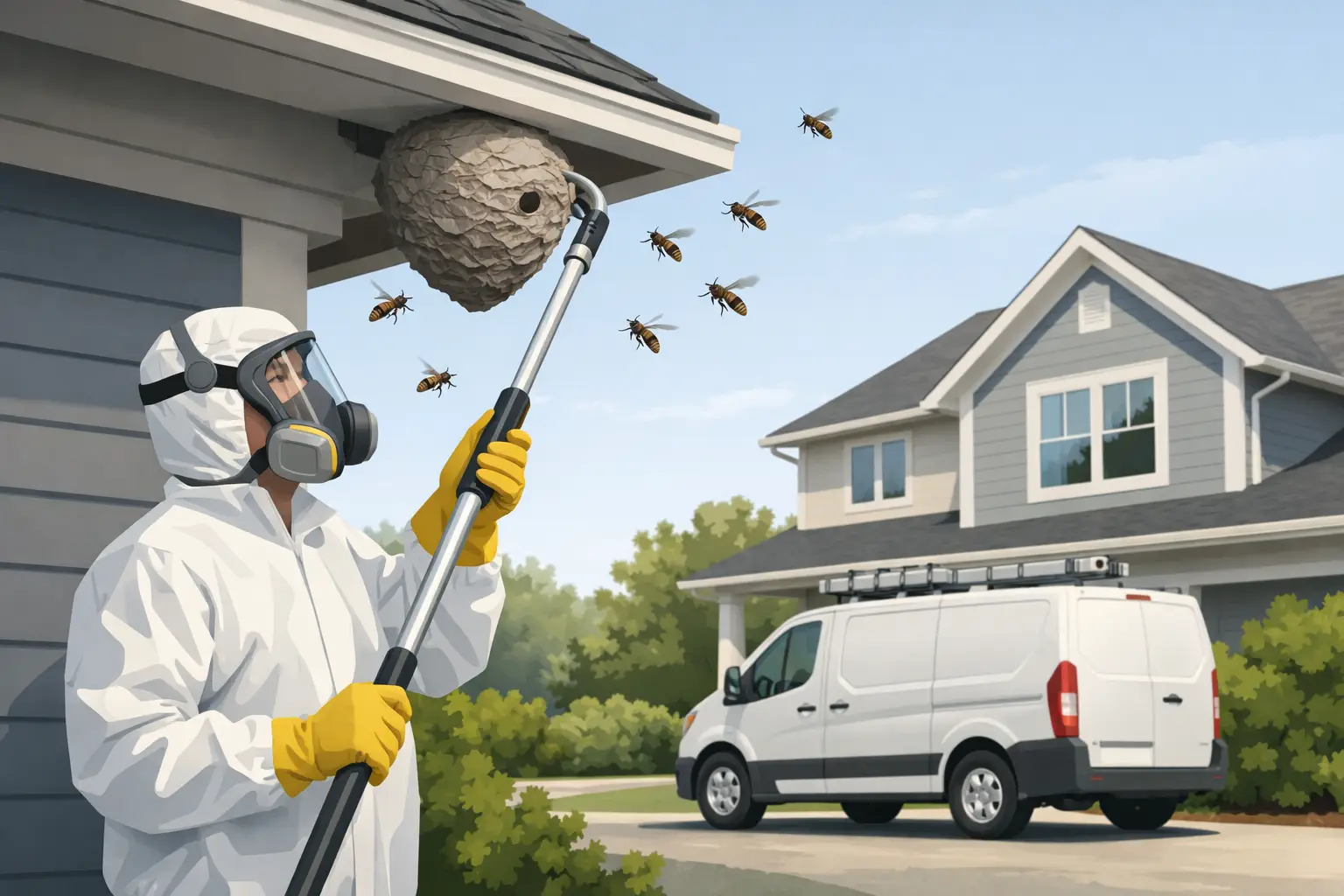
That low buzzing under the eaves usually starts as a small nuisance and turns into a real problem fast. If you searched for wasp nest removal near me, there is a good chance you have already seen increased wasp activity around your roofline, deck, shed, attic vent, or business entrance. At that point, the main question is not whether the nest should be removed. It is how to get it handled safely before someone gets stung.
Wasps are aggressive when they feel their nest is threatened, and many people underestimate how quickly a simple spray-can attempt can go wrong. A nest that looks small from the ground may hold far more activity than expected. If the nest is hidden in a wall void, soffit, or behind exterior siding, disturbing it without the right approach can drive wasps deeper into the structure or send them swarming into living and work spaces.
When wasp nest removal near me becomes urgent
Not every wasp sighting means there is a full nest on your property, but repeated activity in one area is a warning sign. If you notice wasps entering a gap near the roof, disappearing into brick cracks, flying under siding, or clustering around a porch ceiling, there is a strong chance they have established a nest nearby.
The situation becomes urgent when the nest is close to daily foot traffic. Front doors, balconies, children’s play areas, backyard seating, garages, and commercial entryways all create a higher risk of stings. The same is true for rental properties or business locations where visitors and tenants may not know where the nest is. One accidental bump, lawn vibration, or attempted cleanup can trigger a defensive response.
Urgency also depends on who uses the property. Homes with children, seniors, pets, or anyone with sting allergies should treat nest activity seriously. Even without an allergy, multiple stings can require medical attention. For restaurants, warehouses, offices, and retail spaces, a visible wasp problem can quickly become a safety issue and a reputation issue at the same time.
Why DIY nest removal often makes the problem worse
People usually try DIY for one reason: they want the problem gone immediately. That instinct makes sense. The problem is that speed without a plan often leads to more risk, not less.
Most store-bought sprays only work well in very specific situations, usually when the nest is fully visible, easy to access, and small enough to treat directly. That is not the case for many active infestations. Wasps frequently build inside enclosed spaces where the visible activity is only the surface of the problem. Spraying the outside opening may agitate the colony without reaching the core nest.
There is also the issue of timing. Wasps are generally less active during cooler parts of the day, but that does not make removal safe for an untrained person. Reaching above your head on a ladder near an active nest is one of the most common ways people get stung. In commercial settings or multi-unit buildings, DIY attempts can also create liability if tenants, staff, or customers are affected.
Then there is the false-finish problem. A nest may look inactive after treatment, but if the source was not fully eliminated and the entry point remains open, activity can return. Professional removal is not just about knocking down a visible paper nest. It is about identifying the species, locating the nest properly, treating it safely, and reducing the chance of another infestation in the same spot.
What professional wasp removal usually involves
A licensed pest control technician starts by confirming what you are dealing with. Not every stinging insect should be treated the same way. Wasps, hornets, and bees differ in behavior, nesting habits, and treatment approach. Correct identification matters because the safest solution depends on the pest and the nest location.
From there, the technician assesses access, activity level, and risk to the property. An exposed nest under a soffit can often be treated differently from a nest inside a wall cavity or attic vent. In some cases, removal is straightforward. In others, control has to be paired with follow-up treatment and exclusion work to stop re-entry.
A proper service should also account for the people and animals around the property. Homes with pets and children need careful application methods and clear guidance on when treated areas are safe to use again. Businesses may need discreet scheduling, especially if the nest is near entrances, loading zones, patios, or customer-facing spaces.
The best results come from treatment plans that focus on both elimination and prevention. That may include sealing small openings, addressing attractive nesting areas, and advising you on conditions that encourage future activity.
Where wasps commonly build nests around homes and businesses
Wasps are opportunistic. They look for sheltered, low-disturbance spots that protect the colony from weather and predators. Around homes, common nesting sites include roof overhangs, soffits, attic vents, window frames, decks, fence posts, sheds, garages, and wall voids.
Commercial properties have their own hot spots. Signage cavities, dumpster areas, loading docks, outdoor dining spaces, utility boxes, and roof equipment zones can all attract nesting activity. Because these areas often get less direct attention, nests may grow longer before anyone notices.
One tricky part of wasp control is that the visible nest is not always easy to find. You may only see a steady flight path – wasps entering and exiting the same small gap. That usually means the nest is hidden behind the surface. In those cases, accurate inspection is just as important as treatment.
Signs you should call a licensed expert right away
Some situations should not wait. If wasps are getting indoors, if the nest is inside a wall, if you hear buzzing behind surfaces, or if the nest is attached near a doorway or walkway, professional help is the safer move. The same applies if anyone on the property has a known sting allergy.
Large nests also require caution. By late summer, colonies can become more defensive and more active. What might have started as a manageable-looking issue in early season can become a serious hazard once the colony expands. If you have already tried a spray and the wasps are still active, avoid another attempt. Repeated disturbance can escalate aggression.
In the GTA, warm months often bring sudden spikes in wasp complaints because outdoor activity increases at the same time colonies are growing. For homeowners in Toronto, Etobicoke, Scarborough, and Aurora, a fast response matters when nests are close to family spaces, tenant areas, or customer traffic.
How to reduce the risk before service arrives
Until treatment is completed, the goal is to avoid provoking the nest. Keep children and pets away from the area, and do not block the nest opening with caulk, foam, or tape. That can trap wasps inside the structure and force them to find another exit, sometimes into interior rooms.
Skip pressure washing, trimming, hammering, or mowing close to the nest. Vibrations can trigger defensive behavior. If the nest is near an entry door, use another entrance if possible. For businesses, it may help to temporarily redirect foot traffic or post a simple warning for staff.
Food and sweet drinks can draw foraging wasps, so clean outdoor garbage lids, remove fallen fruit, and avoid leaving open beverages nearby. These steps will not solve the infestation, but they can reduce additional activity around people.
What to expect after removal
After successful treatment, visible activity should begin to drop, though timing can vary depending on nest size and location. Hidden nests may require a little more patience than exposed ones because returning wasps need to contact the treated area. Your technician should explain what is normal and whether follow-up is recommended.
You may also receive prevention advice based on your property layout. This can include sealing entry points, repairing damaged soffits, screening vents, and monitoring areas that repeatedly attract nesting. Prevention is especially valuable for properties that deal with recurring stinging pest issues each season.
For many customers, peace of mind matters just as much as the removal itself. You want to know the problem was handled properly, the immediate risk is lower, and the same nest location is less likely to become a repeat issue next month.
If you are searching for fast, reliable help, Quality Pest Control GTA takes a practical approach: identify the nest, remove the immediate danger, and help prevent the next one. That is what licensed wasp control should do.
A wasp nest rarely gets better by being ignored. If the activity is increasing, the nest is close to people, or you are not fully sure where it is, trust your instincts and get it checked before a close call turns into an emergency.

