
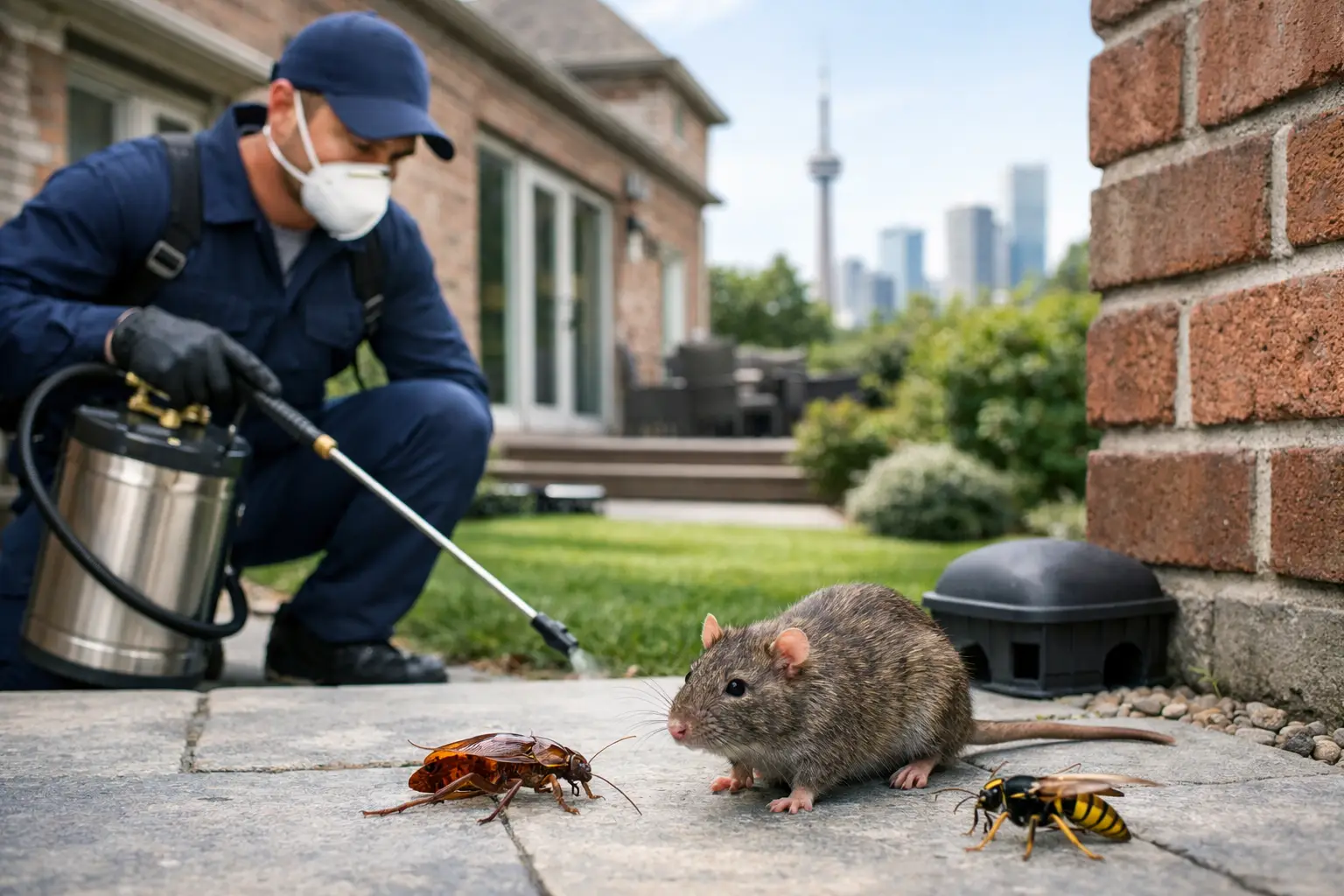
A scratching sound in the wall at 2 a.m. usually means one thing – a small problem is already becoming a bigger one. That is why pest control Toronto property owners rely on is not just about removing what you can see. It is about finding the source, stopping the spread, and protecting your home or business before the damage, stress, and health risks get worse.
Toronto properties face year-round pest pressure. In colder months, mice, rats, and wildlife move indoors looking for heat and shelter. In warmer weather, ants, wasps, cockroaches, mosquitoes, and other insects become more active. Multi-unit buildings, restaurants, offices, retail spaces, and family homes all deal with different risks, but the pattern is the same – pests move fast when conditions favor them, and waiting usually makes treatment more expensive and more disruptive.
Why pest control Toronto homes need is rarely a one-time fix
A lot of people first try traps, sprays, or hardware store bait. Sometimes that helps for a day or two. More often, it only reduces what is visible while the real activity continues behind walls, under flooring, inside attics, or around entry points.
Professional pest control works differently because it starts with inspection. The goal is not simply to kill a few pests. The goal is to identify how they got in, what is helping them survive, and what treatment will solve the issue without creating unnecessary risk for people or pets.
This matters in Toronto because building types vary so much. A detached home with a crawl space has different vulnerabilities than a downtown storefront, a basement apartment, or a condo building with shared walls and utility lines. What works in one property may be the wrong approach in another. Safe, lasting control depends on matching the treatment to the infestation, the structure, and the level of urgency.
The pests that cause the most trouble
Rodents remain one of the most common calls because they contaminate food, damage insulation, chew wiring, and reproduce quickly. If you hear movement at night, find droppings in cupboards, or notice gnaw marks near baseboards, the issue may already be established.
Bed bugs create a different kind of stress. They disrupt sleep, spread from room to room, and are notoriously difficult to eliminate with store-bought products. Many people waste time and money trying to solve bed bug problems themselves, only to push the infestation deeper into furniture, wall voids, and adjacent spaces.
Cockroaches are another major concern, especially in kitchens, commercial properties, and multi-unit buildings. They are persistent, unsanitary, and hard to control without a full treatment plan. Seeing even one during the day can be a warning sign of a larger hidden population.
Ants, wasps, hornets, spiders, and mosquitoes may seem less serious at first, but they still affect safety and comfort. Stinging pests around entryways or outdoor seating areas can quickly turn into a liability issue for businesses and a daily concern for families with children.
Wildlife problems are common as well. Raccoons and squirrels often enter attics, roofs, chimneys, and soffits. Once inside, they can damage insulation, create noise, leave waste, and open the door for repeat intrusions. Humane removal and proper sealing matter here. Removing the animal without securing the access point often leads to the same problem all over again.
What fast, reliable treatment should include
Speed matters, but speed alone is not enough. Effective service should begin with a thorough inspection, followed by a treatment plan based on the specific pest and property conditions. In urgent situations, the first priority is to reduce immediate activity and restore safety. After that, prevention becomes just as important as elimination.
That often means a mix of methods rather than a single product. For rodents, it may include targeted baiting, trapping, sanitation guidance, and entry-point sealing. For bed bugs, it may involve detailed room-by-room treatment and follow-up. For cockroaches, success often depends on combining treatment with exclusion and strict moisture control.
Eco-friendly treatment is also a practical concern, not just a marketing phrase. Families, pet owners, property managers, and business operators want results without creating unnecessary exposure. The right provider will explain what is being used, where it is being applied, and what steps help keep the environment safe while still controlling the infestation.
Residential and commercial pest problems are not the same
Homeowners usually call when daily life is being disrupted. They want the scratching in the attic gone, the bites to stop, and the kitchen to feel clean and safe again. They also want confidence that the issue will not return next month.
Commercial clients often face a different kind of pressure. A restaurant, office, warehouse, or retail business may be dealing with reputation risk, compliance concerns, staff complaints, or customer exposure. In those settings, response time and discretion matter just as much as treatment quality.
That is why customized service matters. A family home may need child-safe treatment and exterior prevention. A commercial kitchen may need scheduled inspections, sanitation coordination, and after-hours service to reduce operational disruption. The pest may be similar, but the plan should reflect how the property is used.
Prevention is where long-term value shows up
The most effective pest control does not end after the first visit. It includes practical prevention that makes the property less attractive and less accessible to pests.
In many Toronto homes and businesses, prevention starts with sealing cracks, repairing screens, closing utility gaps, and checking rooflines, vents, and foundation openings. Moisture control is another big factor. Leaks, condensation, and standing water create ideal conditions for insects and can also attract rodents and wildlife.
Sanitation matters too, but it is not the whole answer. People are often told pests only show up in dirty spaces, and that is simply not true. Clean homes get mice. Well-managed offices get cockroaches. Good housekeeping helps, but structural access and hidden harborage often matter more than people realize.
This is one reason professional inspections are useful even when the infestation seems minor. A few ants near a sink may point to a larger colony. A single mouse sighting can mean several more are nesting nearby. Catching that early is cheaper and easier than waiting until the problem spreads.
Choosing a pest control company in Toronto
Not all providers offer the same level of service. When comparing options, look for licensed technicians, clear pricing, safe treatment methods, and a company that handles both removal and prevention. If the issue is urgent, 24/7 emergency availability can make a real difference.
It also helps to choose a company that understands local building conditions and common regional pest patterns. Toronto properties deal with dense neighborhoods, shared walls, aging infrastructure in some areas, and high movement between residential and commercial zones. That local experience can improve both diagnosis and treatment strategy.
A dependable provider should also be honest about trade-offs. Some infestations can be resolved quickly. Others need repeat visits, monitoring, or building repairs to fully control the source. Straight answers matter, especially when you are trying to protect tenants, family members, employees, or customers.
For property owners across the GTA, working with a team that covers both urgent extermination and humane wildlife control is often the most practical choice. Quality Pest Control GTA is one example of a local company built around fast response, affordable service, and prevention-focused treatment for homes and businesses that need dependable results.
When to call for pest control Toronto service
If you are seeing droppings, hearing movement in walls or ceilings, finding bites, spotting live insects during the day, or noticing nests near doors, windows, or rooflines, it is time to act. The same goes for any sign of food contamination, foul odors, chewed materials, or recurring sightings after DIY treatment.
The earlier you call, the more options you usually have. Smaller infestations are easier to contain, less costly to treat, and less likely to cause ongoing damage. Waiting rarely improves the situation.
A safe property should feel like a place where people can sleep, work, cook, and operate without worry. If pests are getting in the way of that, the right help is not just about removal – it is about getting control back quickly and keeping it that way.

