
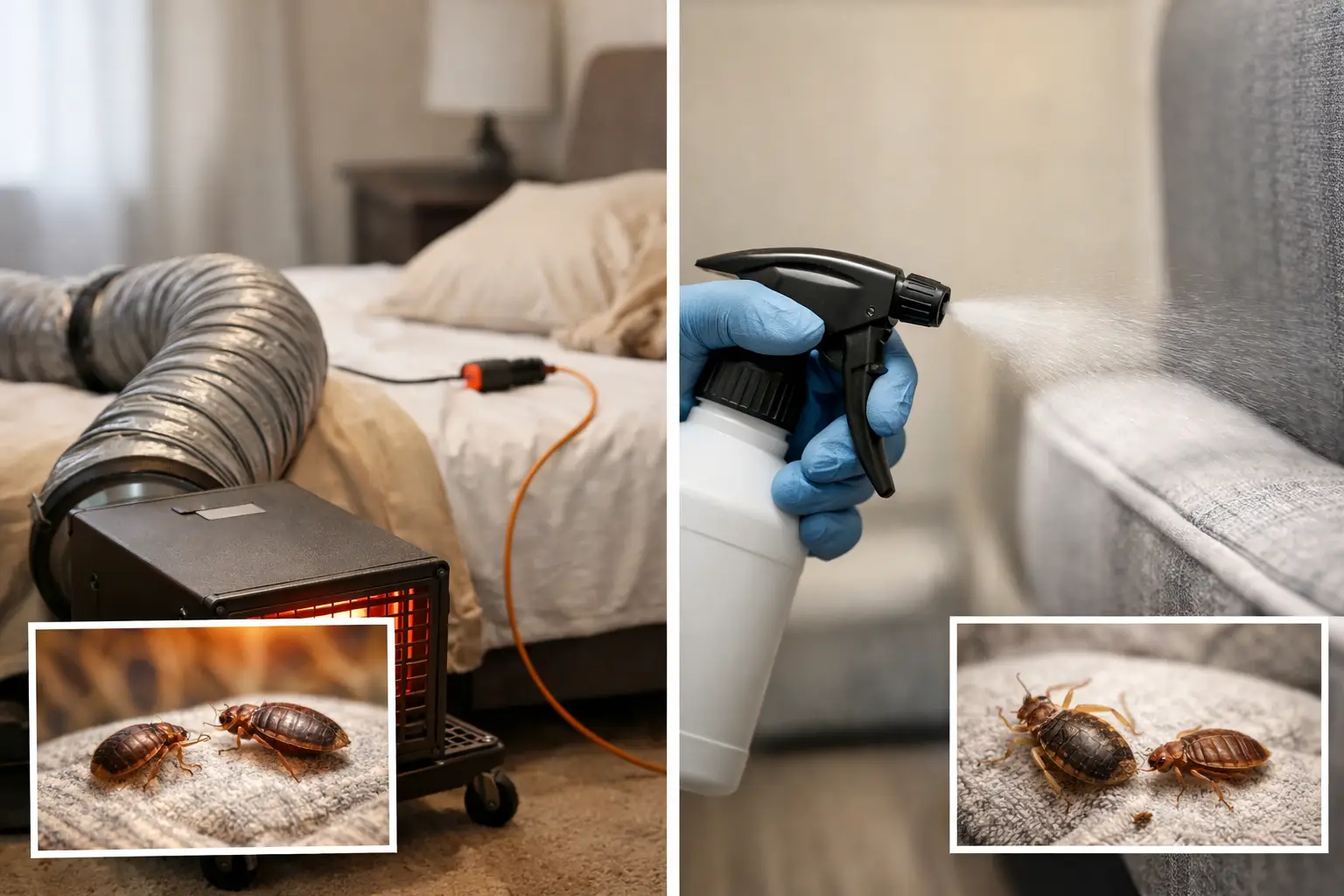
A bed bug problem can turn a normal bedroom into the most stressful room in the house. When comparing bed bug heat treatment vs spray, the right choice depends on the size of the infestation, where the bugs are hiding, your budget, and how quickly you need the problem resolved. Both methods can work when performed correctly, but they do not work in exactly the same way.
For homeowners, tenants, property managers, and businesses, the goal is not simply fewer bites this week. It is a complete, reliable solution that reaches adult bed bugs, young nymphs, and eggs before the infestation spreads to another room or unit.
Bed Bug Heat Treatment vs Spray: The Main Difference
Heat treatment uses specialized equipment to raise the temperature inside an infested space to a level bed bugs cannot survive. Professional technicians place sensors throughout the room, monitor temperatures carefully, and circulate heated air into common hiding places such as mattresses, box springs, bed frames, baseboards, upholstered furniture, and cracks in walls.
Spray treatment uses registered insecticides applied strategically to areas where bed bugs travel and hide. Depending on the product and infestation, a technician may use a combination of contact products, residual treatments, dusts, and targeted crack-and-crevice applications. The residual effect is important because it can continue working after the appointment.
Heat is generally designed to eliminate bed bugs in one intensive service. Spray treatment usually requires follow-up visits because eggs may hatch after the first application, and bed bugs can avoid treated surfaces or remain hidden in difficult areas.
When Heat Treatment Is the Better Choice
Heat treatment is often the best option when fast results are the priority. A properly performed whole-room or whole-unit heat treatment can kill bed bugs at all life stages, including eggs, during the treatment period. That makes it especially valuable for severe infestations, homes with multiple affected rooms, furnished rentals, hotels, and situations where a quick return to normal use is needed.
It also reaches many places that are hard to treat with conventional products. Bed bugs can hide behind headboards, inside furniture joints, beneath carpet edges, in electrical areas, and inside clutter. Heat moves through the space, provided the room is prepared correctly and technicians can maintain the required temperatures.
For some GTA households, heat also provides peace of mind because it reduces reliance on chemical applications. This can be appealing for families concerned about children, pets, or sensitive occupants. However, heat treatment still requires careful preparation. Heat-sensitive belongings, aerosol cans, candles, medications, plants, and certain electronics may need to be removed or protected before service.
Heat is not a shortcut around preparation. Laundry, decluttering, bagging items, and following technician instructions are still essential. If belongings are packed too tightly or rooms are not prepared, cool spots can form and allow bed bugs to survive.
Benefits and limitations of heat
The biggest advantage of heat is speed. In many cases, occupants can return after the treatment is completed and the space has cooled, subject to the technician’s instructions. It can be a strong choice for an urgent infestation that is disrupting sleep, tenant satisfaction, or business operations.
The trade-off is cost. Professional heat treatment often costs more upfront than a spray-based program because it requires specialized equipment, monitoring, labor, and extensive setup. It may also be less practical for a very limited infestation found early in one small area. In multi-unit buildings, heat may need to be paired with inspections of adjacent units because bed bugs can move through wall voids, hallways, utility lines, and shared spaces.
When Spray Treatment Is the Better Choice
Professional spray treatment can be highly effective, particularly for early or localized infestations. It is usually more affordable upfront than full heat treatment and may be a sensible option for a single bedroom, a low-level problem, or a property that cannot safely undergo heat due to sensitive contents.
A licensed technician does not simply spray an entire room. Effective bed bug control requires a detailed inspection and precise treatment of harborages and travel routes. The technician may treat seams and crevices of the bed frame, baseboards, nearby furniture, cracks, and other confirmed activity areas. Products should be selected and applied according to label directions and building conditions.
Residual products can offer a valuable layer of protection after the initial service. As newly hatched bed bugs emerge and travel across treated areas, they may be exposed to the product. This ongoing activity is why follow-up appointments are often part of a professional spray program.
Benefits and limitations of spray
Spray treatment is often easier on the budget and can be tailored to a specific room or affected area. It may also be combined with mattress encasements, vacuuming, steam, interceptors, and monitoring devices for a more complete plan.
The limitation is timing. Bed bug eggs are not always controlled by every product, and insecticide resistance is a real concern. Bed bugs that survive the first treatment can continue breeding if follow-up service is delayed or preparation is incomplete. Most spray-based programs require patience, cooperation, and at least one return inspection or treatment.
Do not attempt to solve an infestation with over-the-counter foggers or repeated store-bought sprays. Foggers rarely reach the cracks where bed bugs hide. They can drive bugs deeper into walls or neighboring rooms, create unnecessary exposure, and make professional control more difficult.
Cost, Safety, and Convenience: What Matters Most?
There is no single answer to the question of which treatment is better. Heat often costs more initially but may resolve a widespread infestation faster. Spray can cost less at the start but may require multiple visits and a longer monitoring period. The least expensive option is not always the most affordable if the infestation returns, spreads, or causes tenant turnover.
Safety depends on professional application and proper preparation. Licensed technicians use products and methods suited to the infestation and follow established safety requirements. Occupants should always follow re-entry instructions, remove or protect items as directed, and tell the technician about infants, pets, allergies, medical needs, or sensitive equipment.
Convenience also matters. Heat involves more extensive day-of preparation and temporarily removes people and pets from the treated area. Spray programs usually involve less disruption per visit, but the process may take several weeks. For a busy family, a rental property, or a business, the best choice is the one that can be completed correctly without cutting corners.
Signs You Need Professional Bed Bug Control
Bed bugs are small and excellent at hiding, so bites alone do not confirm an infestation. Look for rusty or dark spots on mattress seams and bedding, shed skins, tiny pale eggs, live bugs around the bed frame, or unexplained itchy welts that appear after sleeping. Some people do not react to bites at all, which allows an infestation to grow unnoticed.
Call for an inspection quickly if you find possible evidence. Bed bugs reproduce rapidly, and moving infested furniture, sleeping in another room, or tossing loose items into the hallway can spread them. In apartments and condos, prompt reporting also helps property managers assess whether nearby units need inspection.
A Combined Approach Often Delivers the Best Results
The strongest bed bug programs are not always heat only or spray only. A professional may recommend heat to address active bugs throughout an infested room, then use targeted residual treatment or monitoring to help prevent survivors from rebuilding the population. In another property, a carefully planned multi-visit spray program may be the more practical and effective option.
Preparation and prevention make either method more successful. Wash and dry bedding and clothing on high heat when instructed, reduce clutter around beds, vacuum seams and cracks, use certified bed bug encasements, and avoid bringing discarded furniture indoors. After travel, inspect luggage before bringing it into bedrooms and dry travel clothing on high heat when appropriate.
Frequently asked questions
Can bed bugs survive heat treatment?
They can if the treatment is incomplete, if cool areas are not addressed, or if bugs are reintroduced later. Professional monitoring, proper room preparation, and post-treatment guidance greatly reduce those risks.
How long does spray treatment take to work?
Some activity may decline quickly, but complete control often takes several weeks because eggs can hatch after the initial visit. Follow-up treatment and inspection are key to stopping the life cycle.
Should I throw away my mattress?
Usually, no. Many mattresses and box springs can be treated and protected with bed bug-proof encasements. Discarding furniture without a plan can spread bed bugs through a home or building.
If bed bugs are affecting your sleep, your tenants, or your business reputation, act before the infestation expands. A professional inspection can identify the scope of the problem and provide a clear treatment plan that protects your property, your budget, and your peace of mind.

