
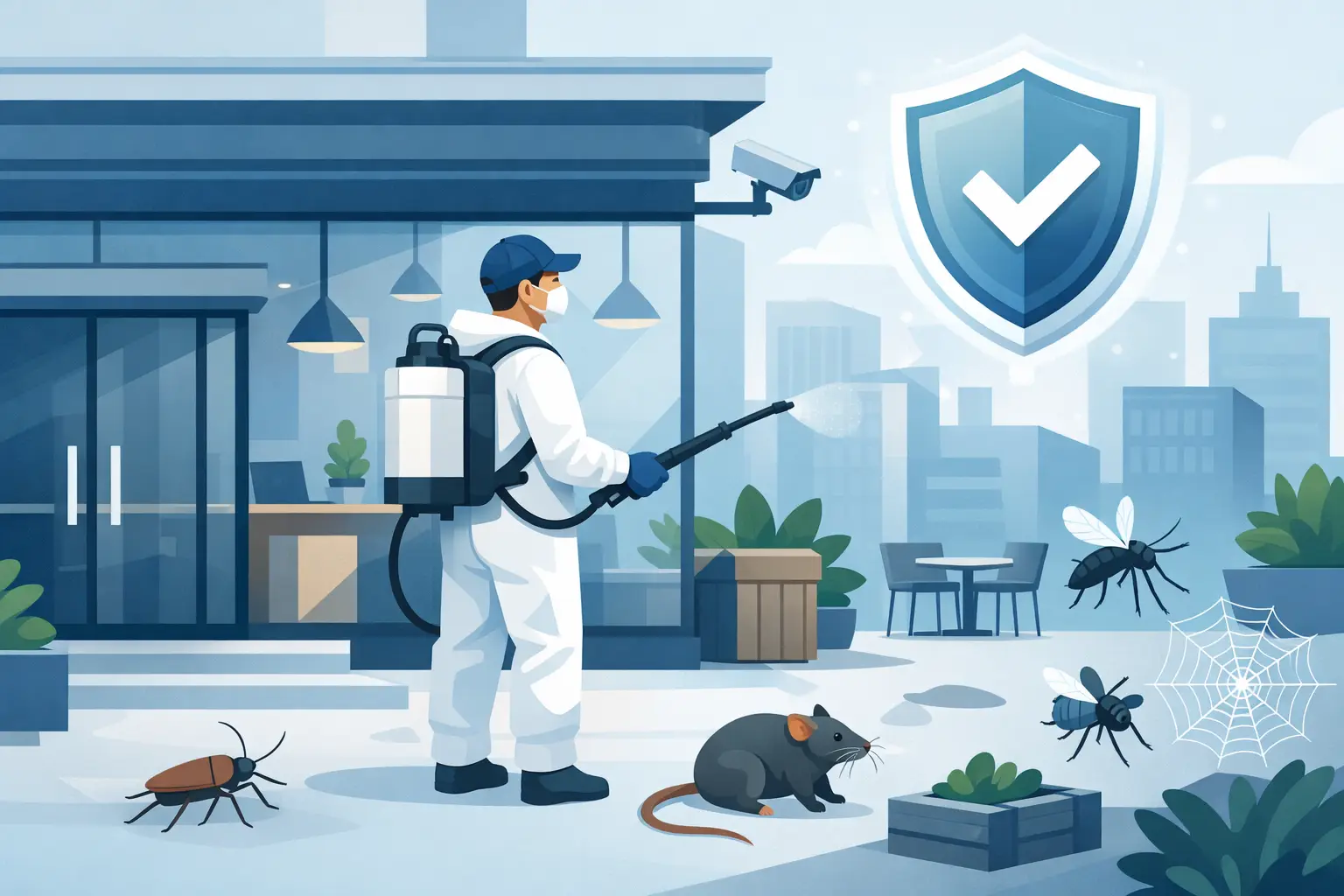
One pest sighting can turn into a business problem faster than most owners expect. A mouse in a storage room, cockroaches in a restaurant kitchen, or wasps near an entryway can lead to customer complaints, failed inspections, damaged inventory, and a serious hit to your reputation. That is why commercial pest control is not just about removing pests when they appear. It is about protecting your staff, your customers, your property, and your day-to-day operations.
For many businesses, the real cost of pests is not limited to the treatment itself. It is the lost time, the disruption, the stress, and the risk of the issue getting worse before anyone takes action. In retail spaces, offices, warehouses, restaurants, apartment buildings, and healthcare settings, pest activity can spread quickly if the root cause is not identified and corrected.
Why commercial pest control matters more in business settings
A pest issue in a home is stressful. In a business, it can become a liability. Commercial spaces often have more foot traffic, more entry points, more storage, and more opportunities for pests to find food, shelter, and water. That creates conditions where a small issue can grow into a recurring one.
There is also less room for delay. If customers see pests, tenants start complaining, or employees feel unsafe, the pressure becomes immediate. Some industries face added compliance concerns as well. Food service businesses, property managers, and facilities with sensitive equipment or inventory need solutions that are effective without creating unnecessary downtime.
That is where a professional approach matters. A licensed commercial pest control provider looks beyond the visible problem and builds a treatment plan around the specific risks of the building. That includes pest identification, targeted treatment, entry-point review, sanitation guidance, and prevention strategies that help keep the issue from coming back.
The pests businesses deal with most often
Different properties attract different pests, but a few patterns show up again and again across commercial sites.
Rodents are one of the biggest concerns because they contaminate surfaces, chew wiring, damage walls, and reproduce quickly. Mice can fit through very small gaps, and rats often take advantage of garbage areas, loading zones, basements, and utility spaces.
Cockroaches are another major issue, especially in buildings with food handling, shared walls, moisture, or cluttered storage. They are difficult to control without a full inspection because they hide well and tend to spread through wall voids, drains, and equipment gaps.
Ants can seem minor at first, but certain species become persistent inside kitchens, break rooms, and common areas. Flies, stored product pests, and occasional invaders such as spiders may also create problems depending on the property type.
Stinging insects like wasps and hornets are a serious concern for businesses with outdoor seating, entrances, loading docks, or customer-facing exterior areas. One nest near a doorway can quickly become a safety issue.
In some cases, nuisance wildlife also becomes part of the problem. Raccoons, squirrels, or birds around a commercial building can damage roofing, vents, insulation, and exterior structures. When that happens, removal and exclusion need to be handled carefully and humanely.
What good commercial pest control actually includes
The best service is not a one-size-fits-all spray. Commercial pest control works best when it is tailored to the property, the industry, and the urgency of the issue.
It usually starts with a detailed inspection. That means identifying the pest, understanding how long the activity has likely been going on, and finding where pests are entering, nesting, or feeding. Without that step, treatment may reduce activity for a short time without solving the underlying problem.
From there, the treatment plan should match the site. A restaurant kitchen, office building, warehouse, and multi-unit property all have different risks and different priorities. Some need discreet after-hours service. Some need ongoing monitoring. Others need immediate intervention because business operations are already being affected.
Prevention is a major part of the job. Entry-point sealing, sanitation improvements, moisture control, and structural recommendations often make the difference between temporary relief and long-term control. Eco-friendly treatment options also matter to many businesses, especially in spaces where staff, customers, children, or pets may be present.
When one-time service works and when it does not
Some commercial pest issues can be resolved with a focused treatment if they are caught early and the conditions that caused them are corrected. A small wasp nest outside a storefront or isolated ant activity in one area may not require ongoing service.
But many business properties benefit from routine monitoring and preventive treatment. This is especially true for restaurants, food storage spaces, apartment buildings, medical offices, and facilities with frequent deliveries or shared walls. In these settings, waiting until pests are visible often means the problem is already established.
Ongoing service gives property owners and managers a chance to stay ahead of infestations instead of reacting to them. It also creates a record of inspections, treatments, and recommendations, which can be useful for internal documentation and compliance needs.
Choosing a commercial pest control provider
Not every pest control company is built for commercial work. Businesses need a provider that can respond quickly, communicate clearly, and understand the pressures of operating in an active commercial environment.
Speed matters, but so does experience. A licensed and insured team should be able to assess risk, explain the treatment plan in plain language, and work with minimal disruption. If emergency service is available, that is a major advantage when a pest issue threatens operations or customer safety.
It also helps to choose a company that focuses on both elimination and prevention. Anyone can place bait or apply a treatment. The real value comes from identifying why the issue started, how pests are moving through the property, and what changes will reduce the chance of another infestation.
For businesses in Toronto and surrounding areas, local experience can make a difference. Building types, seasonal pest pressures, and property layouts vary across the region, and a local provider is more likely to recognize common patterns and respond efficiently.
What business owners can do between visits
Professional treatment is essential, but building staff also play a role in long-term results. Daily conditions inside and outside the property can either support pest control efforts or work against them.
Garbage should be removed regularly and stored in tightly sealed containers. Food debris needs to be cleaned promptly, especially in break rooms, kitchens, and under equipment. Leaks, standing water, and excess moisture should be addressed quickly because many pests are drawn to damp areas.
Clutter matters more than people think. Storage rooms packed with cardboard, paper, and unused materials create hidden shelter for rodents and insects. Receiving areas should also be checked carefully since pests are often brought in through deliveries and packaging.
Staff should know what to report. Droppings, grease marks, chewing damage, nesting material, insect casings, and unusual odors are all signs that should not be ignored. Quick reporting allows treatment to begin before the issue spreads.
Commercial pest control is really about risk management
Most business owners do not call for pest control because they want a technical service. They call because they need the problem handled fast, safely, and properly. They want to avoid complaints, protect their reputation, and keep the property clean and functional.
That is why commercial pest control should be treated as part of overall property protection, not an afterthought. The right response reduces immediate pest activity, but it also helps protect revenue, staff confidence, tenant satisfaction, and customer trust.
At Quality Pest Control GTA, that means practical treatment plans, eco-friendly options, and preventive recommendations that make sense for real businesses dealing with real pressure. If pests are affecting your property, waiting rarely makes it easier. The sooner the source is found and addressed, the easier it is to protect what you have worked hard to build.
A clean, safe business environment does not happen by accident. It comes from acting early, fixing the cause, and having reliable support when problems show up.

