
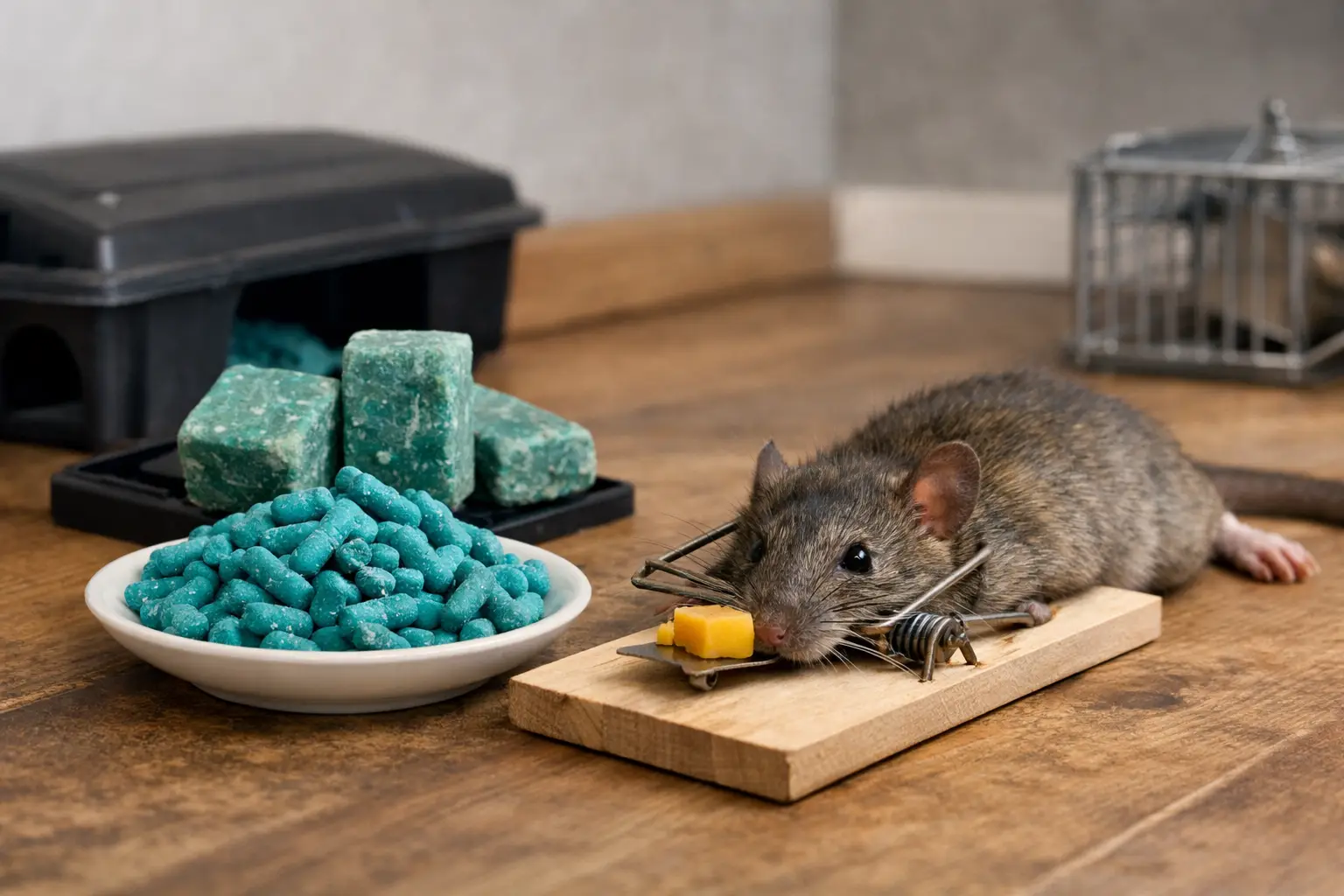
A rat seen near the garbage bins, in a basement, or behind a restaurant kitchen is rarely the only rat on the property. The real choice in rat poison vs trapping is not simply which method kills a rodent faster. It is which approach removes the active problem without putting children, pets, customers, wildlife, or your property at unnecessary risk.
For many GTA homes and businesses, trapping is the safer first response indoors. Poison can have a place in a professionally managed outdoor control plan, but it has serious limitations that make it a poor DIY answer for many infestations. The most reliable solution combines targeted removal with inspection, exclusion, and sanitation.
Rat Poison vs Trapping: The Key Differences
Rat poison, also called rodenticide, is a bait formulated to kill rodents after they eat it. Depending on the product, a rat may die hours or days later. Trapping uses a physical device, such as a snap trap or enclosed trap station, to capture or kill the rat at a known location.
The biggest practical difference is control. With a trap, you can confirm activity, remove the rodent promptly, and reset the device. With poison, a rat may consume bait and die inside a wall, ceiling, crawl space, or other inaccessible area. That can lead to a strong odor, flies, and a difficult cleanup issue.
Poison also carries a higher risk of accidental exposure. Pets and children may access improperly placed bait, while predators and scavengers can be harmed if they eat a poisoned rat. This matters in residential neighborhoods, apartment buildings, warehouses, and commercial properties where people and animals move through shared spaces.
When Trapping Is Usually the Better Choice
Trapping is often the best choice when rats are active indoors. It provides immediate evidence of whether the placement is working and avoids leaving poisoned carcasses hidden in the structure. A trained technician can place traps along established travel routes, typically close to walls, near droppings, behind appliances, and around entry points.
Snap traps can be highly effective when they are correctly selected, baited, and secured. Enclosed tamper-resistant stations may be used where safety and discreet placement are necessary. In a home with pets or young children, securing equipment is not optional. A trap placed carelessly can create its own safety concern.
Trapping also works well when the infestation appears limited. If you have recently noticed fresh droppings in a pantry, scratching in one wall, or a rat entering through a damaged vent, focused trapping and exclusion can stop the issue before it grows.
When Professional Baiting May Be Appropriate
There are situations where a licensed pest control professional may recommend rodenticide in locked, tamper-resistant bait stations. Large exterior populations, repeated activity around dumpsters, and extensive commercial sites may require a carefully monitored baiting program as part of broader rat control.
This is not a set-it-and-forget-it method. Professional baiting requires regular inspection, secure station placement, documentation, and adjustments based on activity. It should never replace sealing entry points or correcting the food and shelter conditions that attracted rats in the first place.
For businesses, particularly food-related operations, a monitored pest management plan can help address rodent pressure around the exterior while trapping and sanitation measures protect the interior. The right approach depends on the building layout, the number of sightings, nearby wildlife, and who has access to the area.
Why DIY Rat Poison Can Create Bigger Problems
Store-bought poison can look like the quickest fix when you hear scratching at night. Unfortunately, it can mask a larger infestation while creating new risks. Rats are cautious and may avoid unfamiliar bait. They may also have alternative food sources, such as pet food, birdseed, overflowing garbage, or food debris behind equipment.
Even when bait is consumed, you may not know where the rat dies. A carcass inside an inaccessible wall can smell for weeks. If several rats are involved, the odor problem may be significant. Poison alone also does nothing to stop the next rat from entering through a gap near a utility line, broken foundation vent, open garage door seal, or damaged roofline.
Avoid placing loose poison pellets or blocks in attics, basements, sheds, kitchens, garages, or around a property. These products can be accessed by pets, children, and non-target wildlife. If rodenticide is needed, it should be selected and managed by a licensed professional who can assess the property and use secured equipment responsibly.
Signs You Need More Than a Few Traps
One rat sighting deserves attention, but certain signs suggest an established infestation that needs professional treatment. Fresh droppings are dark and soft, while older droppings turn gray and crumble. Greasy rub marks along walls, gnaw damage on food packages or wiring, burrows near foundations, and repeated nighttime sounds are also strong warning signs.
A persistent odor can indicate urine buildup or a dead rodent. In commercial settings, chewed inventory, contaminated food storage, tenant complaints, or sightings during business hours should be treated as urgent. Rats can damage insulation and electrical wiring, contaminate stored goods, and spread bacteria through droppings and urine.
If traps catch rats repeatedly over several days, do not just keep adding traps. That pattern usually means there is an active entry point, nesting area, or food source that has not been addressed.
The Long-Term Answer: Removal Plus Prevention
The best rat control plan starts with an inspection. A technician looks for where rats are entering, where they are feeding, and where they may be nesting. From there, treatment can include targeted trapping, carefully managed exterior bait stations when appropriate, and practical exclusion recommendations.
Homeowners and property managers can reduce rat activity by keeping garbage lids closed, cleaning food spills promptly, storing pet food and dry goods in sealed containers, and removing clutter from garages and storage areas. Outdoor birdseed, fallen fruit, compost, and accessible barbecue grease can also attract rodents.
Entry points deserve special attention. Rats can fit through surprisingly small gaps and can chew weak materials. Seal openings around pipes, vents, doors, foundation cracks, and utility penetrations with durable, rodent-resistant materials. Repair damaged screens and door sweeps, and keep vegetation trimmed back from the structure where possible.
At Quality Pest Control GTA, licensed technicians use a practical, safety-focused approach based on the conditions at your property. Whether you are dealing with rat activity in a Toronto home, a Scarborough rental property, or a Whitby business, the goal is to remove the immediate threat and help prevent repeat infestations.
Frequently Asked Questions About Rat Control
Is rat poison more effective than traps?
Not necessarily. Poison may reduce outdoor rodent populations in some situations, but traps are often more controlled and easier to monitor indoors. The most effective method depends on the infestation, property type, and safety concerns.
How long does it take to get rid of rats with traps?
A correctly placed trap can catch a rat quickly, sometimes overnight. Complete control may take longer because every property has different entry points, nesting areas, and levels of activity. Ongoing inspection is essential.
Will rats leave on their own if I remove food?
Removing food sources helps, but rats may stay if they have shelter, water, or an established nesting site. Sanitation should be paired with trapping and exclusion for dependable results.
Can I use poison in my attic?
It is not recommended. A poisoned rat may die in an inaccessible area, creating odor and cleanup problems. Trapping and professional assessment are usually safer options for attic activity.
If you are seeing droppings, hearing movement, or finding gnaw marks, act before a small rat problem becomes a costly property issue. A prompt inspection can identify the source, choose the safest control method, and give you a clear path back to a clean, protected space.

