
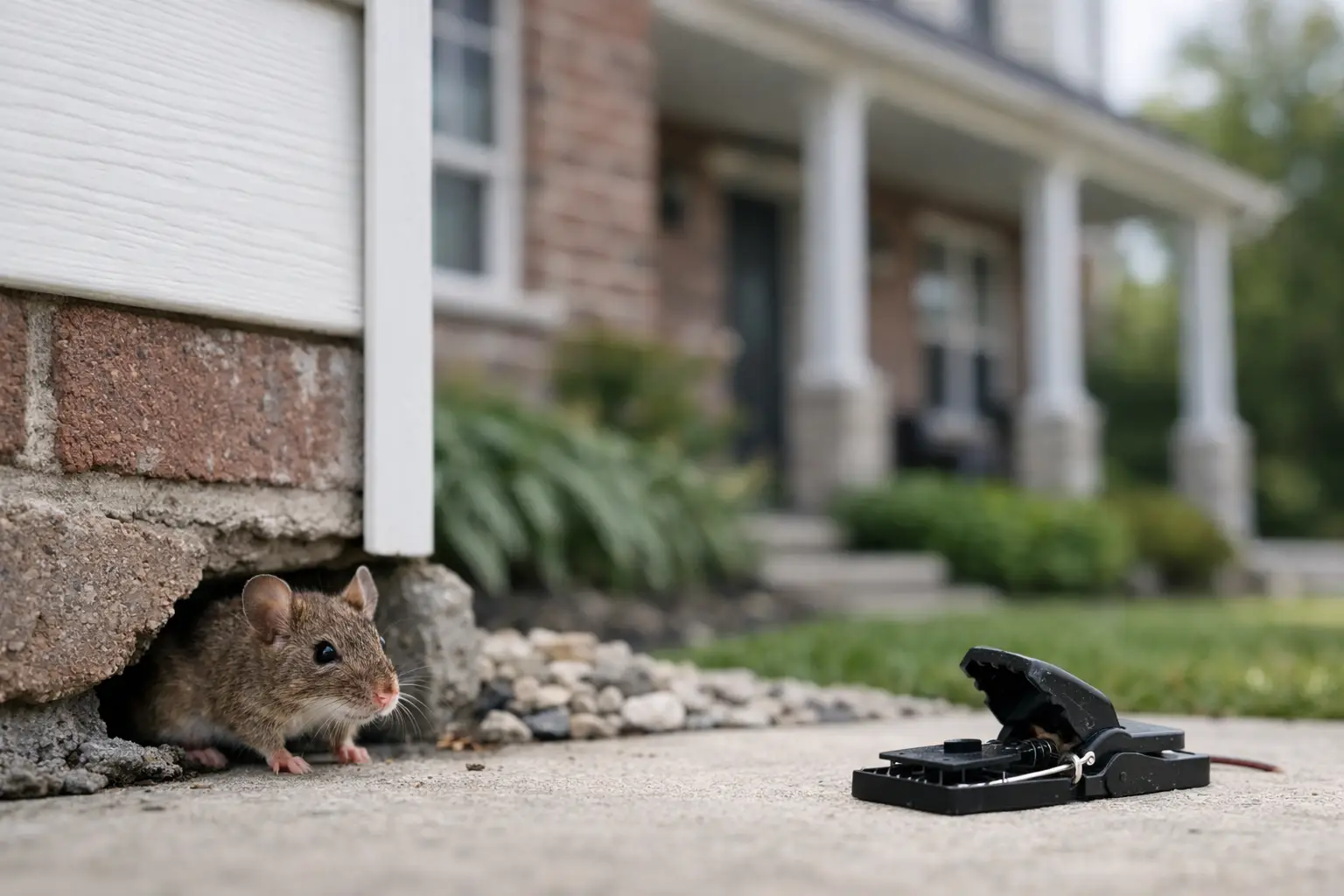
A mouse can enter through an opening no wider than a dime. That is why learning how to prevent mice from entering your home in Ajax is less about setting traps and more about closing the small, overlooked gaps around your property before cold weather or nearby construction sends rodents searching for shelter.
Ajax homeowners often notice mouse activity in fall and winter, but mice can move indoors at any time when they find easy access to food, warmth, and nesting material. A few droppings in a pantry, scratching behind a wall, or a chewed food package can signal a bigger issue nearby. Fast prevention protects your food, wiring, insulation, and peace of mind.
Why Mice Try to Enter Ajax Homes
Mice do not need an untidy home to become a problem. They are opportunistic pests that follow shelter, food, and warmth. In Ajax, changing temperatures, rain, landscaping work, and construction around established and growing neighborhoods can disrupt outdoor nesting areas and push mice toward garages, basements, sheds, and homes.
Once inside, mice usually stay hidden. They travel along wall edges, behind appliances, through suspended ceilings, and inside insulation. A female mouse can reproduce quickly, so a small concern should not be ignored while waiting to see whether it gets worse.
The most common entry points are gaps around utility lines, damaged weatherstripping, cracks in foundations, open garage-door corners, dryer vents, roofline gaps, and openings around pipes beneath sinks. Older homes may have settling cracks, while newer homes can still have incomplete sealing around exterior penetrations.
How to Prevent Mice From Entering Your Home in Ajax
Effective mouse prevention starts outside. The goal is to remove access points and reduce the conditions that make your property attractive. Interior cleanup matters, but it will not solve an entry problem on its own.
Inspect the exterior from ground level up
Walk around the exterior of your home in daylight and look closely at the foundation, siding, doors, windows, vents, and roof edges. Check where cable, plumbing, air-conditioning, and electrical lines enter the building. Even a narrow gap deserves attention.
Seal small cracks with a durable exterior-grade sealant. For larger holes, use metal mesh or hardware cloth combined with a suitable sealant or repair material. Mice can chew through foam, wood, plastic, and light materials, so foam by itself is rarely a reliable long-term solution for an active rodent entry point.
Pay special attention to garage doors. The bottom corners and side seals are common access routes, particularly when weatherstripping is worn or the concrete floor is uneven. Replace damaged door sweeps and make sure the garage door sits flush when closed.
Protect vents, chimneys, and roofline openings
Vents are necessary for your home, but they must remain protected. Install properly fitted, pest-resistant covers on exterior vent openings where appropriate. Do not block airflow or use materials that create a fire or moisture risk. Dryer vents need special care because lint buildup can be hazardous, so use a rodent-resistant vent cover designed to allow safe exhaust flow and keep the vent clean.
Look up at soffits, fascia boards, roof returns, and chimney areas. Loose or damaged materials can create routes into attics and wall cavities. If you see daylight in an attic, hear activity above the ceiling, or find chewed insulation, arrange a professional inspection instead of guessing where mice are entering.
Remove food sources and nesting materials
A sealed home is much less appealing when food is also hard to reach. Store cereal, rice, flour, pet food, birdseed, and snacks in solid containers with tight-fitting lids. Cardboard boxes and thin plastic bags are easy for mice to chew through.
Clean crumbs beneath stoves, refrigerators, and toasters, and do not leave pet food out overnight. Rinse recycling containers before placing them in bins, keep garbage lids closed, and repair leaking pipes or dripping faucets. Mice need water as well as food, and a small plumbing leak under a sink can support activity in an otherwise clean home.
In storage rooms, avoid placing loose paper, fabric, or cardboard directly on the floor. These materials offer easy nesting sites. Use sealed plastic totes and keep a small gap between stored items and the wall so you can spot droppings, gnaw marks, or nesting material early.
Make the yard less inviting
Your yard does not have to be bare to discourage mice. It does need reasonable clearance around the home. Trim shrubs, vines, and tree branches so they do not press against siding, windows, or the roof. Keep mulch, leaf piles, firewood, and stacked materials away from the foundation whenever possible.
Firewood should be elevated and stored away from the house. Bird feeders can also attract rodents when seed falls to the ground. If you use one, clean up spilled seed regularly and position it away from exterior walls.
Compost bins, outdoor garbage, pet waste, and fallen fruit can create feeding opportunities. Keeping these areas contained and maintained reduces the chance that mice will establish activity near the home before finding a way inside.
Do Not Forget Basements, Garages, and Shared Walls
Basements are frequent mouse entry areas because they contain utility lines, floor drains, foundation joints, and storage. Inspect rim joists, basement windows, and pipe openings. If your basement has a finished ceiling, a pest inspection may be the most efficient way to identify hidden travel routes without unnecessary damage.
Garages can become a bridge between the outdoors and the main home. Keep food, birdseed, pet supplies, and clutter off the floor. Check the door leading from the garage into the house and make sure its sweep and weatherstripping are intact.
For townhomes, condos, apartments, and commercial units, mice may travel through shared walls, utility corridors, or neighboring spaces. In these situations, one resident’s cleanup efforts may not be enough. Property managers and owners should coordinate inspection, exclusion, sanitation, and monitoring across affected areas.
Signs Prevention Has Not Been Enough
The earlier you spot mice, the easier they are to remove. Fresh droppings are small, dark, and often found along baseboards, in cabinets, near food, or behind appliances. Other warning signs include scratching or scurrying sounds at night, shredded paper or insulation, greasy rub marks along walls, chewed packaging, and a stale, musky odor in enclosed spaces.
Avoid sweeping or vacuuming dry rodent droppings. Wear gloves and ventilate the area, then wet droppings with a household disinfectant before carefully wiping them up. Wash hands afterward and discard contaminated food or heavily damaged packaging.
A single mouse sighting can mean more mice are hidden nearby, especially if there are droppings or signs in more than one room. Store-bought traps can help monitor a minor issue, but they will not prevent a repeat infestation if exterior entry points remain open.
When to Call a Professional Mouse Control Company
Professional help is the practical choice when you see repeated signs, hear activity in walls or ceilings, find mice in multiple areas, or cannot locate the entry point. It is also advisable when children, pets, tenants, food storage, or business operations are involved.
A licensed technician can inspect the home, identify active entry routes, recommend exclusion repairs, and use targeted control methods appropriate for the property. The best mouse control plans combine removal with prevention. Simply placing bait or traps without sealing access may reduce visible activity temporarily, but new mice can continue entering.
Quality Pest Control GTA provides reliable mouse control and preventative pest services for Ajax-area homes and businesses. Our approach focuses on finding the cause of the problem, treating active activity safely, and helping protect the property from future rodent entry.
Frequently Asked Questions About Mouse Prevention
Can mice enter through an open dryer vent?
Yes. An unprotected or damaged dryer vent can provide access to a wall cavity or utility area. Use a pest-resistant cover that maintains proper airflow, and keep the vent line free from lint buildup.
Is steel wool enough to keep mice out?
Steel wool can help fill a small gap, but it is most effective when secured and covered with a durable sealant or repair material. For larger openings, metal mesh or hardware cloth is usually a better choice.
Why do I have mice if my home is clean?
Clean homes can still have mice when entry points, warmth, water, or accessible nesting areas are available. Cleanliness reduces food sources, but exclusion work is what stops mice from getting inside.
What time of year are mice most active indoors?
Mouse calls often increase during fall and winter as outdoor temperatures drop. However, mice can enter throughout the year, particularly after heavy rain, landscaping changes, or construction that disturbs their outdoor shelter.
Small gaps become big problems when they lead to a warm wall cavity, a pantry, or an attic. A careful exterior inspection now can spare your Ajax home the stress and damage of a larger mouse problem later.

