
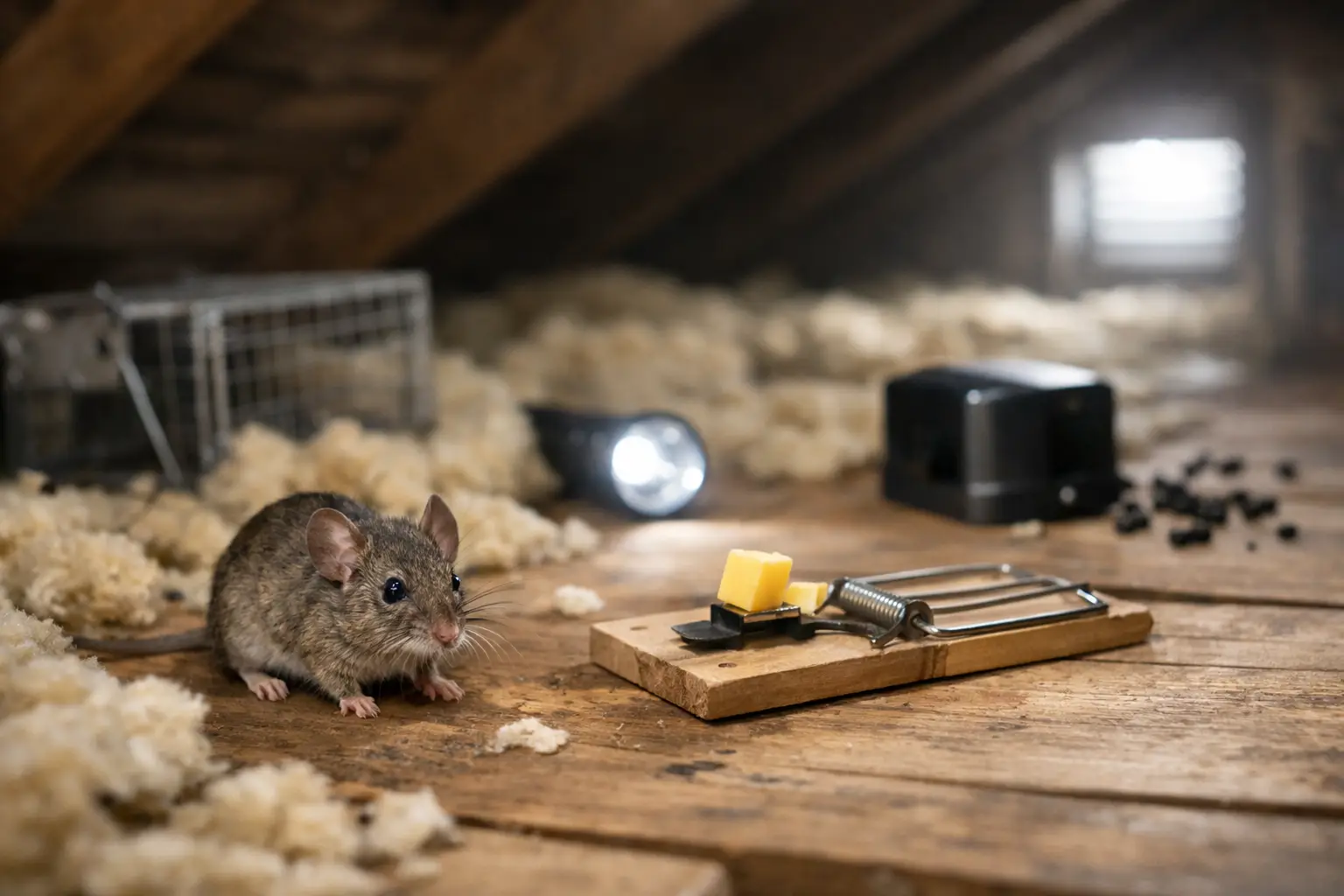
The phrase mice attic may be what brings you here, but the problem is rarely limited to one small animal overhead. Mice can nest deep in insulation, travel through wall voids, chew wiring, and leave contamination where you cannot easily see it. For homeowners, landlords, and business operators, quick action protects the property before a quiet attic problem becomes a larger infestation.
Why Mice Choose the Attic
An attic gives mice exactly what they need: warmth, darkness, nesting material, and protection from weather and predators. In the Greater Toronto Area, attic activity often increases when outdoor temperatures drop, but mice can move indoors at any time of year if food and shelter are available.
A mouse needs only a small opening to enter a building. Gaps around utility lines, roof vents, soffits, damaged fascia, chimneys, and foundation connections can all become access points. Once inside, a mouse may pull apart insulation, cardboard, stored fabrics, paper, and other soft materials to build a nest.
An attic can also act as a highway. Mice may enter at roof level, then move through wall cavities to kitchens, basements, bedrooms, and storage areas. That is why seeing a single mouse downstairs can sometimes point to a hidden nesting area above.
Signs of Mice in the Attic
Attic infestations are often discovered by sound before visual evidence. Light scratching, scurrying, or gnawing noises at night can indicate mice moving through insulation or along ceiling joists. Mice are most active after dark, so sounds may be most noticeable when the home is quiet.
Droppings are another common warning sign. Mouse droppings are small, dark, and shaped like grains of rice, often found near nesting areas, stored boxes, exposed beams, or travel routes. Fresh droppings may look darker and slightly shiny, while older droppings become dull and dry.
You may also notice a stale, musky odor, especially in an enclosed attic or upper-floor closet. Heavy infestation activity can create a stronger ammonia-like smell from urine. Other clues include shredded insulation, torn paper, chewed plastic, gnaw marks on wood or wiring, and small openings around roof edges.
Do not assume every attic noise is caused by mice. Squirrels, raccoons, birds, and bats can also enter roof spaces. The size and timing of the noise matter. Mice typically make lighter, faster scratching sounds at night, while squirrels are more active during the day and raccoons tend to make heavier thumping sounds. A professional inspection identifies the animal before treatment begins.
The Risks of Leaving an Attic Infestation Untreated
Mice reproduce quickly. A small problem can become a substantial one in a relatively short time when food, warmth, and nesting materials remain available. Waiting also gives rodents more time to spread from the attic into living areas.
The most immediate concern is contamination. Mice can leave urine, droppings, and nesting debris in insulation and storage areas. They may also contaminate food if they reach a pantry or kitchen. Avoid sweeping or vacuuming dry droppings because that can stir particles into the air. Wear gloves and use proper cleanup methods, or have contaminated material handled professionally.
Chewing creates another serious risk. Mice continually gnaw to wear down their teeth, and electrical wiring is a frequent target. Damaged wires can affect appliances, lighting, and safety systems, while increasing the risk of electrical faults. They can also damage insulation, ductwork, stored belongings, and building materials.
For rental properties and commercial buildings, rodents can trigger tenant complaints, failed inspections, damaged inventory, and reputational harm. The goal is not simply to catch a few mice. It is to remove active rodents, stop new entry, and reduce the conditions that support nesting.
How Professional Mice Attic Treatment Works
Effective mouse control begins with an inspection. A licensed technician checks the attic, roofline, exterior walls, basement, garage, utility connections, and likely food sources. This helps determine where mice are entering, how widespread activity is, and whether another wildlife species is involved.
Treatment may include strategically placed tamper-resistant bait stations, traps, and monitoring devices in appropriate areas. The best method depends on the property, the level of activity, the presence of children or pets, and whether the attic is accessible. A reliable plan uses targeted tools rather than a one-size-fits-all approach.
Exclusion is the part that prevents a repeat problem. Openings around vents, rooflines, pipes, and utility penetrations may need to be sealed with durable, rodent-resistant materials. If entry points are not addressed, new mice can often replace the ones removed.
For severe infestations, contaminated insulation or nesting material may require removal or remediation. This decision depends on the amount of damage and contamination. A technician can explain what is necessary, what can remain safely, and what should be replaced to restore a clean attic environment.
Quality Pest Control GTA provides professional, eco-friendly mouse control options designed to protect homes and businesses while addressing the source of the infestation. Prompt service is especially valuable when attic noises, droppings, or chewed wiring suggest active rodent activity.
What You Can Do Before and After Treatment
Do not block suspected entry holes while mice may still be inside. Sealing an active route too early can trap rodents in walls or push them into other parts of the building. First, have the activity assessed and follow a treatment plan that removes the mice safely.
You can help reduce pressure on the property by keeping food in sealed containers, cleaning up crumbs, securing garbage, and avoiding clutter around the exterior. Trim branches that touch or overhang the roof, since they can give mice and other wildlife easier access to upper levels.
Inside the attic, avoid disturbing nests or droppings without protective equipment. Keep stored belongings in sealed plastic bins instead of cardboard boxes when possible. Cardboard is easy for mice to chew and offers nesting material, while tightly closed bins make stored items less attractive.
After treatment, continue monitoring for new noises, droppings, or odors. Seasonal checks are worthwhile, particularly before winter. A property can be clean today but vulnerable again after weather damage, construction work, or aging exterior materials create a new gap.
Frequently Asked Questions About Mice in the Attic
Can mice in the attic get into bedrooms?
Yes. Mice can travel through wall voids, duct openings, plumbing penetrations, and gaps around wiring. An attic infestation can eventually lead to activity in bedrooms, kitchens, or basements if entry points and indoor food sources are available.
Will mice leave the attic on their own?
Usually not if the attic remains warm, sheltered, and accessible. Mice may leave temporarily to search for food, but they often return to the same nesting site. Professional removal and exclusion provide a more dependable solution.
Is it safe to sleep in a home with mice in the attic?
The risk depends on the extent of the infestation, but it should be addressed quickly. Mice can contaminate areas, damage wiring, and spread into living spaces. If you hear ongoing activity or find droppings, arrange an inspection rather than waiting for the problem to worsen.
How long does it take to get rid of attic mice?
Timing depends on the size of the infestation, the building layout, and whether entry points can be identified and sealed. Initial activity can decline quickly with proper treatment, but follow-up and prevention are essential for lasting results.
An attic should protect your home, not shelter a rodent colony. If you hear scratching overhead, find droppings, or suspect mice are entering near the roofline, arrange a professional inspection promptly. Acting early is usually safer, cleaner, and more affordable than repairing the damage an established infestation can leave behind.

