
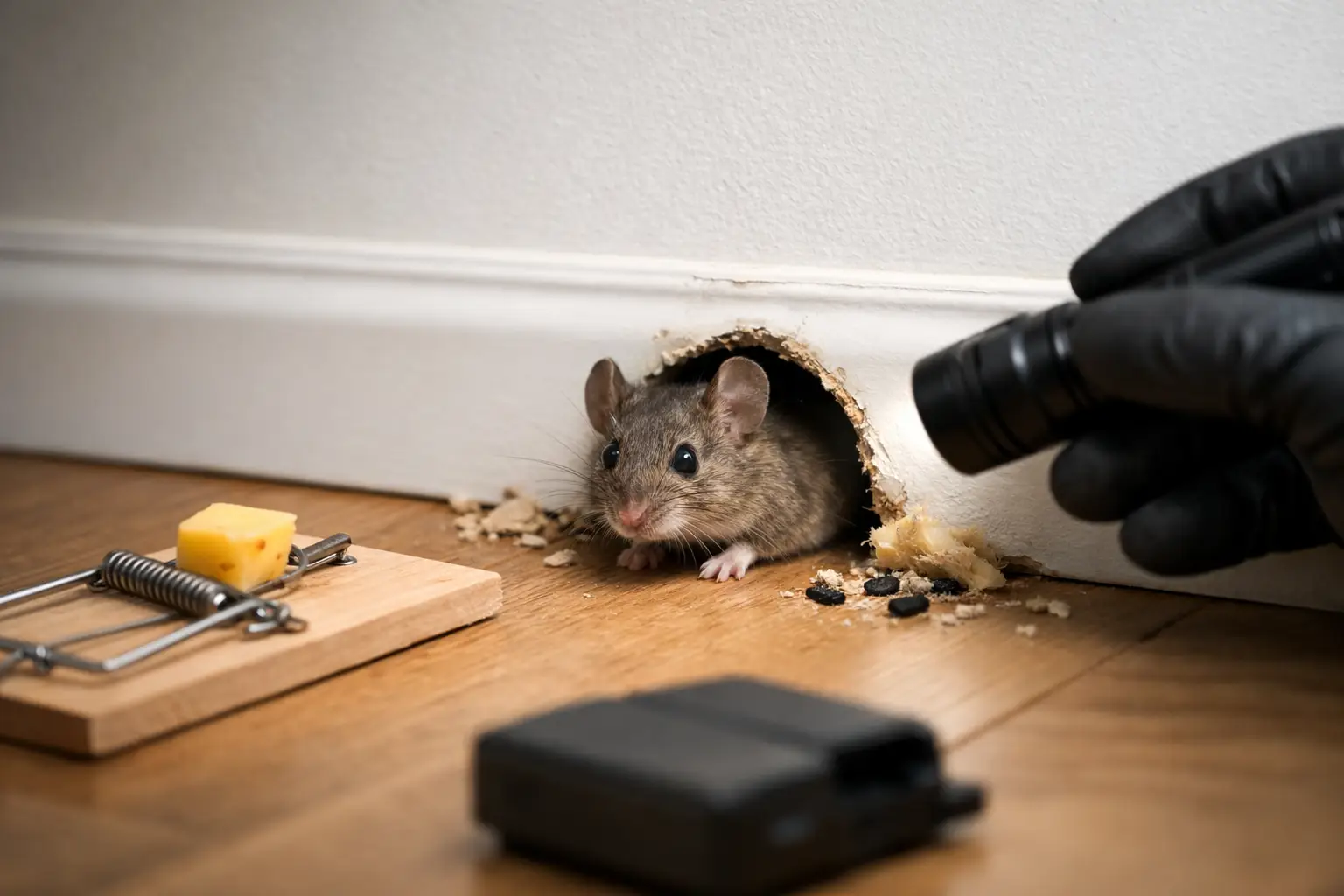
A scratching sound after dark is easy to dismiss once. When it happens night after night, especially behind the kitchen, basement, or bedroom wall, it deserves attention. People searching for “mice walls” are usually dealing with a problem that has already moved beyond a single mouse in the garage. Mice hidden inside wall cavities can breed, damage insulation and wiring, and leave droppings where you cannot easily clean them.
The good news is that a wall infestation can be resolved without guessing or relying on temporary fixes. The right approach is to identify the entry points, remove the active mice safely, and close off the conditions that allowed them inside. Fast action matters because mice reproduce quickly and tend to follow the same warm, protected routes through a property.
Signs of Mice in Walls
Mice are most active at night, so sound is often the first clue. Light scratching, scurrying, or gnawing noises in walls, ceilings, and under floors may become more noticeable when the house is quiet. Activity often increases in fall and winter, when mice seek shelter from colder weather, but infestations can occur at any time of year.
You may also find small, dark droppings along baseboards, beneath sinks, behind appliances, inside cabinets, or near food storage areas. Fresh droppings look dark and slightly shiny. Older droppings become dry and gray. One or two droppings may indicate a mouse passing through, while repeated droppings in the same area often point to regular activity nearby.
Other warning signs include a stale or musky odor, chewed food packaging, shredded paper or insulation used for nesting, and grease marks along walls. Mice often travel close to edges rather than through open rooms. In some cases, pets become unusually focused on a particular wall, vent, cupboard, or appliance.
A dead mouse in a wall can create a strong, unpleasant odor that seems to appear without explanation. While that smell may fade eventually, it should not be treated as proof that the entire problem is over. If one mouse accessed the wall cavity, others may still be using the same opening.
Why Mice in Walls Need Prompt Attention
Mice are not simply an inconvenience. They can contaminate counters, pantry goods, and storage areas with urine, droppings, and saliva. This is especially concerning in kitchens, daycare settings, restaurants, rental properties, and businesses where sanitation standards matter.
They also chew constantly to wear down their teeth. That behavior can damage drywall, wood, plastic pipes, insulation, and electrical wiring. Chewed wiring is a serious concern because it can create an electrical hazard. The risk depends on where the mice are nesting and what materials are accessible, but it is never a problem worth waiting out.
Walls also give mice a protected travel system. From one opening near a foundation, utility line, garage door, roofline, or exterior vent, they may move through voids to several rooms. A trap placed in one visible location may catch a mouse, yet leave the route and the rest of the population untouched.
For landlords and property managers, mice in walls can quickly become a tenant complaint, sanitation issue, and maintenance concern. For homeowners, the hidden nature of the problem often creates stress because the sounds can disrupt sleep and the source is hard to reach. Professional inspection replaces uncertainty with a clear plan.
What to Do When You Hear Mice in Your Walls
Start by avoiding quick fixes that can push the issue deeper into the structure. Do not seal a suspected entry hole until you know whether mice are still active inside. Closing every opening too early can trap mice in wall voids, leading to odor problems or new chewing damage as they look for another exit.
Remove accessible food sources first. Store dry goods, pet food, birdseed, and snacks in hard-sided containers with tight lids. Wipe crumbs from counters, clean under stoves and refrigerators, and avoid leaving pet food out overnight. Garbage should be kept in containers that close securely.
Next, reduce clutter near walls, in basements, and inside garages. Cardboard boxes, paper bags, and fabric piles can provide nesting material and cover. This will not eliminate an established infestation on its own, but it makes the area less favorable and helps reveal fresh signs of activity.
If you find droppings, do not sweep or vacuum them dry. Disturbing dry droppings can send contaminated dust into the air. Wear gloves, ventilate the area if possible, apply a household disinfectant, allow it to sit briefly, then wipe the material up with paper towels and discard them in a sealed bag. Wash your hands thoroughly afterward.
Snap traps can help with a small, clearly localized problem when placed correctly along walls and behind appliances. However, they are limited when mice are nesting inside inaccessible cavities or entering through multiple openings. Poison placed inside walls is also a poor do-it-yourself choice. A mouse may die where it cannot be retrieved, creating odor and fly activity, while children, pets, and non-target wildlife can face exposure risks if products are misused.
Professional Mice Wall Treatment That Solves the Source
Effective mouse control is not just about removing the mouse you see. It begins with an inspection of the interior and exterior of the property. A licensed technician looks for droppings, rub marks, tracks, nesting material, gaps around pipes, foundation cracks, door gaps, damaged screens, roofline openings, and other access points.
Treatment methods depend on the building and the severity of activity. A home with a few recent signs may need targeted trapping and basic exclusion work. A larger home, multi-unit building, restaurant, warehouse, or property with long-term activity may need a more detailed program with monitored stations, follow-up visits, and coordinated sanitation recommendations.
At Quality Pest Control GTA, our technicians focus on safe, eco-friendly, and effective solutions that fit the property. We use targeted methods rather than relying on a one-size-fits-all treatment. The objective is to reduce active mouse activity, identify their travel routes, and help prevent the next infestation before it starts.
In Toronto, Scarborough, Etobicoke, Whitby, Oshawa, Pickering, Aurora, and Bowmanville, seasonal changes can make entry-point inspections especially valuable. Mice can slip through openings as small as a dime. Sealing gaps around utility penetrations, repairing damaged weatherstripping, screening vents properly, and closing foundation gaps are often among the most valuable long-term steps.
How to Keep Mice Out of Walls After Treatment
Exclusion and housekeeping work together. Even a well-maintained property can develop a mouse issue if exterior gaps are left open, but food and nesting materials make that access far more attractive. Check around pipes, cables, air-conditioning lines, dryer vents, garage doors, and basement windows at least a few times a year.
Keep vegetation trimmed away from the exterior where practical, and avoid storing firewood, clutter, or bagged materials directly against the house. Indoors, use sealed food containers, clean spills promptly, and keep storage areas organized enough to inspect. Pay close attention to utility rooms, crawl spaces, and the backs of cabinets where evidence can go unnoticed.
For commercial properties, regular pest monitoring is often the more affordable choice than responding after employees, customers, or tenants spot evidence. Restaurants, offices, retail spaces, and multi-unit buildings benefit from clear reporting, routine inspections, and fast service when activity appears.
Frequently Asked Questions About Mice in Walls
Will mice leave my walls on their own?
They may leave temporarily to search for food, but they often return if the entry point and shelter remain available. A warm wall cavity with nearby food and nesting material is highly attractive. Waiting can allow the population to grow.
Can I hear mice in walls during the day?
Yes. Mice are generally more active at night, but a larger infestation, nesting activity, or a quiet building can make sounds noticeable during the day. Daytime sightings can also indicate more established activity.
How long does it take to get rid of mice in walls?
It depends on the size of the infestation, the number of entry points, and whether exclusion repairs are completed. Some cases show quick improvement after targeted treatment, while long-term or multi-unit problems may require scheduled follow-up visits.
Are mice in walls dangerous to pets and children?
Mice can contaminate food and surfaces, and their droppings should be handled carefully. The safest response is to use professional, targeted control methods and reduce exposure to traps or products that are not placed and managed correctly.
If scratching, droppings, or a persistent odor suggests mice are using your walls, act before the problem spreads into more rooms. A prompt inspection and prevention-focused treatment can restore a clean, secure property and give you confidence that the issue is being handled properly.

