
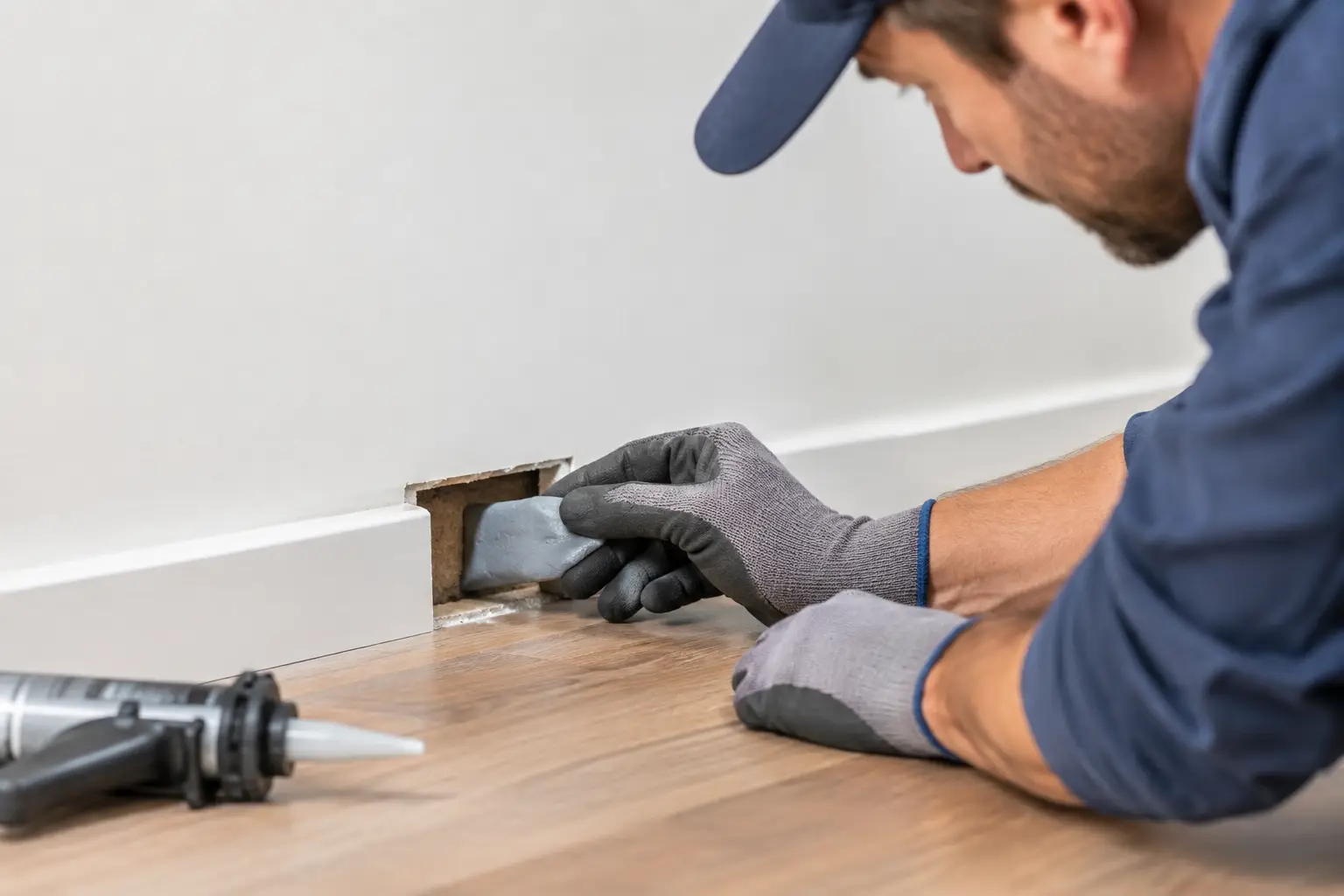
A gap behind a stove, a crack where a utility line enters the wall, or a damaged vent can be enough to bring mice indoors. Effective mouse hole sealing closes the routes mice use to enter, but it needs to be done at the right time and with the right materials. Simply filling a hole while mice are still active inside can trap them in walls, push them into new areas, and leave the real infestation unresolved.
For homeowners, tenants, property managers, and business owners, the goal is not just to make one visible hole disappear. The goal is to stop repeat access while addressing the mice already using the building.
Why Small Gaps Create Big Mouse Problems
House mice can squeeze through openings about the width of a pencil. That means a gap that seems too small to matter around pipes, garage doors, foundation joints, siding, vents, or electrical conduits may be a regular entry point.
Once inside, mice look for warmth, food, water, and protected nesting areas. Kitchens, utility rooms, drop ceilings, basements, storage areas, and wall voids provide all of those conditions. In colder GTA weather, even well-maintained homes and commercial properties can become attractive shelter.
A mouse problem is more than an inconvenience. Mice contaminate food and food-preparation surfaces with droppings and urine, chew insulation and wiring, damage stored goods, and create unpleasant odors. In rental properties and businesses, a recurring infestation can also lead to tenant complaints, failed inspections, lost inventory, and reputational damage.
Signs You Need Mouse Hole Sealing
Seeing a mouse is an obvious warning, but mice are usually more active after dark and can remain hidden for some time. Look for small dark droppings along baseboards, inside cabinets, behind appliances, or near stored food. Fresh droppings are darker and softer, while older droppings become dry and gray.
Other common signs include scratching in walls or ceilings, shredded paper or insulation used for nesting, grease marks along walls, chewed food packaging, and small holes around plumbing or utility lines. A stale, musky odor in a cupboard, pantry, basement, or storage room can also point to ongoing activity.
Exterior clues matter just as much. Check for gaps under garage doors, damaged weather stripping, open construction joints, holes near air-conditioning lines, loose siding, damaged screens, and worn mortar around brick or stone foundations. A professional inspection often finds entry points that are easy to miss from ground level or behind stored items.
Why Foam Alone Is Not a Reliable Fix
Expanding foam is commonly used for mouse hole sealing because it is quick, accessible, and fills irregular gaps. On its own, however, it is rarely a permanent barrier. Mice can chew through ordinary foam, especially when they are motivated by food, nesting space, or an established scent trail.
The right repair depends on the location and size of the opening. Small gaps around pipes may require metal mesh paired with a durable sealant. Larger openings may need sheet metal, hardware cloth, cement-based repair material, door sweeps, or replacement weather stripping. Exterior repairs should also stand up to moisture, temperature changes, and normal building movement.
There is a trade-off between sealing every opening quickly and sealing strategically. Blocking active routes before reducing the indoor mouse population can cause activity to shift deeper into walls, ceilings, or adjacent units. A reliable plan pairs exclusion work with targeted control and follow-up monitoring.
A Professional Approach to Sealing Mouse Entry Points
Quality mouse control starts with a full inspection. A licensed technician looks for signs of activity, likely nesting areas, food sources, structural vulnerabilities, and travel routes. In homes, this often includes basements, kitchens, garages, attics, utility rooms, and exterior foundation lines. In restaurants, offices, warehouses, and multi-unit buildings, loading areas, garbage rooms, suspended ceilings, storage zones, and service penetrations deserve close attention.
After the inspection, active mouse activity should be addressed using safe, targeted methods appropriate for the property. The approach may include tamper-resistant bait stations in suitable locations, trapping, monitoring devices, and sanitation recommendations. The best method depends on the level of activity, the presence of children or pets, the building layout, and whether food is handled on site.
Once the population is being controlled, the technician identifies priority openings for exclusion. This work may include sealing pipe penetrations, reinforcing damaged vents, installing door sweeps, screening weep holes where appropriate, repairing foundation gaps, and closing spaces around utility connections. A professional will avoid blocking required ventilation or creating conditions that cause moisture damage.
At Quality Pest Control GTA, our licensed technicians focus on both immediate mouse removal and practical prevention. That means looking beyond the one hole a customer noticed and finding the access points that allow the problem to continue.
Areas That Need Extra Attention
Some entry points are more common than others, particularly in older homes, renovated properties, and buildings with multiple utility connections. Inspect these areas carefully:
- Gaps around water, gas, cable, and electrical lines
- Openings beneath exterior doors and garage doors
- Cracks in foundations, brickwork, and siding
- Damaged window screens, dryer vents, and exhaust covers
- Gaps where decks, porches, additions, or sheds meet the building
- Open soffits, roofline gaps, and poorly screened vents
Not every opening should be sealed with the same product. Dryer vents, plumbing vents, and other systems need to function safely after exclusion work. This is one reason DIY repairs can fall short when the source of mouse activity is unclear.
Preventing Mice After the Holes Are Sealed
Mouse hole sealing is strongest when daily conditions inside the property do not reward mice for trying to return. Store dry food, pet food, birdseed, and pantry goods in hard-sided containers with tight lids. Clean crumbs and grease from behind appliances, empty indoor trash regularly, and avoid leaving pet food out overnight.
Reduce clutter in basements, garages, closets, and storage rooms. Cardboard boxes, loose paper, and crowded storage create nesting opportunities and make monitoring difficult. Keep stored items raised from the floor when possible and leave enough space along walls for inspection.
Outside, keep garbage lids secure, clean up fallen fruit, and avoid stacking firewood, lumber, or dense materials directly against the building. Trim vegetation away from walls and inspect exterior repairs seasonally. Weather, construction settling, and routine wear can create new gaps over time.
For commercial properties, prevention also includes staff habits. Food spills should be cleaned promptly, deliveries inspected, storage areas kept organized, and exterior waste areas maintained. A scheduled pest management program can catch early warning signs before they become a larger operational problem.
When DIY Mouse Hole Sealing Is Enough
A homeowner may be able to handle a minor repair when there is no evidence of current mouse activity and the source is clearly visible, such as a small gap under a door or around a pipe. Use durable, chew-resistant materials and inspect the repair after a few weeks.
Professional help is the better choice when droppings continue to appear, scratching is heard in walls, multiple openings are present, or mice may be nesting in inaccessible spaces. It is also recommended for apartment buildings, restaurants, warehouses, childcare settings, and properties where children, pets, customers, or tenants could be affected by improper trap or bait placement.
Can mice chew through steel wool?
Mice may pull apart or move loose steel wool, and it can rust when exposed to moisture. It is more reliable when packed securely and combined with a long-lasting sealant or other appropriate barrier. For larger gaps, heavier metal mesh or sheet metal is often a better solution.
How long does mouse hole sealing take?
A simple exclusion visit may take a few hours, while a larger home or commercial property can require more time. The timeline depends on the number of entry points, accessibility, repair materials, and whether active control is needed before final sealing.
Will sealing holes get rid of mice already inside?
No. Sealing prevents new mice from entering, but mice already indoors still need to be removed through a targeted control plan. Combining removal, exclusion, sanitation, and monitoring provides the best chance of preventing a return.
Do mice come back after an extermination?
They can if entry points, food sources, and nesting conditions remain available. That is why exclusion work is a central part of lasting mouse control rather than an optional add-on.
A quiet wall or a clean kitchen does not always mean the problem is gone. If you have noticed droppings, scratching, chewed packaging, or recurring mouse activity, act before a small opening becomes an established infestation. A thorough inspection and properly completed exclusion work can protect your property long after the first mouse is gone.

