
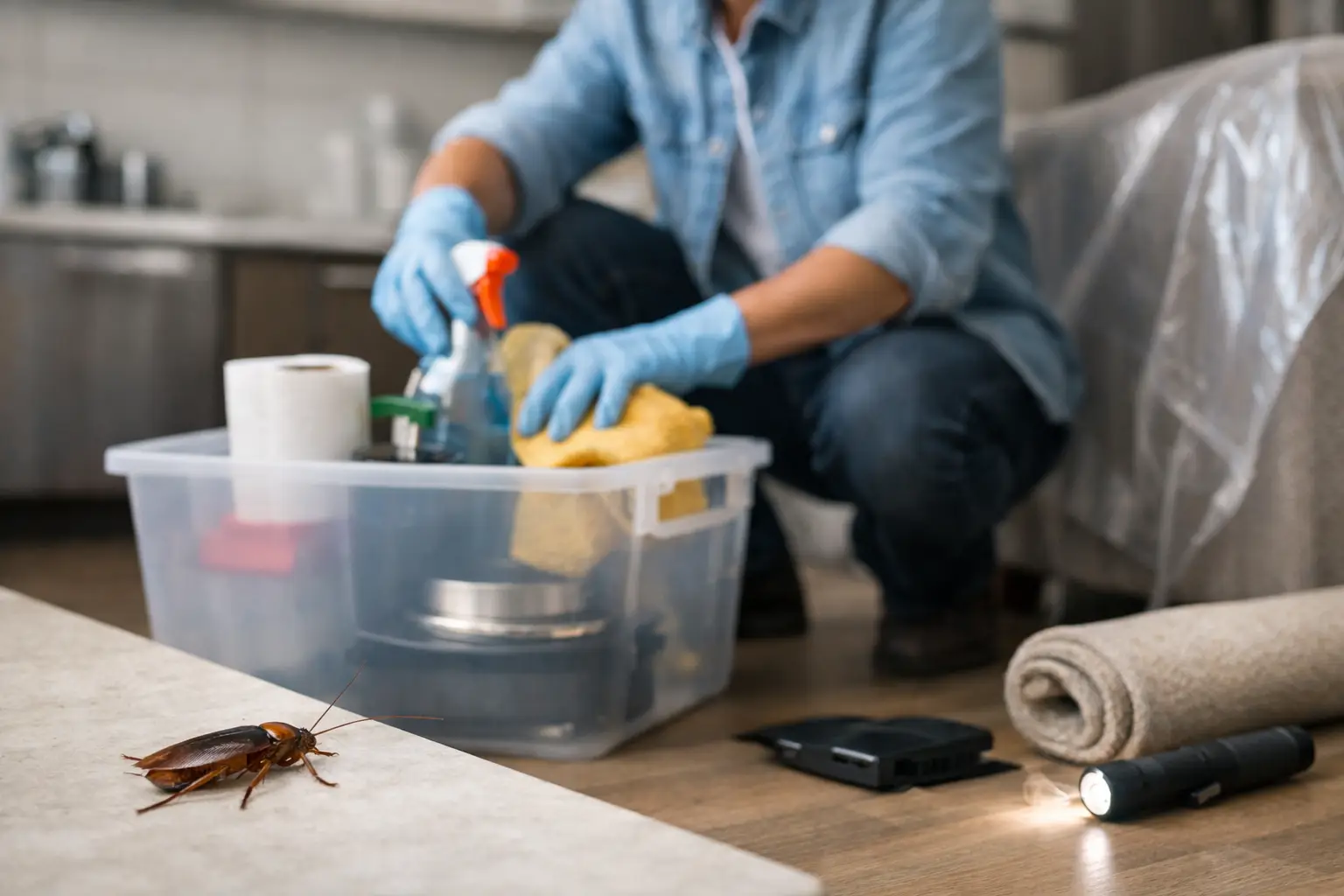
Cockroaches can move through wall gaps, plumbing openings, shared hallways, and neighboring units. That is why apartment cockroach preparation is not just about making a unit look clean before service. It gives your pest control technician access to the places roaches hide, removes food sources that compete with bait, and helps prevent the problem from spreading or returning.
For tenants, landlords, and property managers, the goal is simple: prepare thoroughly, follow the treatment instructions, and keep communicating if activity continues. A licensed cockroach treatment works best when everyone involved takes practical steps before and after the visit.
Why apartment cockroach preparation matters
Cockroaches are drawn to food residue, grease, moisture, cardboard, clutter, and warm hidden spaces. In an apartment building, they may live behind refrigerators, under sinks, inside cabinet hinges, around pipe penetrations, and within shared walls. Seeing one cockroach in a kitchen or bathroom can mean more are hiding nearby.
Professional treatments often use targeted gel baits, insect growth regulators, crack-and-crevice applications, monitoring traps, or a combination of methods. These treatments are more effective when surfaces are accessible and competing food is limited. If crumbs, dirty dishes, pet food, or open garbage remain available, roaches may ignore bait placements.
Preparation also protects the treatment. Spraying over bait, deep-cleaning treated cracks immediately, or moving items back too soon can reduce results. Follow the instructions provided for your specific service, because the right approach depends on the species, infestation level, building conditions, and treatment method.
What to do before cockroach treatment
Start preparation as soon as your appointment is scheduled. Do not wait until the morning of service, especially if you need to organize cabinets, move appliances, or coordinate access with a tenant.
Remove food, dishes, and personal items
Empty lower kitchen cabinets, drawers, and pantry areas if your technician instructs you to do so. Focus on areas near the sink, stove, refrigerator, dishwasher, and any location where droppings or live roaches have been seen. Place food, dishes, utensils, small appliances, and cookware in sealed plastic bins or bags away from treatment areas.
Do not leave fruit bowls, bread, snacks, pet food, or opened dry goods on counters. Roaches can feed on tiny spills and grease residue, so wipe counters, stovetops, and tables with soap and water. Take garbage and recycling out of the unit before the appointment.
If you have a heavy infestation in a pantry, inspect packages carefully. Cockroaches and egg cases can hide around cardboard seams. Transfer dry goods into sealed containers when possible, and discard heavily contaminated items in an outdoor garbage bin.
Clear access where roaches hide
Technicians need clear access to the edges and working areas of a room, not an empty apartment. Pull furniture away from walls where practical, especially in the kitchen, bathroom, laundry area, and rooms where activity has been reported. Clear the floor beneath sinks and remove items stored beside appliances.
Make space around the refrigerator and stove if it is safe to do so. These warm appliance areas are common cockroach harborage sites because they collect crumbs, moisture, and grease. Property managers should arrange maintenance support if appliances are too heavy or access is restricted.
Decluttering matters, but avoid moving infested belongings into hallways, storage lockers, vehicles, or another unit. That can spread cockroaches. Bag and contain items first, then move only what is necessary for treatment access.
Address moisture and sanitation issues
Roaches need water as much as food. Before treatment, dry sinks and counters overnight, repair dripping faucets if possible, and report leaks under sinks, behind toilets, or around dishwashers. A persistent plumbing leak can undermine even a well-planned cockroach control program.
Vacuum visible droppings, shed skins, dead insects, and crumbs from cabinet corners, along baseboards, and beneath appliances. Empty the vacuum outside after use. This cleanup reduces allergens and makes it easier to monitor whether new activity appears after treatment.
Do not use bug bombs, foggers, or store-bought sprays right before professional service. These products can drive cockroaches deeper into walls, scatter them into other rooms, and interfere with bait acceptance. If you have recently used another pesticide, tell the technician exactly what you used and where it was applied.
Preparing children, pets, and sensitive areas
Professional cockroach control is designed around careful placement and safety directions, but residents must still prepare properly. Keep children and pets away from treatment areas until the technician confirms it is safe to return. Remove pet bowls, toys, bedding, cages, and aquarium supplies from kitchens, bathrooms, and other active areas.
Aquariums require special attention. Cover the tank securely, turn off air pumps if instructed, and speak with the technician before treatment begins. Fish and reptiles can be more sensitive to airborne products than people or household pets.
If anyone in the unit has respiratory concerns, chemical sensitivities, or a medical condition that affects treatment planning, mention it before the appointment. An experienced technician can explain the treatment plan and any re-entry guidance clearly.
What tenants and property managers should coordinate
Cockroach problems in apartments are rarely limited to one room, and sometimes they are not limited to one unit. A tenant may keep a spotless kitchen yet still see roaches entering around pipes or shared utility lines. That does not mean sanitation is irrelevant. It means the building may need a coordinated response.
Tenants should report sightings promptly, including where roaches were seen, the time of day, and whether there were small nymphs or egg cases. Small roaches and daytime activity can indicate an established infestation. Save a photo if possible, but do not delay reporting while trying to identify the insect.
Property managers should document affected units, inspect adjoining apartments when appropriate, and address building conditions that support activity. Leaks, unsealed pipe openings, overflowing garbage rooms, damaged door sweeps, and neglected utility spaces can all contribute to recurring infestations. Treating only the unit with the complaint may provide temporary relief, but a wider inspection can be necessary.
In Toronto, Scarborough, Etobicoke, Whitby, Oshawa, and surrounding GTA communities, multi-unit buildings often need scheduled follow-up service. Egg cases may hatch after the first visit, and cockroach bait needs time to circulate through the population. Reliable control is a process, not a one-day cleanup.
What to expect after treatment
It is normal to see some cockroach activity after treatment, particularly during the first several days. Roaches may come out of hiding as they encounter bait or treated areas. Do not assume the service failed because you see activity right away.
Keep kitchen and bathroom areas dry and clean, seal food overnight, and empty garbage regularly. Leave monitoring traps and bait placements where they were installed unless the technician tells you otherwise. Avoid wiping baseboards, cabinet corners, cracks, and crevices that were treated.
Continue to report sightings between visits. Note whether activity is decreasing, where it is concentrated, and whether you see very small roaches. This information helps a licensed technician adjust bait placements or inspect potential entry points during follow-up service.
Apartment cockroach preparation mistakes to avoid
The most common mistake is cleaning only visible areas while leaving cluttered cabinets, appliance gaps, and plumbing spaces inaccessible. Another is using strong-smelling sprays after bait is placed. Roaches may avoid the area, and the bait may become less effective.
Do not move unsealed belongings from an infested unit to a relative’s home, a storage unit, or another apartment. Inspect, bag, and contain belongings before relocation. Also avoid assuming one treatment will always solve a building-wide infestation. Follow-up inspections and cooperation between residents and management often make the difference.
Frequently asked questions
Do I need to empty every cabinet before cockroach treatment?
Not always. The preparation required depends on the treatment plan and where cockroach activity is found. Kitchens and bathrooms usually need the most attention. Your technician should provide clear instructions before arrival so you do not do unnecessary work.
Should I clean immediately after the technician leaves?
Clean food preparation surfaces if instructed, but do not scrub treated cracks, cabinet corners, baseboards, or bait placements. These targeted areas need to remain undisturbed so the treatment can work. Ask for specific cleaning and re-entry directions before service begins.
Can cockroaches return from another apartment?
Yes. Cockroaches can travel through shared walls, plumbing routes, electrical openings, and hallways. If activity continues, the property manager may need to inspect adjoining units and common areas while addressing conditions such as leaks and gaps around pipes.
How long does apartment cockroach control take?
Results vary with the infestation size, species, sanitation conditions, and cooperation across the building. Many infestations show a noticeable reduction after initial treatment, but follow-up service is often needed to control newly hatched roaches and hidden populations.
A prepared unit gives treatment the best possible start, but ongoing prevention keeps that progress going. Keep food sealed, report leaks and sightings quickly, avoid spreading belongings between units, and request professional help as soon as roaches appear. Quality Pest Control GTA provides practical, eco-friendly cockroach solutions designed to protect apartments, residents, and the buildings they call home.

