
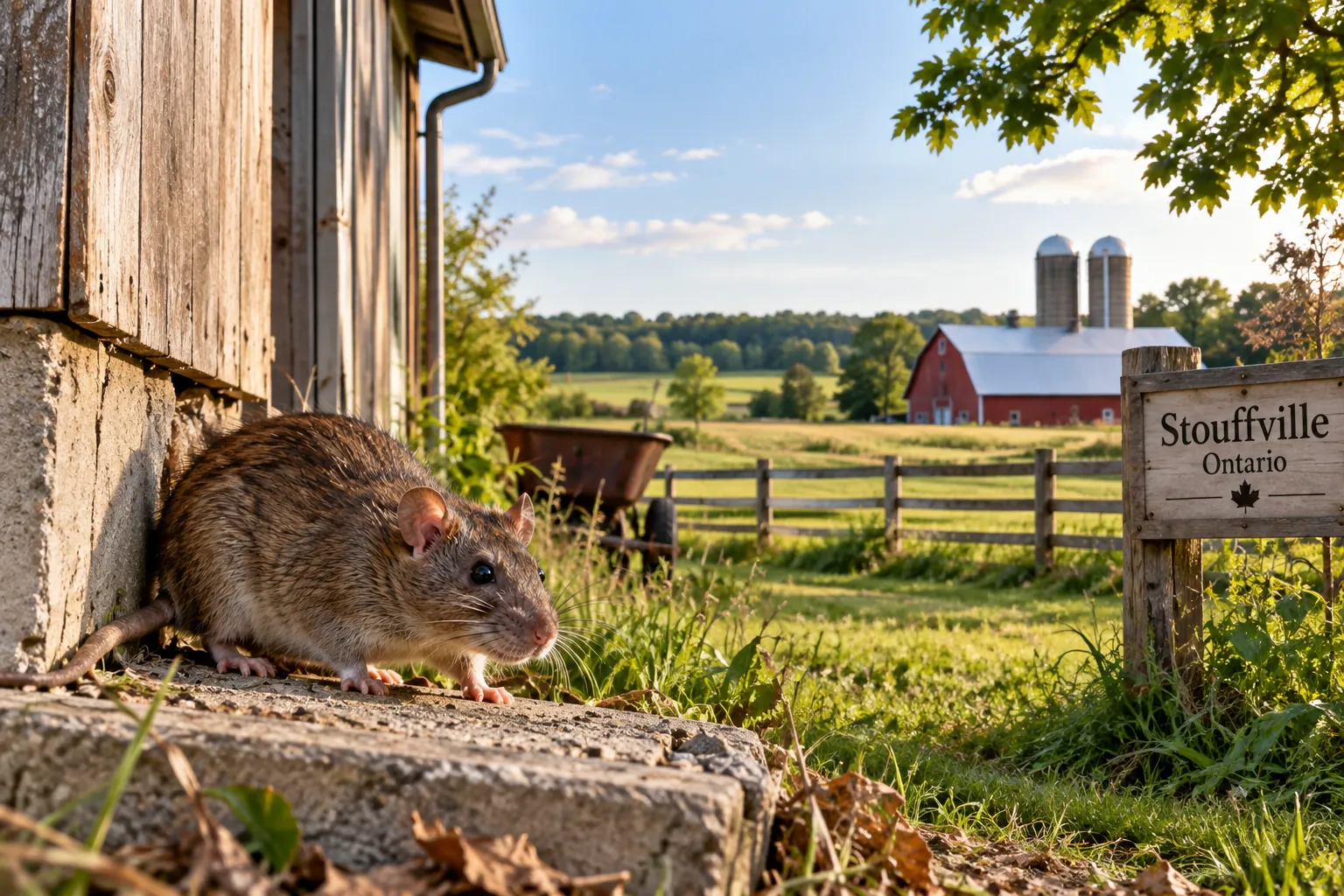
Why Stouffville’s rural edges and growing subdivisions both draw rats — and what actually keeps them out.
Stouffville’s rural-edge properties and farmland give rats shelter and food in barns and outbuildings, while the town’s newer, expanding subdivisions can have fresh-construction gaps before a home fully settles. Rat droppings are larger than mouse droppings, roughly 3/4 inch with blunt ends, and rats pose real structural and fire risks through gnawing.
Stouffville sits in a spot that’s still genuinely close to working farmland, even as new residential subdivisions continue to expand around it. That combination gives rats two very different opportunities: barns and outbuildings on rural-edge properties offering shelter and stored feed, and newer homes where construction gaps haven’t fully sealed yet. Both situations draw rats, just for different reasons.
Rats vs. Mice: Know Which You’re Dealing With
| Feature | Rats | Mice |
|---|---|---|
| Droppings | Roughly 3/4 inch, blunt ends | About 1/4 inch, pointed ends |
| Gnaw marks | Larger, more forceful | Smaller, finer |
| Entry point needed | About the size of a quarter | About the width of a pencil |
| Common shelter | Barns, woodpiles, burrows | Wall voids, attics, cluttered storage |
Why Rural-Edge Properties See More Rat Activity
Barns, sheds, and other outbuildings common on Stouffville’s rural-edge properties offer rats exactly what they need: shelter from weather and predators, and often a nearby food source in the form of stored feed or grain. Once established in an outbuilding, rats can extend their range toward a nearby home, particularly as outdoor temperatures drop in fall.
Why Newer Subdivisions Aren’t Immune Either
Stouffville’s newer residential developments aren’t exempt from rat activity. Fresh construction can leave small unsealed gaps around vents, utility lines, and siding before a home fully settles, and rats — like other rodents — will readily test these openings if the opportunity is there.
Signs of a Rat Problem
- Larger droppings (roughly 3/4 inch, blunt-ended) near food sources or along travel paths
- Grease marks or smudges along baseboards and walls, from repeated travel along the same route
- Burrow holes near foundations, woodpiles, or garden beds
- Heavier scratching or scurrying sounds than typical mouse activity
Prevention Tips for Stouffville Properties
- Store animal feed and grain in rodent-resistant containers on rural-edge properties
- Seal gaps around barns, sheds, and outbuildings before fall
- Check fresh-construction gaps around vents and siding on newer homes
- Keep woodpiles and garden debris away from the foundation
When to Call a Professional
Burrow holes near the foundation, repeated sightings, or droppings found in more than one area are signs a rat population has an established foothold worth addressing with a full inspection rather than DIY traps alone.
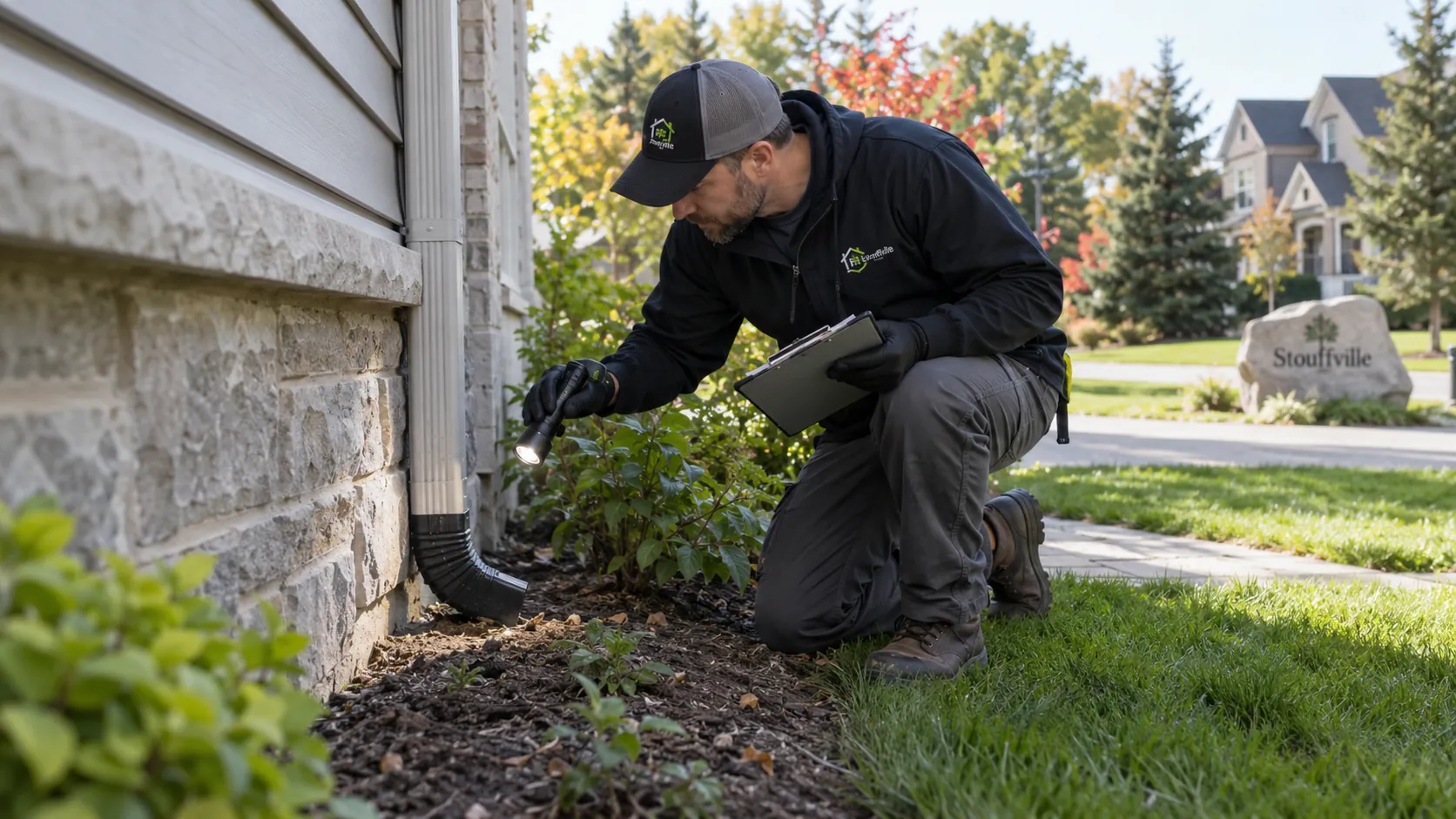
Quality Pest Control GTA provides professional rat removal services across Stouffville and the surrounding area, including Richmond Hill and Aurora.
Frequently Asked Questions
Stouffville’s mix of rural-edge properties, farmland, and newer residential subdivisions gives rats both shelter (barns, sheds, and outbuildings) and expanding neighbourhoods where fresh construction can leave gaps before a home fully settles.
Rat droppings are larger, roughly 3/4 inch with blunt ends, compared to mouse droppings, which are about a quarter of that size with pointed ends. Rats also leave larger gnaw marks and more noticeable grease trails along baseboards.
Properties near farmland or rural outbuildings tend to see more rat activity than dense urban areas, since barns and stored feed offer both shelter and a reliable food source.
Yes. Rats can spread bacteria through droppings and urine, cause structural damage by gnawing through wiring and wood, and their gnawing on electrical wiring is a documented fire risk.
Serving Stouffville, Richmond Hill, Aurora, and across the GTA. Call (647) 945-9602 for a free inspection.


