
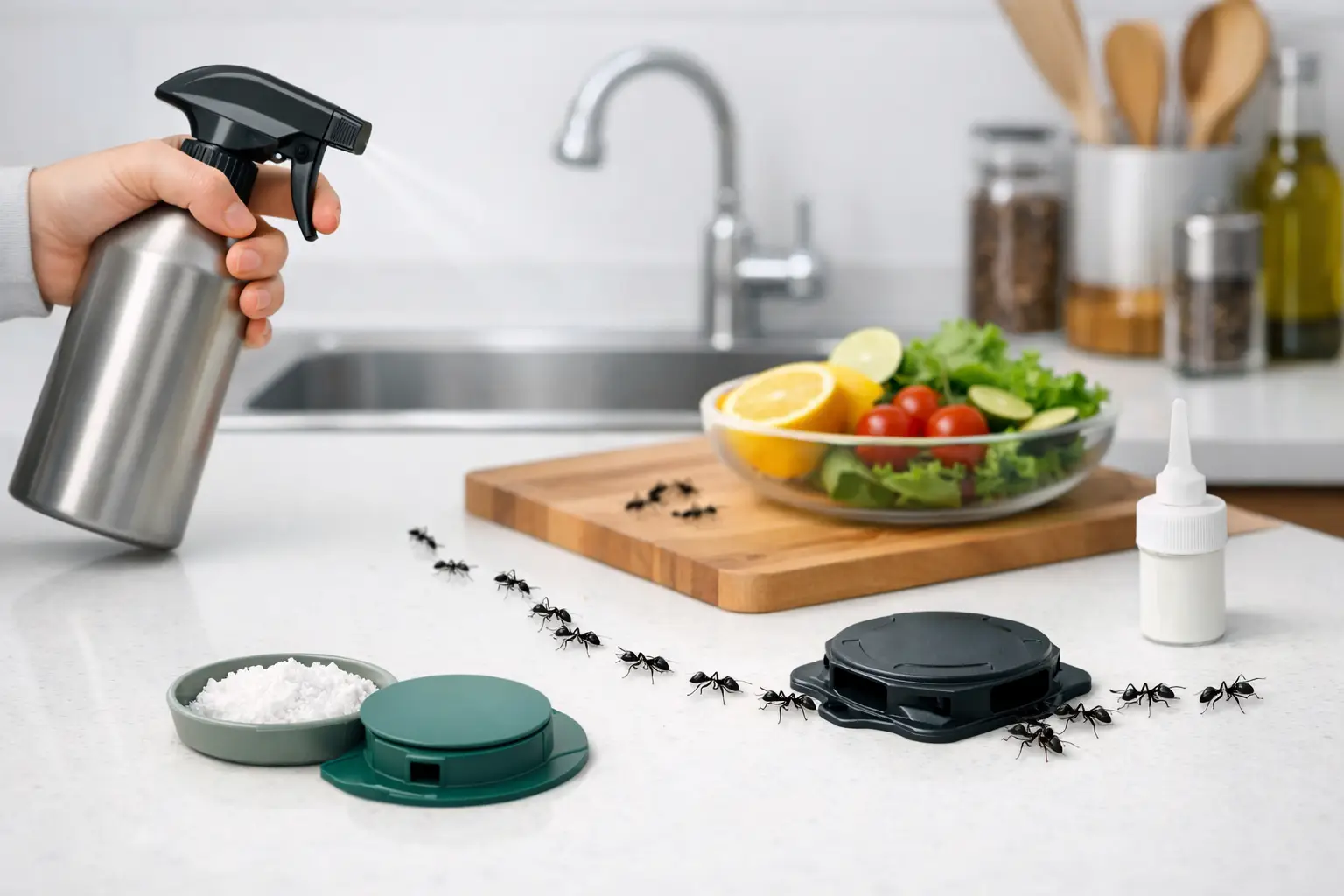
You wipe the counter, take out the trash, and still find a line of ants marching straight to the sink by morning. That is usually the moment people start searching for the best ant control for kitchens – not because a few ants are annoying, but because the problem feels unhygienic, persistent, and oddly hard to stop.
Kitchen ants are rarely there by accident. They are following food residue, moisture, and reliable access points. If you only kill the ants you can see, the colony often keeps sending more. Real control comes from doing two things at once: removing what attracts them and using the right treatment to reach the nest.
What actually works as the best ant control for kitchens
The best approach is not the strongest-smelling spray or the fastest knockdown product. In kitchens, the most effective ant control is usually a combination of sanitation, entry-point reduction, and properly placed ant bait. That matters because foraging ants are only a small part of the problem. The colony, including queens and developing ants, is hidden behind walls, under floors, or outside near the foundation.
Baits work by turning worker ants into carriers. They feed on the bait and bring it back to the colony, where it is shared. This is why bait often outperforms contact sprays in kitchens. A spray may kill the ants on the counter right away, but it can also scatter the colony or interrupt the trail before the poison reaches the nest.
That said, it depends on the species and the size of the infestation. Small sugar ant activity near a windowsill may respond well to a targeted bait plan and better cleaning. A heavy infestation, recurring trails in multiple rooms, or ants coming from wall voids often needs professional treatment and exclusion work.
Why kitchen ant problems keep coming back
Ants are efficient. Once they find a dependable food and water source, they leave scent trails for others to follow. Kitchens offer exactly what they want: crumbs under appliances, sticky cabinet shelves, pet food, recycling bins, fruit bowls, and moisture around sinks or dishwashers.
Even very clean homes can get ants. A tiny syrup spill under the toaster, a leaking pipe under the sink, or a gap around a window frame may be enough. In apartments, condos, and multi-unit properties, ants may also travel between units through plumbing penetrations and shared wall spaces.
Weather plays a role too. Heavy rain can drive ants indoors. Hot, dry periods can push them toward water sources. In places like Toronto, Etobicoke, and Scarborough, seasonal changes often trigger sudden indoor activity that seems to appear overnight.
The safest first steps for ant control in a kitchen
Start by resisting the urge to spray every visible ant. Fast-kill aerosols can make the issue look better for a day while making long-term control harder. Instead, clean with a purpose. Wipe counters, backsplash areas, and floors to remove food residue and pheromone trails. Pay attention to the spaces around the stove, microwave, toaster, garbage area, and under the sink.
Store sugar, cereal, flour, and snacks in sealed containers. Empty indoor garbage regularly and rinse recycling before keeping it inside. If you leave out pet food, reduce the time it sits exposed. Fix any moisture issue you can find, especially drips under sinks or condensation around plumbing.
Then inspect where the ants are entering. Look along window frames, baseboards, utility openings, countertop seams, and areas where pipes pass through walls. Small gaps can be sealed, but timing matters. If you seal openings before the treatment has had time to work, you may trap ants inside and force them to appear somewhere else.
Best ant control products for kitchens
If you are handling a light infestation yourself, bait is usually the best starting point. Gel baits and bait stations both have a place in kitchens, but placement matters more than quantity. Put bait close to active trails, but away from direct food-prep surfaces and out of reach of children and pets.
Sweet baits tend to work well for sugar-feeding ants, while protein or grease-based baits may be more effective for other species. This is where many DIY efforts fail. Homeowners often pick one bait, place it randomly, and assume it is ineffective when the ants ignore it. In reality, ants can switch food preferences based on colony needs.
Dusts and residual products can help in cracks, voids, and hidden entry areas, but these should be used carefully in kitchens. Misapplied products around food storage or prep zones create unnecessary risk and often do not solve the root problem. For most households, heavy chemical use indoors is not the best answer. Safe, targeted treatment is.
Natural remedies are popular, but results are mixed. Vinegar can help clean trails, and caulking can reduce access, but these are support steps, not full solutions. Essential oils may repel some ants temporarily, yet repellency often pushes them to a new route rather than eliminating the colony.
When bait works – and when it does not
A good bait plan can be highly effective, but it requires patience. You may see more ants at first, which is normal. The bait is attracting foragers so they can carry it back to the colony. If you wipe them out with spray during this stage, you stop the transfer that makes bait successful.
Bait tends to work best when there is a clear, active trail and the infestation is still localized. It becomes less reliable when there are multiple colonies, hidden nesting sites in walls, or competing food sources throughout the kitchen. If ants are feeding on grease behind the stove or residue under cabinets, they may ignore bait until those attractants are removed.
Another issue is species identification. Carpenter ants, pharaoh ants, pavement ants, and odorous house ants do not all behave the same way. Some species respond poorly to the wrong treatment, and some can spread if handled incorrectly. Pharaoh ants are a classic example. In certain cases, pressure from sprays can cause colony budding, which means the problem expands instead of shrinking.
Signs you need professional kitchen ant control
If ants keep returning after one or two weeks of proper baiting and cleaning, it is time to stop guessing. The same goes for ants appearing from outlets, inside cabinets, behind backsplashes, or in more than one room. These signs usually point to a larger nesting issue or multiple access points.
Professional service is also the better choice when children, pets, tenants, or customers are involved. In kitchens, safety matters as much as effectiveness. A licensed technician can identify the species, choose eco-friendly treatment options where appropriate, and apply products precisely where they will work without contaminating food areas.
For restaurants, rental units, and shared properties, professional documentation and follow-up also matter. Ants are not just a nuisance in those settings. They can become a sanitation, reputation, and compliance problem.
A company like Quality Pest Control GTA typically approaches kitchen ant problems with a full plan: inspection, species-based treatment, safe product placement, and prevention steps such as sealing entry points. That is the difference between short-term relief and long-term control.
How to keep ants out of the kitchen for good
Long-term prevention is less about one miracle product and more about consistency. Ants return when the environment stays welcoming. Once the active infestation is under control, focus on the habits and structural issues that made the kitchen easy to invade.
Keep dry goods sealed and avoid leaving ripe fruit or dirty dishes out overnight. Pull out movable appliances often enough to clean hidden crumbs and grease. Check under sinks for slow leaks. Replace worn weatherstripping and seal visible cracks around windows, baseboards, and service lines.
Outside the home, trim vegetation away from the structure and keep mulch, firewood, and debris from sitting too close to the foundation. Many kitchen infestations begin outdoors and move inside through tiny openings. If exterior conditions remain favorable, indoor treatments may need reinforcement.
There is no single best ant control for kitchens in every situation. The right fix depends on the species, nesting location, severity, and how long the infestation has been active. But in most cases, the winning combination is clear: remove food and moisture, use the right bait strategically, avoid counterproductive spraying, and bring in expert help when the activity does not stop.
If ants keep showing up where your family cooks, eats, and stores food, treat that as a real pest issue, not a minor inconvenience. The faster you deal with it properly, the easier it is to protect your kitchen and keep it that way.

